



Eight years, an estimated $1 billion, and a spokeswoman who warned before launch that “the rocket may explode.” It didn’t. Five satellites reached orbit, and Isar’s CEO says the real payoff is a factory that can build 40 more of these a year.
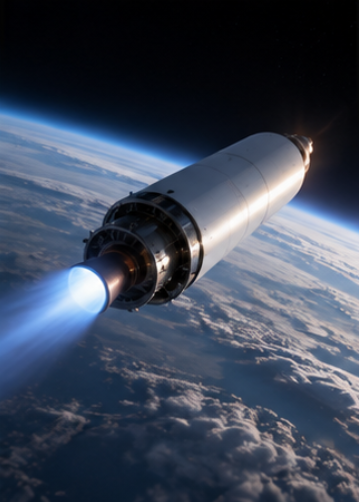
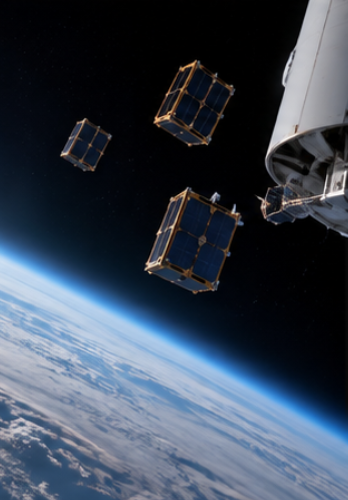
Isar Aerospace became the first privately developed rocket to reach orbit from mainland Europe Saturday, launching its Spectrum rocket from Andøya Spaceport in Arctic Norway. The two-stage, 28-meter vehicle lifted off at 10:12 pm local time, reached orbit seven minutes later, and deployed five small satellites alongside an in-flight technology experiment. CEO Daniel Metzler called launch capability “right now the biggest bottleneck in the entire industry.” German Chancellor Friedrich Merz called it “the beginning of a new era.”
What’s Happening & Why It Matters
Nobody Expected the First Attempt to Work
Isar’s own team wasn’t confident heading into the launch — quite the opposite on a previous attempt. Before an earlier test flight from the same site, a company spokeswoman told reporters: “The rocket may explode — that is even during the test flight. Thirty seconds would be a great success.” That candour is pertinent for reading Saturday’s result. Orbital rockets seldom succeed on a company’s first attempt — SpaceX’s Falcon 1 needed four tries before reaching orbit. Isar’s Spectrum reached orbit and delivered a working payload on what the company itself expected might end in an explosion.
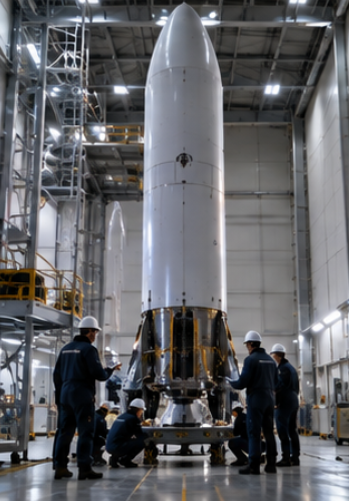
Metzler named the achievement around the people behind it, not the hardware alone. “Don’t forget the human element behind all of this. There are engineers, technicians, operators, a strong support team, who dare to dream, and against all odds, that team delivered.” He was equally forthcoming about the timeline distortion founders face. “You very much overestimate what you can do in the short term, but you underestimate what you can do in the long term.”
Eight Years and $1 Billion Later
Isar Aerospace was founded in 2018 by Daniel Metzler, Josef Fleischmann, and Markus Brandl — three classmates at the Technical University of Munich, taking the company’s name from the river running through the city. Getting from that founding to Saturday’s orbital success took eight years, a timeline consistent with other successful Western commercial rocket startups. Along the way, Isar raised $1 billion across several private financing rounds, most recently a €270 million Series D closed in June 2026, and built a workforce approaching 500 employees. That makes Isar, by a clear margin, the most well-capitalised private launch company in Europe.
Porsche — through Volkswagen’s major shareholder — sits among Isar’s investors, alongside institutional backing from the European Space Agency‘s Boost! programme, which funds commercial space transportation development. Isar had already secured two ESA launch contracts before Saturday’s flight, the first such agreements ESA had signed with a private European launch company — confirming institutional confidence existed well before the technical achievement arrived to justify it.
Not Going Public… Yet
Metzler was blunt about Isar’s near-term financial plans when asked. “Privately owned Isar remains well-funded,” he told reporters, adding that an IPO “is not on the table.” That contrasts with the pattern TF has documented across SpaceX’s own record-setting June IPO and other major space companies choosing public markets to fund expansion. Isar is betting its existing capital base and institutional backing can sustain the scale-up ahead without diluting ownership or answering to public shareholders during what’s to be a volatile early-operations period.
The company is already building its next five Spectrum rockets at a new 40,000-square-metre manufacturing facility near Munich — a plant Isar says is designed to produce up to 40 rockets annually. The production target is more relevant than a single successful launch. A company proving it can reach orbit once demonstrates the engineering works. A factory capable of 40 launches a year is the actual bet that Europe’s satellite market will grow fast enough to need that cadence.
Norway’s Stake: Security
Norway’s own review of Saturday’s launch went beyond commercial milestone language. Industry and Commerce Minister Cecilie Myrseth connected it to security: “The fact that we can now launch satellites from Andøya strengthens Norwegian and European security in the turbulent times we live in.” Andøya Spaceport itself only opened last year, becoming continental Europe’s first facility capable of supporting orbital launches — infrastructure built to give European governments and companies a domestic alternative to relying on SpaceX or other non-European providers for satellite deployment.
That security aspect connects to a continental push TF has covered — as reported in The EU’s Answer to Starlink Just Moved a Step Closer to Launch, Europe has spent much of 2026 building independent satellite infrastructure to reduce dependence on American launch and connectivity providers. Isar’s successful orbital debut gives that strategy its first working domestic rocket, not just a funded plan.
TF Summary: What’s Next
Isar Aerospace is developing a second launch site in Nova Scotia, Canada, with a targeted readiness date of 2028. Five companies, including Isar, compete under the European Launcher Challenge to demonstrate repeatable orbital launch capability from European territory. No confirmed date exists for Isar’s next Spectrum launch, though the company has already begun building the following five rockets at its Munich facility.
MY FORECAST: Expect Isar to secure additional ESA and commercial satellite contracts within months, as Saturday’s successful orbital insertion turns institutional confidence that predated the launch into a documented track record other satellite operators can point to. The real test isn’t repeating a single success — it’s whether the 40-rocket-per-year manufacturing target proves achievable once Isar moves from proving the technology works to sustaining a production cadence at that scale. Watch whether the European Launcher Challenge produces a second successful orbital company within the next 18 months; Isar’s eight-year, $1 billion path sets the realistic benchmark every remaining competitor in that programme must match or beat.
Related Stories
- SpaceX Goes Public — the Largest IPO in Stock Market History
- The EU’s Answer to Starlink Just Moved a Step Closer to Launch
- AST SpaceMobile Delays Commercial Service to 2027, Eyes Acquisitions