


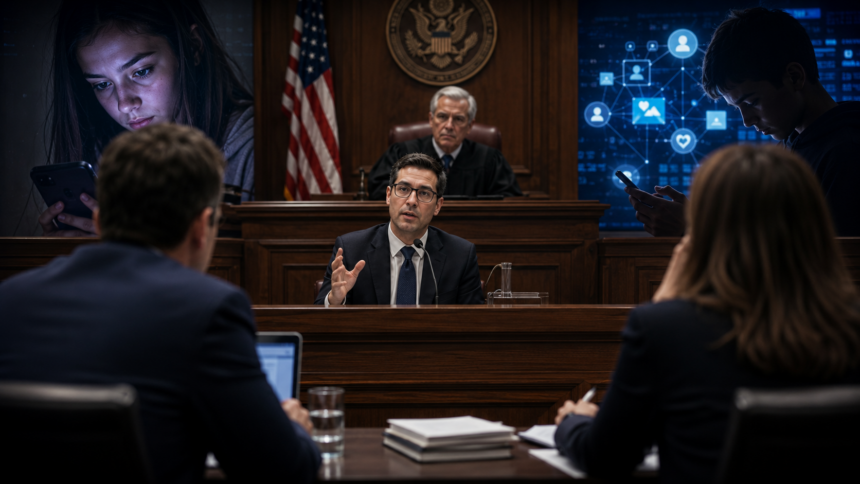
“You just cannot trust Mark Zuckerberg with kids.” That’s a former Meta engineering director, under oath, describing five years of warnings that went nowhere. Meta tried to keep him off the stand. The judge said no.
The article discusses child mental health, online predation, and social media addiction at a legal and policy level.
Arturo Béjar, a former Meta engineering director, took the stand Tuesday and Wednesday in the federal trial TF reported since opening arguments began. As reported in Opening Arguments Begin in the $1.4 Trillion Meta Addiction Trial and States’ Lawyers: Meta Engineered Instagram Like a Casino Machine, the case pits California, Colorado, Kentucky, and New Jersey against Meta in Oakland federal court. Béjar testified that the company operated under a “don’t ask, don’t tell” philosophy toward child safety — repeated internal warnings, briefed to senior leadership, that produced little meaningful action. Meta tried to block him from testifying last week. Judge Yvonne Gonzalez Rogers rejected that motion.
What’s Happening & Why It Matters
What Béjar Saw From Inside
Béjar worked at Meta in product safety across two separate stints — first from 2009 to 2015, then again from 2019 to 2021, when he examined the well-being of teenage Instagram users as an independent contractor. That’s eight years of direct visibility into how Meta’s safety apparatus functioned, not outside speculation. He testified that internal studies documented children encountering harmful material — recommendation algorithms surfacing content from sexual predators, graphic violent images — at elevated rates, and that he raised those findings with Facebook and Instagram executives on multiple occasions.
Those conversations produced little meaningful change, Béjar said. He testified that during his second tenure, Meta substituted the phrase “problematic use” for “addiction” — he characterized as falling short of what the research showed.
The Zuckerberg Confrontation
The most pointed moment came when Béjar disputed a public statement CEO Mark Zuckerberg made in October 2021, following separate allegations from whistleblower Frances Haugen that Meta knew its products were unsafe for children and knew how to fix them, but chose not to in pursuit of higher profits. Zuckerberg had written at the time that it’s “just not true” that Meta prioritizes profit over safety. “Based on my experience at Meta, that is not an accurate statement,” Béjar told the jury. Pressed further, he was blunter still: “It’s so false, every part of it. You just cannot trust Mark Zuckerberg with kids.”
Béjar testified he emailed Zuckerberg to flag his safety concerns. “I didn’t hear back from him,” he said. He described a company where, at almost every turn, choices favored policies that boosted user numbers and revenue over safety — not through any single dramatic decision, but through a consistent pattern of prioritization playing out across years.
Meta Tried Silence the Whistleblower
Meta’s attempt to block Béjar’s testimony is its own significant detail. The company sought to bar him, alleging he deleted Signal messages with former employees — a credibility challenge Judge Gonzalez Rogers rejected before testimony began. Under cross-examination from Meta attorney Brian Stekloff, Béjar acknowledged he was unaware of the specific harm his own teenage daughter would face when he helped her set up an Instagram account — a moment Meta’s defense intended to complicate the whistleblower’s authority on the subject.
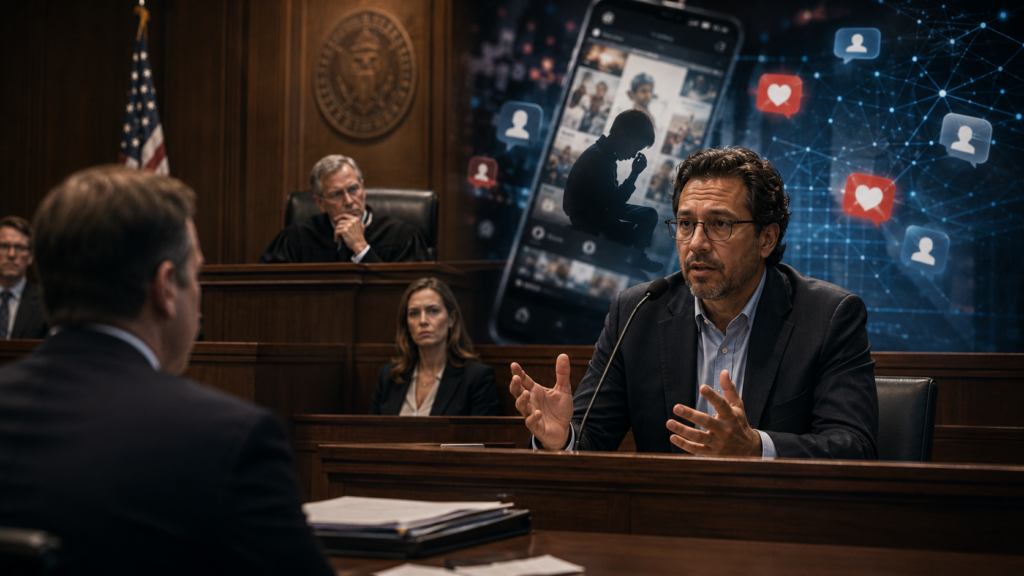
Béjar has testified against Meta in four separate trials, and told a US Senate committee in 2023 that the company was aware of harassment and other harms facing teenagers on its platforms but failed to address them. This isn’t a new critic finding his voice. It’s a repeat witness whose account has remained consistent across multiple legal venues over several years.
What the States Are Asking For
Kentucky Attorney General Russell Coleman has called this “the largest consumer protection lawsuit in American history.” He parsed the states’ strategy in historical terms: “AGs are in the perfect position to get this done. We did it with the tobacco settlement in the 1990s. We did it with the companies behind the opioid crisis. We’ll do it again with Meta.” Plaintiffs are reportedly seeking damages alongside sweeping algorithmic reforms — not just a financial penalty, but structural changes to how Instagram and Facebook’s recommendation systems function for young users.
That reform demand connects to what TF has tracked throughout the trial’s coverage. As covered, Meta’s defense continues pointing to existing safety features — the one-hour Instagram timer, enhanced teen privacy settings — as evidence of good-faith investment. Béjar’s testimony argues the opposite: that those features arrived only after years of internal warnings executives chose not to act on.
TF Summary: What’s Next
Béjar’s testimony continued into a second day, with cross-examination from Meta’s legal team ongoing. The trial is expected to run four to six weeks total, per TF’s earlier coverage. Meta’s own witnesses, including Zuckerberg himself, have yet to take the stand. Tennessee’s parallel case against Meta over similar claims continues separately in Nashville.
MY FORECAST: Expect Béjar’s specific, dated internal knowledge — studies, executive briefings, the unanswered email to Zuckerberg — to become the evidentiary spine the states build the rest of their case around, given how it establishes a documented timeline rather than a general pattern of harm. Meta’s failed attempt to block his testimony will resurface in closing arguments as evidence of a company trying to suppress inconvenient witnesses, not just defend against inconvenient facts. Watch whether Meta calls its own current safety executives to rebut Béjar’s “don’t ask, don’t tell” characterization — that rebuttal, if it comes, will be the clearest signal of how confident Meta is in its defense heading into the trial’s later weeks.
If you or someone you know needs support, please contact the 988 Suicide and Crisis Lifeline by calling or texting 988, or the Samaritans at 116 123 in the UK.
Related Stories
- Opening Arguments Begin in the $1.4 Trillion Meta Addiction Trial
- States’ Lawyers: Meta Engineered Instagram Like a Casino Machine
- Court to Meta: Pay $567M for Children’s Mental Health