


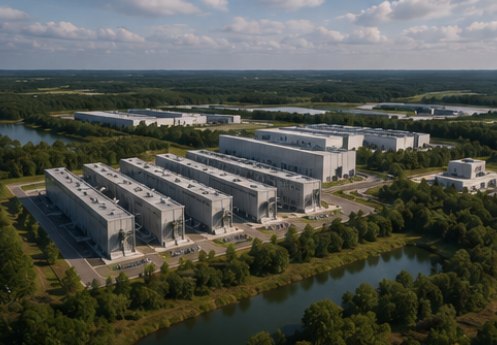
Amazon disclosed its global data centre water consumption for the first time on 11 June. The number is 2.5 billion gallons. Its efficiency is 7x better than the industry average. It returned three gallons for every four it used. And it still hasn’t counted the water used to generate its own electricity.
Amazon’s data centre water consumption disclosure on 11 June 2026 is the company’s first-ever public accounting of its global data centre water use — and it arrives under notable political pressure. Amazon disclosed its 2025 Sustainability Report findings to The Washington Post and sustainability media simultaneously: its data centres withdrew approximately 2.5 billion gallons (9.5 billion litres) of water globally in 2025. That figure covers Amazon‘s entire data centre footprint for the full year. Additionally, Amazon reports this is its first year disclosing the aggregate total — joining Google, Meta, and Microsoft, which have been publishing comparable figures since at least 2020. The disclosure is the same week Seattle passed its unanimous 9-0 data centre moratorium — a coincidence that will not be lost on anyone monitoring Big Tech’s environmental accountability.
What’s Happening & Why It Matters
The Efficiency Case — 7x Better Than Average
Amazon’s data centre water consumption disclosure is structured as an efficiency argument rather than an admission. Amazon measures its water use at 0.12 litres per kilowatt-hour (L/kWh) of electricity in 2025. By contrast, the industry average the company calculated is at 0.84 L/kWh — making Amazon more than seven times more efficient than the average data centre operator. Microsoft‘s most recently reported figure is 0.27 L/kWh — more than twice Amazon‘s rate. Furthermore, Amazon achieved a 52% improvement in water efficiency since 2021 — and cut total withdrawal by 2% from 2024 to 2025 despite adding new capacity. The engineering behind those numbers is specific. Amazon uses air cooling for the majority of the year — reserving evaporative cooling only for the hottest days. The company confirmed it evaporates water less than 10% of the year at most facilities. Air cooling is more energy-intensive. Evaporative cooling uses more water. Amazon has consistently chosen the energy-over-water tradeoff.
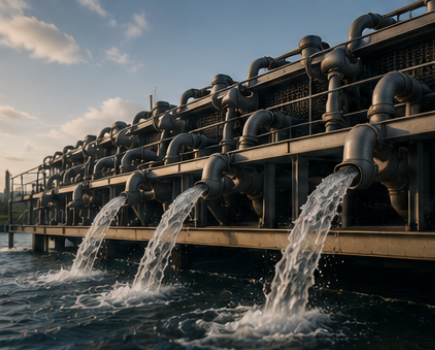
2.5 Billion Gallons — Put in Context
The number requires specific context to interpret fairly. Amazon noted directly that Americans use approximately 3.3 trillion gallons annually to water lawns and gardens — more than 1,300 times its data centre consumption. Amazon‘s 2.5 billion gallons represents roughly 5% of what metro Seattle consumes annually. Additionally, the company reports returning 3 gallons for every 4 it uses through replenishment projects — putting it 75% of the way toward its “water positive” goal by 2030. Amazon has announced more than 50 water replenishment projects expected to return 5.8 billion gallons annually once fully operational.
By contrast, the disclosure carries three specific limitations that independent researchers have noted. First, it excludes colocation sites — third-party facilities providing approximately one-fifth of Amazon‘s total compute in 2024. Second, it excludes the water consumed upstream to generate electricity — which, depending on the energy mix, can dwarf direct cooling water use. Third, the 2.5 billion gallon figure uses Amazon‘s own counting methodology — which includes water routed to wastewater systems, not just evaporative loss. By contrast, most competitors count only evaporation, which inflates Amazon‘s figure relative to peers and complicates direct comparison.
The Seattle Moratorium and What This Disclosure Actually Means
The timing of Amazon‘s first-ever water disclosure is worth examining against the political backdrop. Seattle’s city council passed a unanimous moratorium on new large-scale data centres on 9 June — citing power and water concerns as primary drivers. Amazon disclosed its water figures two days later. The Sustainability Report also states Amazon is expanding its use of recycled wastewater from 20 sites to more than 120 locations by 2030 — preserving over 530 million gallons of drinking water annually in the US.
By contrast, Latitude Media noted a critical historical gap in the disclosure. Amazon published no historical tables. It disclosed no year-by-year trend reaching back to a 2020 baseline. Google, Meta, and Microsoft all publish multi-year comparative data. Amazon‘s first disclosure is a snapshot — useful, but not the longitudinal accountability that community opponents of data centre expansion most need.

The Water-Energy Trade-Off That AI Is Reshaping
The context for Amazon‘s disclosure is the AI infrastructure expansion that is driving water and power demand simultaneously. Amazon is building new data centre capacity at an extraordinary pace — as TF covered in its Choose France article and Delivering the Future announcement. The AI compute demands of AWS are growing faster than any efficiency improvement can offset in absolute terms. Meanwhile, North American data centres consumed approximately one trillion litres of water in 2025 across the industry. Individual efficiency gains are important. At sufficient scale, however, they do not prevent total consumption from rising.
TF Summary: What’s Next
Amazon‘s 2025 Sustainability Report is available through AboutAmazon.com. The company targets water positive status by 2030 — meaning it will replenish more water than it uses. The 50+ replenishment projects currently under development will reach full capacity at different stages through 2030. Historical water use data before 2025 has not been published.
MY FORECAST: Amazon’s data centre water consumption disclosure will produce meaningful transparency — but not as fast as critics want or communities near data centres need. Amazon will publish historical tables in the 2026 Sustainability Report — the absence of prior-year comparisons in this year’s disclosure will generate enough external pressure to make that addition inevitable. By contrast, the more consequential outcome is the policy one. Amazon‘s 0.12 L/kWh efficiency figure gives the company a credible argument against moratoriums like Seattle’s — and it will use it. Communities arguing for data centre pauses on water grounds will be challenged to demonstrate that local impact is severe despite the aggregate efficiency improvement. That is a harder case to make than the raw 2.5 billion gallon headline suggests. That is precisely why Amazon chose today to disclose it.