


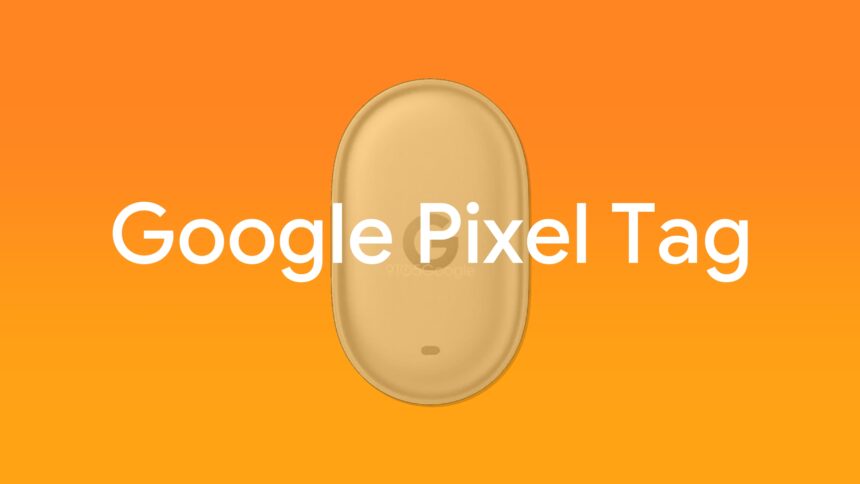
A third of the thickness. Ultra-wideband finding, the feature AirTag has had since 2021. And a billion-device network to search across the moment it’s lost. Google waited five years to answer AirTag. It didn’t come empty-handed.
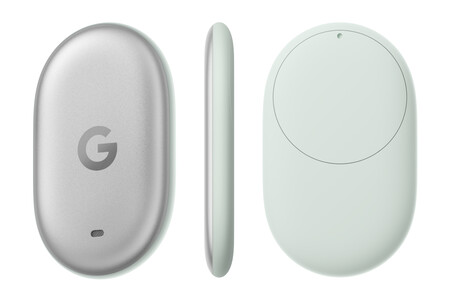
Google unveiled the Pixel Tag at its Made by Google event, answering Apple’s five-year head start in the item-tracker category. The pill-shaped tracker measures 46.1mm by 28mm and just 5.4mm thick — roughly a third slimmer than either the AirTag 2 or Samsung’s Galaxy SmartTag 2, both closer to 8mm. It ships in a single colour, Fog, weighing about 12 grams. Pre-orders open alongside the Pixel 11 lineup, with in-store availability starting August 20 and general sale beginning 11 November at $29, or $99 for a four-pack.
What’s Happening & Why It Matters
The Feature Apple Had All to Itself
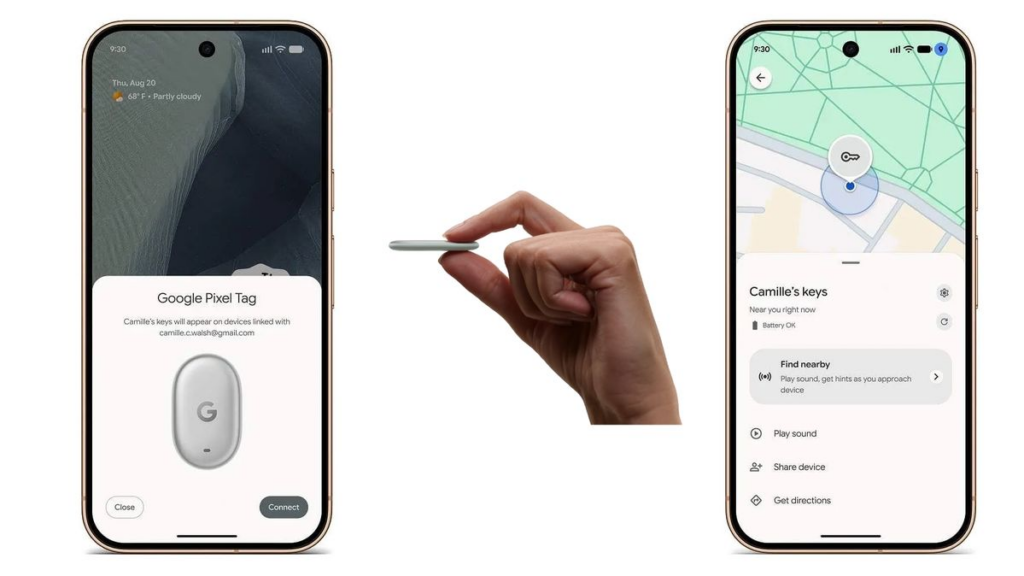
Here’s what makes Pixel Tag more than a me-too product. It combines Bluetooth 6.0 Channel Sounding with ultra-wideband (UWB), giving it two distinct ways to pin down a lost item’s exact location and direction. UWB is the technology that’s let AirTag show you which direction to walk and how many feet away your keys are, rather than a vague “nearby” — no first-party Android tracker has matched it.
Compatibility splits along a specific line, though. The tracker works with any phone running Android 9 or later, so older devices aren’t locked out. But Bluetooth Channel Sounding — the feature enabling those precise distance measurements — only works with Android 16 and Bluetooth 6.0, meaning the full experience is reserved for current hardware.
Plugging Into a Billion-Device Network
Pixel Tag connects to Google‘s Find Hub network, which the company says spans more than a billion Android devices worldwide. That’s the real value proposition, more than the hardware itself. Lose your keys somewhere outside Bluetooth range, and any nearby Android phone running Find Hub can relay the tag’s location back to you — the same crowdsourced-network logic that makes Apple’s Find My so effective at locating an AirTag halfway across a city.
Google built in anti-stalking protections too, designed to alert someone if an unknown tracker appears to be travelling with them over time. That’s a baseline expectation for the category since 2021, after documented cases of AirTags being used to covertly track people without consent — and Google isn’t skipping the safeguard just because it’s the newer entrant.
Pricing
At $29 for a single tag or $99 for four, Google priced Pixel Tag to compete with Apple‘s AirTag, which sells for €35 in Europe — a figure Dealabs reported translates to a matching €34.90 for Pixel Tag on that side of the Atlantic. This isn’t a budget alternative undercutting the market leader. It’s a direct, dollar-for-dollar challenge, banking on thinner hardware and dual-technology tracking to win the comparison on merit rather than price.
One trade-off is worth flagging: unlike AirTag, Pixel Tag has no built-in attachment point. Clip it to your keys or a bag, and you’ll need a separate accessory to do it — a small but real inconvenience Apple’s design solved out of the box.
TF Summary: What’s Next
Pre-orders for Pixel Tag are open through Google‘s standard retail channels. In-store availability begins August 20, with the tracker’s general sale window opening 11 November. Google hasn’t detailed pricing or availability for additional colourways beyond the single Fog option confirmed at launch.
MY FORECAST: Expect Pixel Tag’s UWB-plus-Channel-Sounding combination to be the feature Samsung and other Android tracker makers scramble to match within the next product cycle — Google just set a technical bar neither AirTag 2 nor Galaxy SmartTag 2 currently clears simultaneously. The bigger question is adoption speed. A billion-device Find Hub network sounds enormous, but its practical usefulness depends on how many of those devices are running current Android versions with Channel Sounding enabled. Watch whether Google pushes that update over the next six months — without it, Pixel Tag’s headline feature stays theoretical for a meaningful share of the network it’s supposed to rely on.
Related Stories
- Google Sets Pixel 11 Launch for August 12 — Price Increases Likely
- Snap Specs Cost $2,195 — and Beat Meta, Apple, and Google to Consumer AR
- Third-Party App Stores Are Rolling Out Inside Google Play