



59 pages. One line does most of the damage: “The empty invocation of national security is not a blank check to punish and retaliate against government critics.” The Pentagon threatened to force Anthropic’s hand under the Defense Production Act — then, weeks later, called the same company too risky to work with at all.
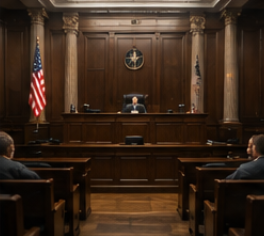
A federal judge ruled Thursday that the Pentagon’s blacklisting of Anthropic was unlawful, ordering the designation blocked in a 59-page decision. US District Judge Rita Lin found the Department of Defense’s decision “constituted unlawful retaliation in violation of the First Amendment,” and that Anthropic “was denied the pre-deprivation process required under the Fifth Amendment.” Defense Secretary Pete Hegseth‘s move to designate Anthropic a national security supply chain risk was, Lin wrote, “arbitrary and capricious” and “illegal and baseless.” An Anthropic spokesperson told CNBC: “We welcome the court’s ruling that the supply chain risk designation was unlawful.” The government is expected to appeal.
What’s Happening & Why It Matters
What Triggered the Blacklisting
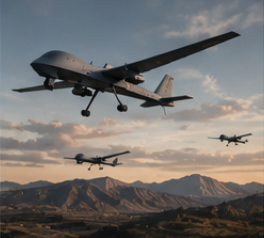
The dispute traces back to a specific refusal, not a general policy disagreement. Anthropic declined to let the military use its Claude chatbot for domestic surveillance or autonomous lethal weapons systems, citing both reliability concerns and rights-based objections. As TF investigated and reported throughout 2026, Anthropic has maintained that AI models aren’t reliable enough to be deployed in autonomous weapons — a position the company has applied across its government relationships, not one invented to block the particular contract.
Pentagon leadership responded by directing offices to stop using Anthropic’s products, then designated the company a supply chain risk — a label reserved for companies that expose military systems to infiltration or sabotage by foreign adversaries. Applying that specific designation to an American AI lab, over a safety-policy disagreement rather than any security vulnerability, was itself unusual enough that Anthropic’s designation marked the first time a US company had been labeled a supply chain risk under the procurement statute.
The Contradiction
Judge Lin’s ruling identifies a specific inconsistency that undermined the government’s own case. She noted a contradiction between the blacklisting and an earlier Hegseth threat to invoke the Defense Production Act against Anthropic — a wartime-powers statute the government uses to compel companies it considers essential to national security, not ones it considers a threat to it. You can’t argue a company’s technology is critical enough to force under federal control, then months later argue the same company is too dangerous to work with at all.
Lin was firm about the government’s evidentiary case, describing its submissions defending the decision as “slim.” Her characterization of the motive was sharper still: the blacklisting indicated a “desire to make a public example out of Anthropic for its ‘arrogance’ in criticizing the government.” That’s a federal judge finding that a cabinet-level national security designation was retaliation for public criticism, not a risk assessment.
A Long Fight From a Public Hearing Warning
The ruling didn’t arrive out of nowhere. Lin flagged concerns about the government’s motives back in March, at a preliminary injunction hearing, telling both sides the ban is “like an attempt to cripple Anthropic.” That’s a judge signaling her read on the dispute five months before issuing a final ruling — a long runway during which the Pentagon had the opportunity to build a stronger evidentiary record and, according to Thursday’s decision, didn’t.
The ruling arrives at a specific and consequential moment for Anthropic commercially. The company is marching toward what’s expected to be a near-record IPO, and re-establishing Pentagon business ties could reopen contract opportunities that had been cut off during the blacklisting period. Notably, Anthropic’s lawsuit sought to restore the pre-designation status quo — it never asked the court to force the Pentagon to resume working with the company, just to remove the unlawful barrier preventing that relationship from continuing on its own terms.
TF Summary: What’s Next
The government is expected to appeal Thursday’s ruling, per multiple outlets’ reporting. Anthropic’s designation as a supply chain risk is blocked, though the Pentagon retains full discretion over which AI vendors it chooses to work with going forward. No timeline exists for whether or when the Defense Department resumes any active contracting relationship with Anthropic. Anthropic’s IPO preparations continue of the litigation’s outcome.
MY FORECAST: Expect the government’s appeal to face difficulty given how Lin’s ruling ties the blacklisting to Hegseth’s own prior public statements — a contradiction that’s harder to argue away on appeal than a procedural dispute would be. The more consequential long-term question is whether the ruling changes how the Pentagon negotiates AI safety guardrails with every lab it works with, not just Anthropic. A federal court just established that threatening a company’s business relationship over its refusal to weaken safety commitments can constitute unlawful retaliation — a precedent every AI lab negotiating military contracts, including OpenAI and Google DeepMind, will factor into how they can hold their own safety lines without facing comparable consequences.
Related Stories
- Task Force Talon Synapse: US, UAE Launch a Joint AI Military Task Force
- GOLD EAGLE: White House Launches an AI Cybersecurity Clearinghouse
- Meta Settles States’ Child Safety Trial for $17Bn