


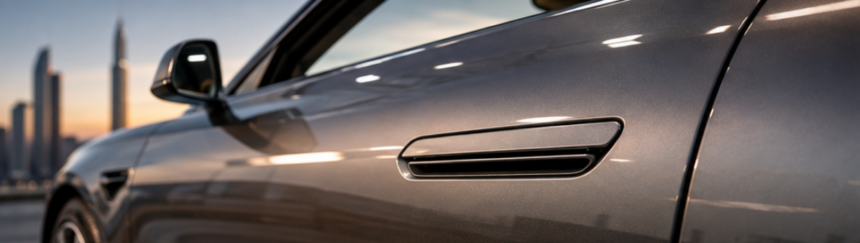
The color matches the interior trim. That’s the entire complaint. In a crash severe enough to kill the low-voltage system, nobody inside — or outside — can find the release. Eleven carmakers, 4.3 million cars, one country’s regulator saying enough.
Tesla is recalling nearly 3 million vehicles in China, the largest single share of a sweeping crackdown affecting 4.3 million cars across 11 automakers. China’s State Administration for Market Regulation announced the action Friday, targeting hidden emergency door releases that “could hinder occupants from opening the doors to escape and impede rescue efforts by those outside the vehicle, posing a safety hazard.” It’s the largest automotive recall in China’s history. Tesla’s share covers imported and China-made Model 3, Model Y, Model S, and Model X vehicles. Xiaomi, Xpeng, and Geely brands Zeekr and Lynk & Co. are also affected.
What’s Happening & Why It Matters
A Door Handle Needed a National Regulator?
The specific complaint is simple, once you read it. Regulators found affected vehicles “have emergency mechanical door handles that are difficult to identify and operate because their color is similar to the interior trim.” That’s the whole problem in one sentence — a backup system that works fine in theory, hidden in a way that defeats the point of having a backup at all.
The failure mode is specific too. In a severe collision that knocks out the vehicle’s low-voltage electrical system, the electronic latch stops responding. That’s when someone needs the manual release most, and when it’s hardest to find — tucked behind a panel, blending into trim nobody’s studying under crash conditions. Rescuers outside the car face the same problem from the other side.
Nine Years of a Design Hits The Wall
Electronic door latches became Tesla’s signature well before the recall — the kind of flush, minimalist handle that pops out with a smartphone tap or an NFC card, no manual pull required. Other automakers followed. The appeal was obvious: cleaner lines, a different tactile experience, a small but real signal that the car runs on different logic than everything that came before it.
China’s regulators reached a different conclusion in February, after a two-year review: hidden, electronically actuated exterior handles will be banned outright on all new models starting in 2027. Friday’s recall is the interim fix for cars already on the road, not the final answer. That answer already exists, and it’s a ban.
Another Round in Tesla vs. China
This isn’t Tesla’s first door-latch recall in China. The company recalled more than 1.6 million vehicles there in 2024 for automatic steering and door latch controls — a different specific defect, same underlying category of concern. In the US, the top automotive safety regulator opened its own investigation into Tesla’s door-latching system late last year, following Bloomberg reporting that put a spotlight on the issue. One US lawmaker has separately proposed legislation requiring manual releases to be “intuitive to use and readily accessible for the occupant” — language that reads like a direct response to exactly what China’s regulator just found wrong with Tesla’s design.
Tesla isn’t alone in facing this specific criticism, either. Rivian customers and employees raised comparable concerns last year about the manual release on the R1, which requires removing a panel and pulling a cord to access. Rivian has since said it will move that release to a more accessible spot on the R2. As part of the China recall, Tesla will push a software update that lowers windows following an accident, and affix warning labels showing where the emergency releases are.
TF Summary: What’s Next
Tesla will update software and add warning labels across the affected 3 million vehicles, with the company covering costs. China’s 2027 ban on hidden electronic exterior handles takes effect for all new models regardless of this recall’s outcome. The US NHTSA investigation into Tesla’s door-latching system, opened last year, continues. No timeline has been confirmed for whether that investigation will produce its own US recall.
MY FORECAST: Expect the US investigation to move faster that China’s regulator has established a documented, government-backed fact pattern — a foreign safety authority naming Tesla’s design a “hazard” gives NHTSA more evidentiary weight than a Bloomberg report alone provided. Watch for the proposed US legislation requiring “intuitive and readily accessible” manual releases to gain momentum this fall, given how China’s recall and ban validate the exact concern that bill was written to address. The design trend — flush, minimalist, electronically-actuated door handles — is entering its final years as a mainstream feature, not because the technology failed, but because the failure mode it creates during a crash is the scenario regulators exist to prevent.
Related Stories
- Tesla Robotaxis Are Now Live in Miami — Rain Is the Real Test
- NHTSA Probes Tesla FSD After Drivers Crashed Into Homes and Pools
- Tesla Debuts Starlink on the Cybercab as Musk Eyes Industry Adoption