


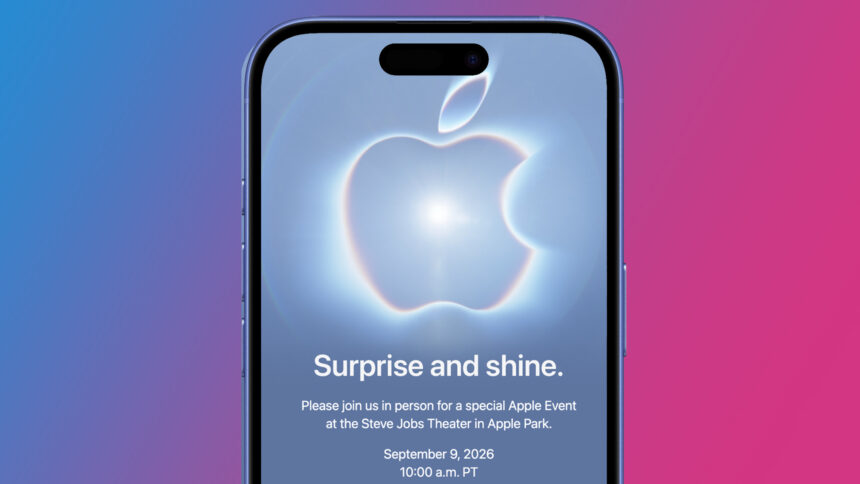
“Surprise and shine,” the invite reads. Touch ID’s coming back — not by choice, but because there’s nowhere to hide a Face ID sensor on a crease-free fold. It’s the first keynote where Tim Cook isn’t the one walking on stage.
Apple confirmed its next iPhone event for Wednesday, 9 September, at 10 am Pacific at Apple Park. Invitations went out Wednesday carrying the tagline “Surprise and shine.” The invites also showed an image of a glowing Apple logo lit from behind. The headline reveal is expected to be Apple’s first foldable device. This device is rumoured to carry the name iPhone Ultra. In fact, it will be the company’s first new iPhone form factor since 2017’s iPhone X. It’s John Ternus‘s first keynote as CEO. This follows Tim Cook’s move to executive chairman effective 1 September.
What’s Happening & Why It Matters
What the Leaks Agree On
Cross-referencing the sources covering the event produces a consistent picture, for once. The iPhone Ultra is expected to use a book-style fold. It will feature an outer display between 5.3 and 5.5 inches and an inner display between 7.6 and 7.8 inches. This is closer in proportion to an iPad mini than to a typical phone screen unfolded. Thickness estimates are around 4.5mm unfolded and 9 to 9.5mm folded. This puts Apple in genuine competition with the thinness Samsung’s Galaxy Z Fold 8 already established.
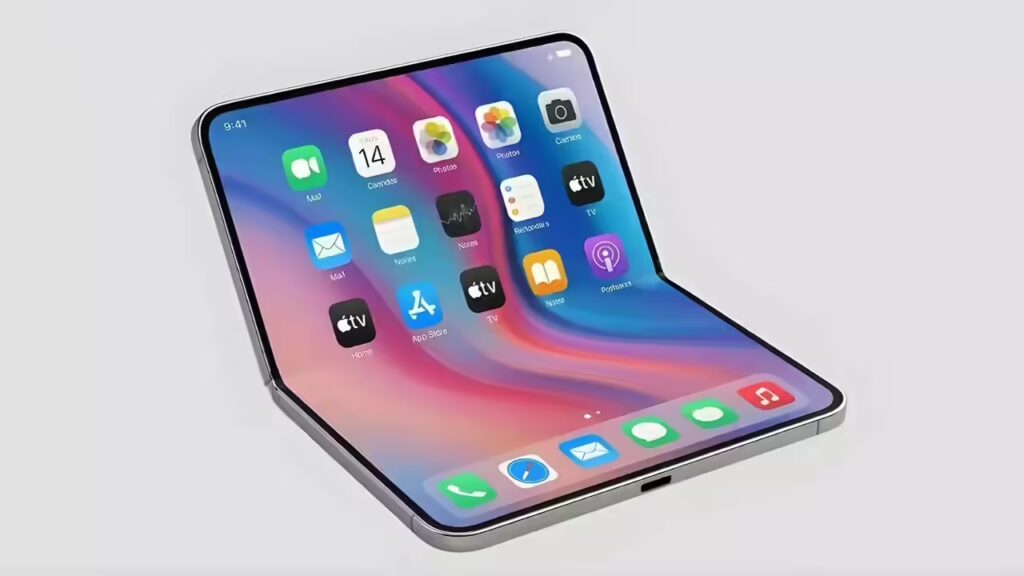
The compromises are specific and telling. Apple is using Touch ID built into the power button rather than Face ID. This choice comes because there’s no space to fit the sensor array on a display engineered to be crease-free. No telephoto lens is expected either. Therefore, both details suggest Apple prioritised the fold mechanism and screen quality over matching every feature from its non-folding flagships, at least for a first-generation device.
The Anticipated Price
Most estimates converge around a $1,999 starting price, with some reports suggesting higher configurations could reach $2,500. That would make the iPhone Ultra Apple’s most expensive iPhone ever by a meaningful margin. That is closer to laptop pricing than phone pricing. Multiple outlets made the comparison without apparent coordination.
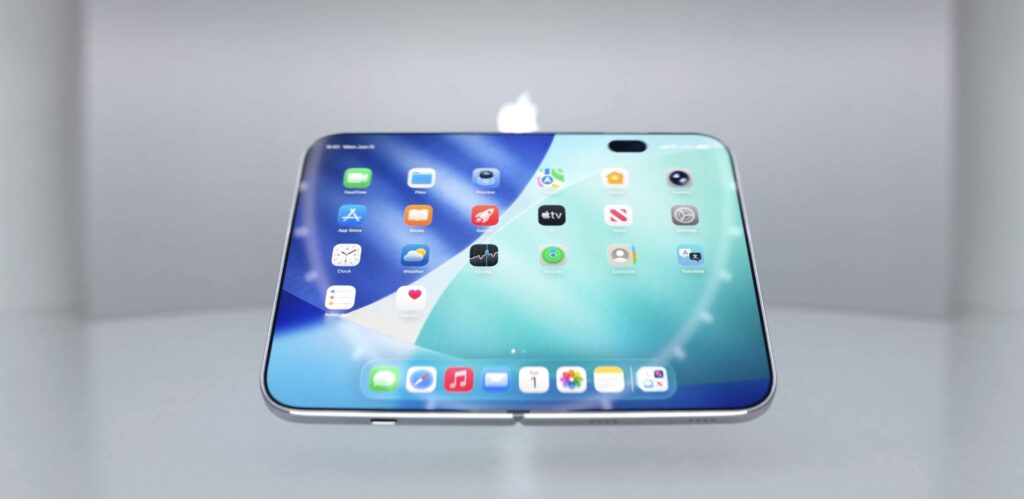
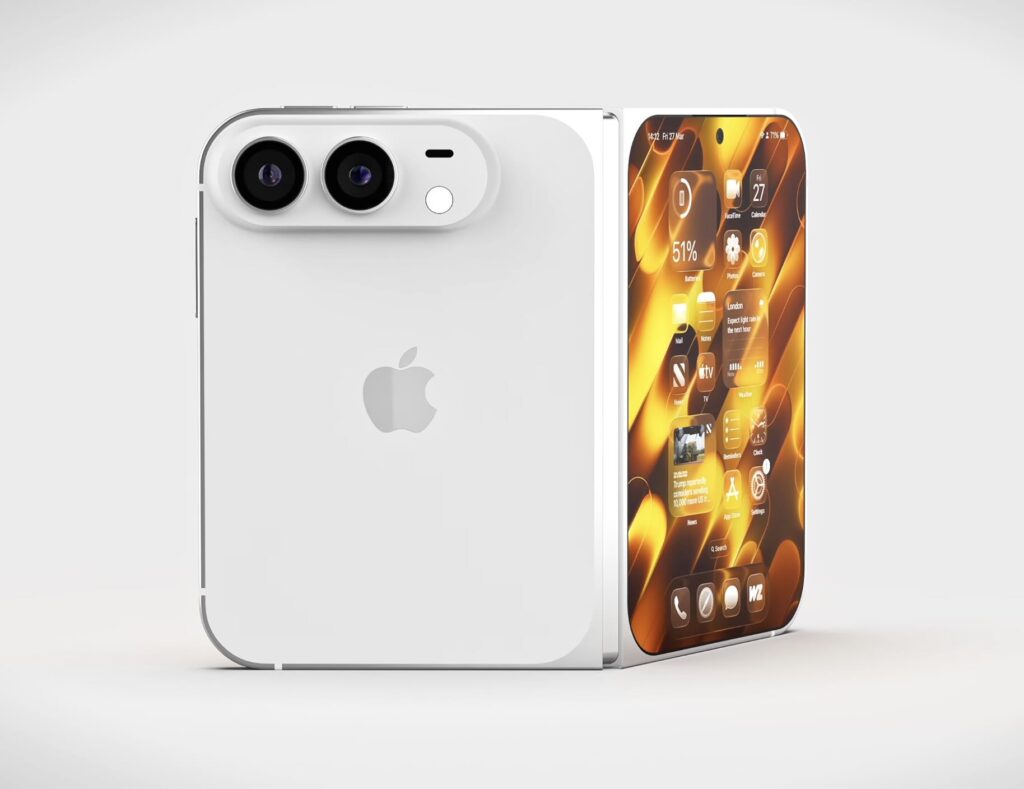
Supply is expected to be tight. First-run production is tipped as very limited, which tracks with Apple’s historical pattern for new form factors. The original Apple Watch and the Vision Pro both launched with supply below initial demand. A phone priced like a laptop, in short supply at launch, is aimed at buyers who’ve already watched Samsung and Google run the foldable experiment for several generations. Whether that’s a cautious debut or Apple hedging its bets on a category it’s watched from the sidelines depends on how the device performs once reviewers get hands-on time.
The Rest of the Lineup Is Boring
Apple is skipping the standard iPhone 18 cycle, pushing it to spring 2027 alongside the iPhone Air 2 and iPhone 18e. September’s event covers only the iPhone 18 Pro, iPhone 18 Pro Max, and the foldable — three premium devices, no budget option. All three are expected to run Apple’s new A20 Pro chip, built on a 2nm process. Tipsters suggest this chip runs up to 18% faster and 30% more power-efficient than the A19 Pro.
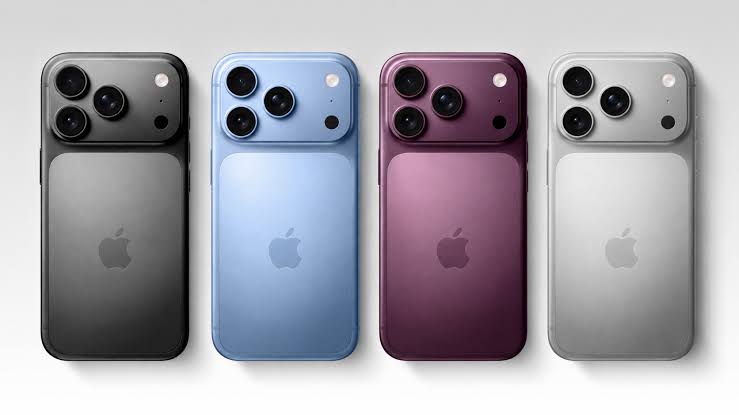
The iPhone 18 Pro and Pro Max are expected to stay close to their predecessors’ designs, with upgrades focused on a variable-aperture main camera, a smaller Dynamic Island, and Apple’s new C2 cellular modem. These are evolutionary changes rather than a redesign. That’s a deliberate contrast strategy. The plan is to keep the Pro line familiar and let the foldable carry the “new” narrative for the event. Rumours point to an Apple Watch Series 12 with a ceramic case, an Apple Watch Ultra 4, and two new AirPods models rounding out the announcement.
TF Summary: What’s Next
The event streams live on Apple’s website and YouTube at 10 am Pacific on 9 September. Pricing, exact specifications, and release dates are unconfirmed until Apple’s own presentation. As TF covered in RAMageddon Hits MacBook Air Supply as Chip Shortage Deepens, the ongoing memory shortage is expected to factor into pricing across the fall lineup. This shortage is likely to impact not just the foldable.
MY FORECAST: Expect the iPhone Ultra’s limited first-run supply to sell out within its opening window regardless of the near-$2,000 starting price. There is genuine novelty from Apple, after a decade without a new form factor. This will draw buyers willing to pay a premium to be first. The Touch ID compromise will draw more criticism than the price does. Face ID has been Apple’s biometric standard since 2017, and reviewers will treat its absence as the device’s most notable limitation rather than a footnote. Watch how Ternus handles his first keynote. A foldable iPhone debut is the kind of high-visibility moment that will shape perception of Apple’s post-Cook leadership, independent of how the device itself performs.
Related Stories
- WWDC 2026: Siri Gets a Brain, macOS Drops Intel, Tim Cook Takes a Bow
- RAMageddon Hits MacBook Air Supply as Chip Shortage Deepens
- Apple Upgrade: Klarna Leasing Program to Replace iPhone Upgrade Program