



Preorders opened 24 June. The base truck starts at $24,950 — stripped down, unpainted, no infotainment, no speakers. From there, buyers can build it into an SUV or load it with 200+ accessories. The cheapest way to an EV truck with actual features? About $29,000. The most capable build? $37,000. Compare that to a Rivian R2.
Slate Auto’s online configurator launch went live on 24 June — the same day the company opened preorders for what is currently the most affordable new electric truck in the United States. The Slate began accepting preorders on June 24, 2026, with deliveries expected to begin in late 2026. Designed around a low starting price of US$24,950, the vehicle uses a simplified design with fewer parts and omits features such as an infotainment system, speakers, and power windows. All vehicles are produced with an unpainted grey plastic exterior and support customisation through accessories and vinyl wraps.
The configurator lets buyers choose from five core build paths — ranging from a bare-minimum truck at $24,950 ($22,975) to a fully-loaded all-terrain build at approximately $37,000 ($34,100) before options. Those figures use the federal EV tax credit of $7,500, which Slate says every buyer qualifies for. By contrast, the base vehicle without the credit starts at $24,950 — still the lowest sticker price on any new EV sold in the US. Asianet NewsableAsianet Newsable
What’s Happening & Why It Matters
The Five Builds. What $25K to $37K Gets You
Slate Auto’s online configurator launch reveals five distinct configuration paths. The first is the Base Truck at $24,950 (€22,000) — the most stripped-down intentional vehicle on the American market. No infotainment screen, speakers, or power windows. Unpainted grey thermoplastic exterior. Two seats. An open truck bed. A range of approximately 150 miles (241 km). For contractors, farmers, or buyers who want to spec every feature themselves, a starting canvas.
The second path is the Lifestyle Truck — approximately $29,000 (€25,580) — adding audio, connectivity, and comfort upgrades. The third is the Worksite Truck — approximately $30,000 (€26,460) — adding bed organizers, tow capability, and durability accessories. The fourth is the Squared SUV — approximately $32,500 (€28,665) — the factory SUV conversion with a squared-off roof and five seats. The fifth is the All-Terrain Build — approximately $37,000 (€32,630) — adding a lift kit, all-terrain tyres, and off-road accessories. All five figures apply the $7,500 federal credit. Without it, add that amount back.
The Customisation Catalogue — 200+ Accessories
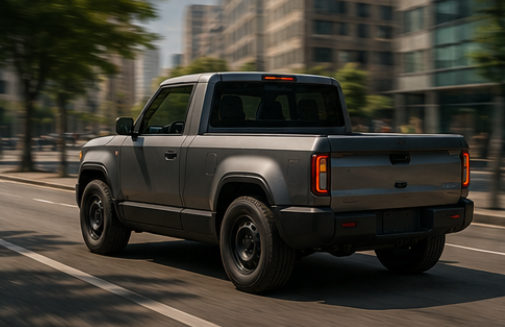
Slate Auto’s online configurator launch reveals a business model that resembles a consumer electronics company as much as an automaker. Nearly every surface in the Slate can get customised, including the headlights, taillights, truck bed, and rims. Buyers can add roof racks, running boards, spare tires, tow hitches, bed organizers, light covers, decals, suspension lift kits, and other exterior accessories.
Slate is taking the same mix-and-match approach inside the cabin. Buyers can choose from seat covers, storage add-ons, floor liners, pet accessories, tech mounts, and small comfort upgrades like a door-mounted front armrest. Additionally, Slate supports customisation through a marketplace offering more than 200 accessories, including vinyl wraps, roof racks, audio systems, seat covers, and light covers. Slate’s new CEO Peter Faricy knows the model well — he previously served as Amazon Marketplace VP. The company he leads operates more like an open platform than a traditional manufacturer.
The SUV Conversion — Factory-Built or DIY
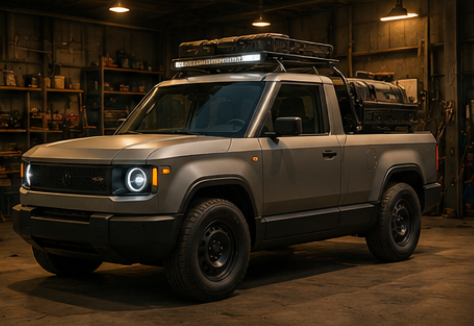
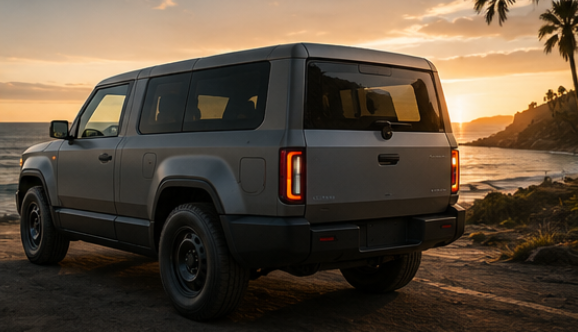
Slate Auto’s online configurator launch includes a feature that no other EV manufacturer offers. The base Slate model is a pickup truck, but can be configured as a 5-seat SUV with a traditional squared-off roof or a fastback roof. While customers can purchase the parts to complete the conversions themselves, in June 2026 the company announced it would offer both SUV designs from the factory.
That factory SUV option eliminates the DIY conversion requirement that was the most common objection in early reviews. Buyers who want an SUV can simply order one. Buyers who prefer the pickup configuration can leave it as a truck — and potentially convert it later if their needs change. Additionally, the company plans to provide repair guides through its Slate U platform and has announced a 10-year/110,000-mile battery and powertrain warranty. That warranty is significantly longer than most EV competitors offer — a commercial signal that Slate is confident in its battery and drivetrain engineering.
The Competition: Rivian R2, Cybertruck, and What Slate Is Not
Slate Auto’s online configurator launch positions the truck against a specific competitive market. The Rivian R2 starts at $45,000 (€39,690) before incentives — approximately $20,000 (€17,640) more than Slate’s base price. The Tesla Cybertruck starts above $60,000 (€52,920). By contrast, those vehicles come fully featured — screens, audio, power everything — with ranges of 250 miles (402 km) or more. Slate’s 150-mile range targets urban and suburban use cases where most trips are under 30 miles (48 km). For highway commuters or towing-heavy users, the Rivian R2 or even the Ford F-150 Lightning are more appropriate.
In May 2025, Slate said it had accepted 100,000 refundable reservations for its truck in the three weeks since it was unveiled. Jay Leno drove a prototype in February 2026 on Jay Leno’s Garage, stating the Slate “is able to do what a lot of electric vehicles can do, just for half the price.” Additionally, MotorTrend reviewed a prototype in June 2026 and called it “pretty much what we were expecting — which is a good thing, as we at MotorTrend have high hopes for this cute, inexpensive electric truck.”
TF Summary: What’s Next
Slate targets deliveries in late 2026. Preorders are open at slate.auto. Slate Auto announced a partnership with RepairPal to provide owners access to a network of approximately 3,000 service locations in the United States, including more than 100 facilities capable of performing high-voltage EV repairs. The company targets cash flow positivity “very shortly after the start of production.” No specific production volume numbers have been announced.
MY FORECAST: Slate Auto’s online configurator launch will generate a strong initial preorder surge — the 100,000 reservation figure from 2025 was compelling, and the configurator makes the price transparency visible that reservations obscured. By contrast, the real test is not preorders. It is whether Slate can execute production at a price point that no EV startup has historically managed without significant losses. Fisker failed. Rivian lost money on every vehicle for years. Tesla took a decade to reach profitability. Slate is attempting to bypass the quality-and-features arms race by offering a canvas, not a finished product. If the accessories business generates sufficient margin alongside vehicle sales, the model could work. The Amazon Marketplace CEO running the company suggests that is exactly the commercial architecture being built. The $7,500 federal tax credit is the mechanism that makes the base price genuinely accessible. Whether Congress preserves that credit through Slate‘s production ramp is the single largest risk the company’s financial model cannot control.
Related Stories
- Waymo Recalls 3,871 Robotaxis — the Third Major Recall in 14 Months
- 2027 Audi Q7 and SQ7 Revealed: 591 HP, 3.7 Seconds, No Hybrid
- NHTSA Probes Tesla FSD After Drivers Crashed Into Homes and Pools