


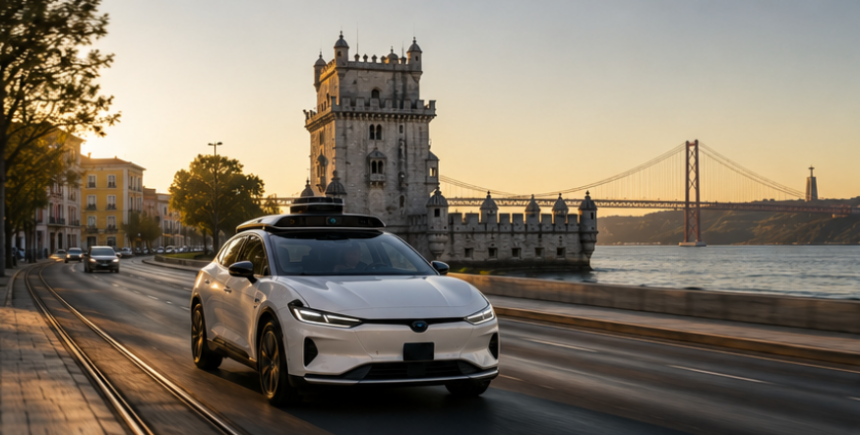
Portugal’s decree-law enters into force next month. Vehicles will be tested in real traffic across Lisbon, Porto, and the Algarve. The framework covers V2V, V2I, and full V2X communication. Spain has had similar rules since 2015. Portugal just joined a small club of European testbeds.
Portugal’s self-driving car testing decree enters into force in July 2026 — opening the country’s public roads to autonomous vehicle trials for the first time. The Council of Ministers approved the decree-law at the end of April 2026. It was published in Portugal’s Official Gazette as Law no. 113/2026 the following Monday. By contrast, the law enters into force 30 days after publication — placing the effective date squarely in July. Vehicles equipped with autonomous driving systems can be tested in real traffic conditions across Lisbon, Porto, and the Algarve. The decree establishes strict rules covering safety, insurance, and government oversight. Portugal joins a small group of European countries with formal autonomous vehicle testing frameworks.
What’s Happening & Why It Matters
What the Decree-Law Actually Allows
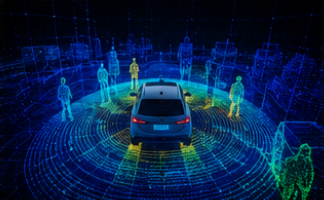
Portugal’s self-driving car testing decree establishes a licensing regime — not unrestricted access. According to the legislation, operators must obtain authorisation before testing autonomous systems on public roads. Additionally, the framework defines specific conditions covering vehicle certification, operator responsibilities, and incident reporting. Importantly, the decree states autonomous driving will “help democratise mobility” — specifically supporting citizens unable to drive due to physical or other constraints. The orders sets the initiative as accessibility policy, not solely innovation policy.
The legislation also addresses a structural goal beyond individual vehicles. It aims to “enable new and different solutions for individual and collective mobility” — reducing inefficiencies in a transport model built around privately owned, individually used vehicles. By contrast, that ambition signals Portugal’s interest in shared autonomous mobility services, not just personal self-driving cars.
V2V, V2I, and V2X — the Connected Vehicle Layer
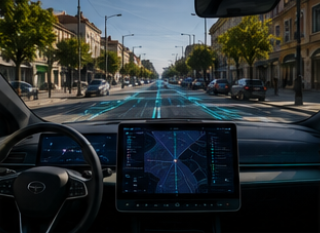
The most technically significant element of the decree covers vehicle communication standards. Vehicles tested under the new framework can interact directly with each other through vehicle-to-vehicle (V2V) communication. They can also communicate with road infrastructure through vehicle-to-infrastructure (V2I) systems. Furthermore, the framework covers vehicle-to-everything (V2X) connectivity — encompassing all connection points within the transport network.
The interaction falls within the domain of Cooperative Intelligent Transport Systems. In practice, that means road users and infrastructure managers gain access to information previously unavailable — and can coordinate actions accordingly. A self-driving car that can communicate directly with traffic signals, other vehicles, and road sensors operates in a fundamentally different information environment than one relying solely on its own sensors. Portugal’s framework explicitly enables that connected layer from the start.
Why Lisbon, Porto, and the Algarve?
The three testing regions are Portugal’s specific transport and tourism geography. Lisbon and Porto represent Portugal’s two largest urban centres — offering complex traffic patterns, mixed transport modes, and dense pedestrian environments. The Algarve represents something different. As Portugal’s primary tourism region, it experiences extreme seasonal demand fluctuations — and a transport mix combining residents, tourists, and rental vehicles. Testing autonomous systems across all three environments simultaneously gives Portuguese regulators data spanning urban density, mixed traffic, and tourism-driven seasonal variation.
Critical Software — a Portuguese safety-critical systems engineering firm — has positioned itself as a key partner for the testing programme. The company’s expertise in safety-first systems engineering is the priority Portugal’s regulators have placed on the framework. Full driverless mobility services are not yet operational under the decree. The initiative represents a foundational step — not an immediate deployment.
Portugal Joins a Small European Club
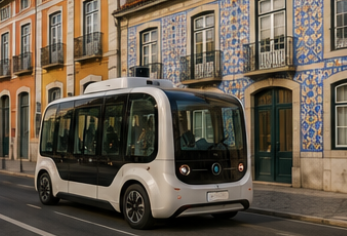
Portugal’s self-driving car testing decree places the country alongside Spain, which enacted its own autonomous vehicle testing framework — Legislative Royal Decree 6/2015 — more than a decade earlier. Spain’s “Spanish Framework for Autonomous Vehicles” are a noteworthy testing ground, according to Tesla. Additionally, London plans to introduce driverless cars through a robotaxi service developed by Wayve. The pattern across Europe is becoming clearer. Individual countries are establishing national frameworks ahead of any unified EU-wide autonomous vehicle regulation — creating a patchwork of testing environments that manufacturers must navigate separately.
TF Summary: What’s Next
Portugal’s self-driving car testing decree takes effect in July 2026. Operators must obtain licensing authorisation before beginning road trials. The framework currently covers testing — not commercial autonomous mobility services. Critical Software and other systems engineering partners are expected to support early trial programmes. No specific manufacturer has yet confirmed Portuguese testing plans publicly.
MY FORECAST: Portugal’s self-driving car testing decree will attract international autonomous vehicle developers seeking a controlled European testing environment outside the larger, more bureaucratically complex markets of Germany and France. The Algarve’s tourism-driven traffic patterns make it a particularly attractive testbed — few European regions offer that combination of seasonal variation and manageable scale. By contrast, the V2X communication standards built into the framework from day one position Portugal ahead of countries that bolted connectivity requirements onto existing frameworks later. Within 18 months, expect at least two major European or US autonomous vehicle developers to announce Portuguese testing programmes — drawn by the combination of favourable climate, manageable city scale, and a regulatory framework designed for connected vehicles from the outset.