


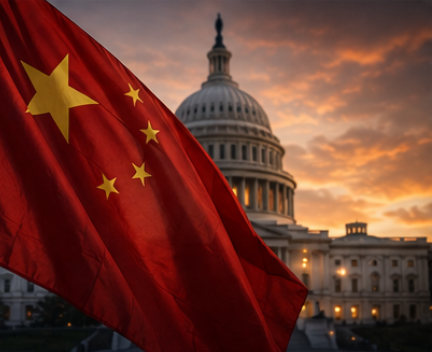
The Pentagon’s Chinese military company list now covers 188 firms — up from 134 last year. Alibaba, BYD, and Baidu just joined it. None of them are military companies, say all three. The list says otherwise.
The Pentagon’s Chinese military company blacklist expanded to 188 entities on 9 June 2026 — and the additions shocked markets worldwide. The US Department of Defense added Alibaba, BYD, and Baidu to its annual list of Chinese companies deemed linked to the People’s Liberation Army. The Pentagon also added Unitree Robotics and RoboSense Technology. The list grew by 54 companies in a single year. That is not a minor update. It is a systematic expansion into China’s most commercially prominent civilian technology sector. All three named companies pushed back immediately. Alibaba called it baseless. Baidu called it “entirely baseless.” Neither “baseless” matched the legal consequences — but the designations carry real commercial risk regardless.
What’s Happening & Why It Matters
What the Blacklist Does — and What It Doesn’t
The Pentagon’s Chinese military company blacklist is frequently misunderstood. It is not a sanctions list. Companies named on it do not face immediate US Treasury penalties. Their shares remain tradeable on US exchanges. US citizens can still transact with them. By contrast, the designation carries two concrete consequences. First, US government agencies cannot procure goods or services from listed companies. Second, the designation signals to US investors, partners, and banks that these companies carry heightened risk in any US national security context. Over time, that signal creates commercial friction — even without formal sanctions. Additionally, the list functions as a precursor. Companies added here have sometimes faced subsequent escalation — export controls, investment restrictions, or full sanctions. The signal matters more than the immediate restriction.
Alibaba, Baidu, and BYD: The Pushback
All three companies denied the designation’s premise. Alibaba stated: “Alibaba is not a Chinese military company nor part of any military-civil fusion strategy. We will take all available legal action against attempts to misrepresent our company.” Baidu described its inclusion as having “no credible justification.” Its CFO confirmed: “We will not hesitate to use all options available to us to have the company removed from the list.” BYD did not immediately respond.
By contrast, the Pentagon stated that both BYD and Baidu are affiliated with a ministry overseeing China’s technology and industrial policies. Alibaba‘s cloud and AI infrastructure capabilities are the probable trigger for its designation. China’s military-civil fusion strategy — which Beijing formally pursues — does not require companies to be military-owned. It requires them to be capable of dual-use contribution. That is the Pentagon’s legal standard — and it is deliberately broad.
The Beijing Summit Context: Timing Matters
The timing of the blacklist update is conspicuous. It arrives less than a month after President Trump met Xi Jinping in Beijing — as TF covered in its Trump-Xi summit article. That summit generated headlines about AI chips, rare earths, and commercial cooperation. The blacklist expansion suggests a different track is running simultaneously. Trade diplomacy at the summit level does not prevent the Pentagon from updating its annual security assessments. Both things can be true at once — and both are. China’s Embassy in Washington described the designation as “discriminatory.” Beijing’s formal response will shape the next round of bilateral technology discussions.
Unitree Robotics: The TF Connection
Among the new additions, Unitree Robotics is the name TF readers will recognise immediately. As TF covered in its ‘The Humans Are Dead’ #3 article, Unitree launched the world’s first production-ready manned mecha robot — the GD01 — in May 2026. The company shipped more than 5,500 humanoid robots in 2025 and is preparing a Shanghai STAR Market IPO. Unitree’s designation reflects a specific concern. Its humanoid and quadruped robots are dual-use by design. The same mobility platform used in theme parks and rescue operations could support military logistics or autonomous weapons research.
TF Summary: What’s Next
Alibaba and Baidu have both signalled legal challenges to their designations. Neither US government procurement changes nor sanctions take effect automatically. Both companies remain listed on US exchanges. China’s official response — through diplomatic channels and potential retaliatory measures — is expected within days. The next bilateral US-China technology dialogue will need to address the blacklist expansion directly.
MY FORECAST: The Pentagon’s Chinese military company blacklist will continue expanding annually — and the commercial impact will outpace the formal legal consequences. Alibaba, Baidu, and BYD will mount legal challenges through US courts. Those challenges will take years and will likely fail — the Pentagon’s broad dual-use standard is legally defensible. In the meantime, US institutional investors will quietly reduce exposure to all three companies to avoid reputational and compliance risk. That quiet de-risking will cost all three companies more in market capitalisation than any formal sanction would have generated in direct penalties. The blacklist is designed to create exactly that outcome — without requiring the political cost of formal sanctions.