



“Not a piggybank.” Trump invoked Section 301 — the same legal authority the Supreme Court struck down once already this year — to open a formal trade investigation into the EU one day after Brussels fined Google. He wants the penalty “entirely reversed.” The EU’s response: a new 10% tariff on European goods just took effect anyway.
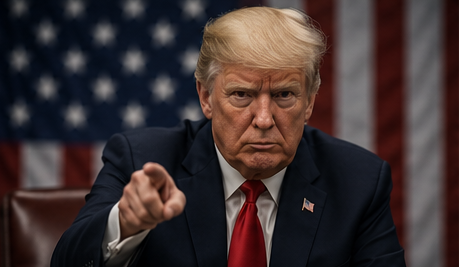
Trump’s EU trade investigation over the Google fine was announced — one day after the European Commission fined Google €890 million ($1 billion) for breaching the Digital Markets Act, as TF covered in detail in its Google DMA fine article. President Trump posted on Truth Social that the US would launch a trade investigation “into the practice of ‘ROBBING’ American Companies and, in turn, the American Taxpayer.” He invoked Section 301 of the Trade Act — his preferred legal authority for reinstating tariffs after the Supreme Court struck down his earlier “Liberation Day” duties this year. “The penalties will be entirely reversed and, we anticipate, a substantial TARIFF to be placed on them at the earliest possible moment,” Trump wrote. “The United States of America is not a ‘PIGGYBANK’ for Europe, nor will we allow it to be!”
What’s Happening & Why It Matters
Why Section 301 Is Trump’s Go-To Legal Recourse
Trump’s EU trade investigation over the Google fine relies on a specific statute central to his tariff strategy. Section 301 of the Trade Act of 1974 allows the US to penalise foreign countries engaged in acts deemed “unjustifiable” or “unreasonable,” or that burden US commerce. Authority matters more than usual. The Supreme Court struck down the legal basis Trump had used to justify his earlier sweeping “Liberation Day” tariffs. This forced the administration to search for legally durable alternatives. Section 301 is that alternative — a mechanism his administration is using to rebuild tariff authority the Court removed.
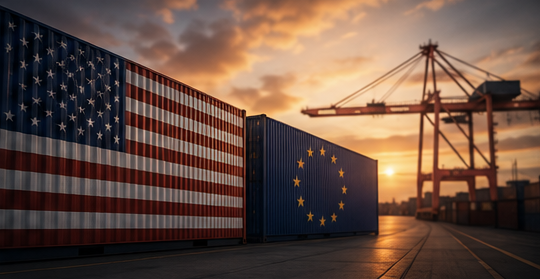
By contrast, the timing carries irony. The EU said on the same Friday that a new 10% tariff rate the US will levy on EU trade would be “all-inclusive” — meaning European businesses will pay a lower effective rate than under the stopgap blanket tariff it replaces. The US has announced tariffs between 10% and 12.5% across 80 countries. The tariffs are part of the trade framework the two sides negotiated. Moreover, Trump’s Google-fine retaliation threat is on top of an already-shifting tariff structure. Both sides had, until Friday, appeared to be stabilising the structure.
Not Google’s First Fine

Trump’s EU trade investigation over the Google fine follows an established pattern that TF has documented across multiple EU enforcement actions. Trump made a nearly identical threat in September 2025. That was when the Commission fined Google €2.95 billion over anti-competitive adtech practices — as TF covered in its earlier Google EU antitrust appeal article, that case originated from a complaint by the European Publishers Council. At the time, Trump called the fine “unfair” and “discriminatory.” He told reporters he would raise the case with Brussels and threatened the same Section 301 mechanism he has formally invoked now.
Trump bolstered his complaint beyond Google. His Friday statement railed against prior EU penalties against Apple, Meta, and Amazon as well. He rated the Google fine as the latest instance he characterises as systematic targeting of American technology companies. He does not treat it as an isolated enforcement decision.
Feeding the Political Narrative
Trump’s EU trade investigation over the Google fine draws direct support from language Google itself used when criticising the DMA ruling. As TF covered, Google’s president of global affairs Kent Walker argued the required compliance changes would force the company to “strip away real-time Search features Europeans love” and “dismantle safety protections on Google Play.” The view — compliance as consumer harm rather than competitive remedy — gives Trump’s political argument a corporate ally making a similar case. Even though Google has not endorsed the tariff threat itself, this alignment strengthens his position.
The Commission, for its part, has shown no sign of backing down under the pressure. Officials warned of “stronger remedies,” including potential divestitures, if Google fails to address its underlying conflicts of interest. This is language from the September adtech case. It signals Brussels views continued non-compliance as grounds for escalation, not retreat, regardless of Washington’s response.
TF Summary: What’s Next

The formal Section 301 investigation proceeds through standard US Trade Representative processes, with no confirmed timeline for its conclusion. Google has 60 days from the DMA ruling to bring its Search and Play Store practices into compliance, per TF’s earlier coverage. The EU’s new 10% “all-inclusive” tariff rate on American goods takes effect independently of the dispute. Trump has followed through on some tariff threats against major trading partners. Yet, he has retreated from others.
MY FORECAST: Trump’s EU trade investigation over the Google fine will not produce the Google fine reversal Trump is demanding — the Commission has never withdrawn a DMA or antitrust penalty under US political pressure. Doing so now would undermine the non-compliance enforcement mechanism TF covered in detail in Google’s original fine. By contrast, the Section 301 investigation itself will likely produce some form of retaliatory tariff, given Trump’s consistent pattern of following through on at least a portion of his trade threats once announced. The risk is escalation into a tech-specific trade dispute. Thus, every future EU fine against Apple, Meta, or Amazon carries the built-in expectation of an equivalent Trump response. Routine DMA enforcement may become a recurring flashpoint in the US-EU trade relationship, rather than a contained regulatory effect.
Related Stories
- EU Fines Google €890 Million for Favouring Its Own Apps
- Google Loses Its Appeal Against a Record €4.1 Billion EU Fine
- EU Orders Google to Open Android to Rival AI Assistants