


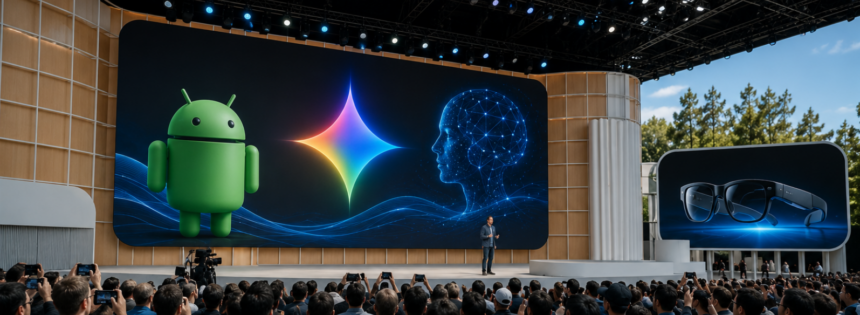
Google I/O 2026 delivered product and development announcements on 19 May at the Shoreline Amphitheatre in Mountain View — and the volume of what Google revealed in a single keynote is genuinely astounding. Gemini 3.5 Flash is live today. Omni — Google‘s answer to Sora — is rolling out now. Gemini Spark is a personal agent that acts on your behalf across Gmail, Docs, and third-party tools. Samsung smart glasses with Android XR are coming without a built-in display. A universal shopping cart lets you buy from multiple retailers in one checkout. And a new laptop category called Googlebook puts Gemini at the hardware level. Across all of it, Google is executing a single strategic bet — that the shift from AI assistants that answer questions to AI agents that complete tasks is the defining product transition of the next three years.
What’s Happening & Why It Matters
Gemini 3.5 Flash: Faster Than Everything Else
Google launched Gemini 3.5 Flash at I/O 2026 as its primary new model — and the performance numbers are striking. Gemini 3.5 Flash outperforms Gemini 3.1 Pro across almost all benchmarks. It runs four times faster than comparable frontier models in output tokens per second. At the same time, it is designed specifically for agentic workflows — tasks that require reasoning, tool use, and multi-step execution rather than single-turn responses. The model is live today in the Gemini app, Google Search, Antigravity 2.0, and the Gemini API.

By contrast, Gemini 3.5 Pro is still in testing. Google confirmed it will be available next month. That orientation — Flash now, Pro in June — keeps the developer ecosystem productive while the more capable model finalises. 3.5 Flash’s combination of speed and agentic capability makes it the most practically useful model Google has shipped for real-world application development.
Gemini Omni: Google’s Answer to Sora
Gemini Omni is the announcement that directly addresses the video generation gap Google has faced since OpenAI launched Sora. Omni accepts image, audio, video, and text input — and outputs video grounded in real-world knowledge that is easily editable. That editability is the key differentiator. Sora and competing video generation tools produce outputs. Gemini Omni produces outputs that users can then refine. That iterative workflow aligns with how creative professionals actually work.
Gemini Omni rolls out today to AI Plus, Pro, and Ultra subscribers through the Gemini app, Google Flow, and YouTube Shorts. The breadth of that rollout — particularly the YouTube Shorts integration — signals Google‘s intent to make AI-generated video a mainstream creative tool for the platform’s 2.5 billion monthly users, not just a professional studio feature.
Gemini Spark: Your Personal Agent Is Here

Gemini Spark is the most consequential consumer product Google launched at I/O 2026. Google described the shift plainly. “Spark represents a big shift for Gemini, transforming it from an assistant that can answer your questions into an active partner that does real work on your behalf and under your direction.” Spark integrates initially with Gmail, Google Docs, and other Workspace apps. It expands to third-party tools via the Model Context Protocol (MCP) over the summer.
Spark is available next week to Google AI Ultra subscribers in the United States first. That phased rollout follows Google‘s pattern of using its highest-tier subscription as the early access channel. Beyond Spark, Google announced Daily Brief — a personalised morning digest generated from Gmail, Calendar, and Tasks — and Gmail Live, which lets users search their emails conversationally. Both roll out to AI Pro and Ultra subscribers in the US this summer.
Android XR and Samsung Smart Glasses Without a Display
One of I/O 2026’s most interesting hardware announcements was Google’s confirmation of Samsung’s smart glasses. The Samsung XR glasses — built on Android XR — are coming without a built-in display. That is a deliberate design choice. Rather than competing with Meta Ray-Ban glasses or Apple Vision Pro directly, Samsung and Google have chosen a lighter, display-free form factor that prioritises audio, cameras, and AI integration over visual overlay.
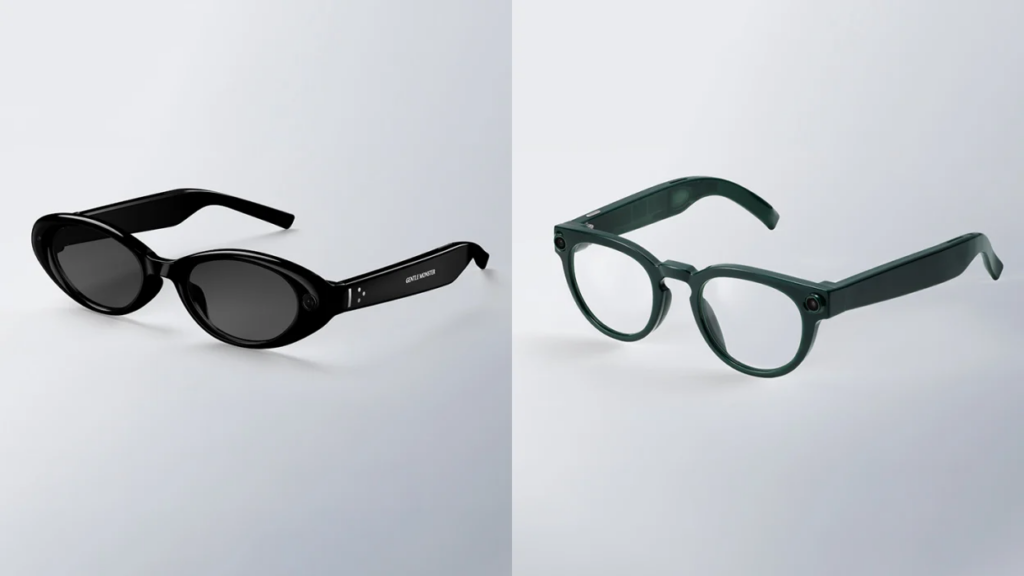
The glasses run Gemini natively. They offer always-on AI assistance, real-time translation, and contextual awareness through cameras — without the weight and battery constraints of a built-in display. That trade-off positions them as everyday wearables rather than immersive computing devices. Google did not confirm a release date at I/O. The announcement serves as a platform preview, establishing Android XR’s glasses strategy ahead of future hardware launches.
The Universal Shopping Cart: Solving a Real Problem
Google‘s Universal Cart is quietly one of the most commercially significant announcements at I/O 2026. The feature lets users add products from multiple retailers to a single cart and complete a unified checkout. That removes the single largest friction point in comparison shopping — the requirement to create accounts and enter payment details separately across every retail site. The Universal Cart works through Chrome and integrates with Google Pay. Google built it specifically to address a documented pattern in consumer behaviour. Shoppers regularly abandon multi-retailer purchases precisely because the checkout process across different sites is too complicated.
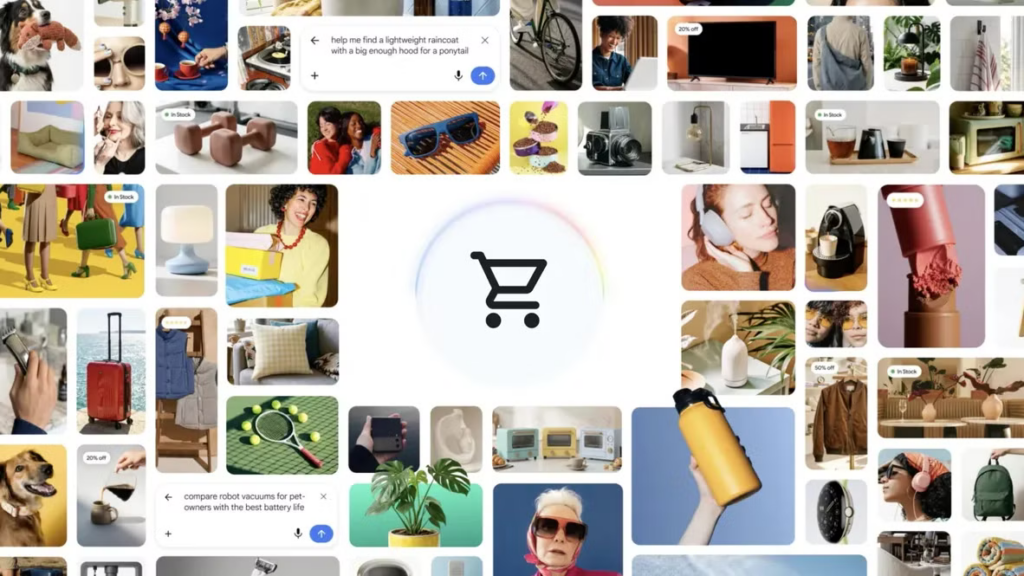
The feature also serves Google‘s commercial interests directly. By centralising checkout, Google positions itself as an essential layer in the shopping transaction — generating data, driving ad value, and creating a product reason to use Chrome over competing browsers. That combination of genuine user utility and commercial self-interest is the same dynamic that made Google Maps a dominant navigation product.
Googlebook: A New Laptop Category Built on Android
Google introduced Googlebook at I/O 2026 — described as “premium hardware built with Gemini at the core that works seamlessly with your devices.” Googlebook is not a Chromebook iteration. It is a new product category: an Android-powered laptop with deep Gemini integration, cross-device features, and a design positioned at the premium end of the market.
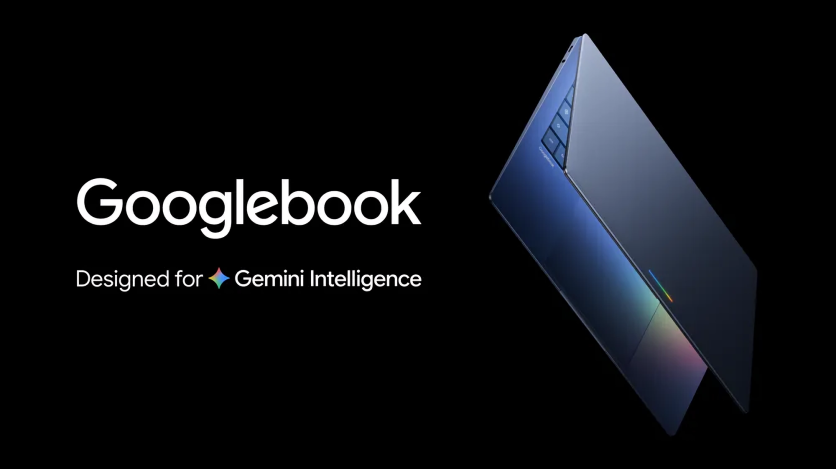
No pricing or specific hardware specs were announced at the keynote. The reveal was a category-level announcement rather than a product launch. By contrast, the “premium hardware” — signals Google‘s intent to compete more directly with Apple’s MacBook line than Chromebooks have historically.
Antigravity 2.0: Developer Platform for the Agent Era
For developers, the most significant I/O 2026 announcement may be Antigravity 2.0 — Google‘s agent-first development platform. The updated platform lets developers spin up specialised sub-agents to tackle complex workflows. Cross-platform terminal sandboxing, credential masking, and hardened Git policies are built in. Managed Agents in the Gemini API remove infrastructure setup entirely — a single API call provisions a fully functioning agent with a remote sandbox. Beyond that, a new Android Studio migration agent converts React Native, web framework, and iOS code to native Kotlin Android apps. Tasks that previously took weeks are completed in hours.
Additionally, Google announced WebMCP — a proposed open web standard allowing AI agents to execute complex tasks within browsers. The experimental WebMCP origin trial starts in Chrome 149. Google AI Studio now supports native Kotlin for Android vibe coding, one-click Cloud Run deployment, and Firebase integration. The AI Ultra subscription — now starting at $100 per month — provides five times the usage limits of the Pro plan in Antigravity.
Search, SynthID, and Content Verification
Google expanded SynthID verification beyond the Gemini app to Search and Chrome. C2PA Content Credentials support lets users verify whether an image is an unaltered original or has been modified by AI tools. That verification layer addresses a genuine consumer trust problem — as AI-generated content proliferates, distinguishing authentic photographs from synthetic imagery becomes increasingly difficult. Google‘s decision to embed that verification directly in Search and Chrome gives it the broadest possible distribution across the web browsing population.
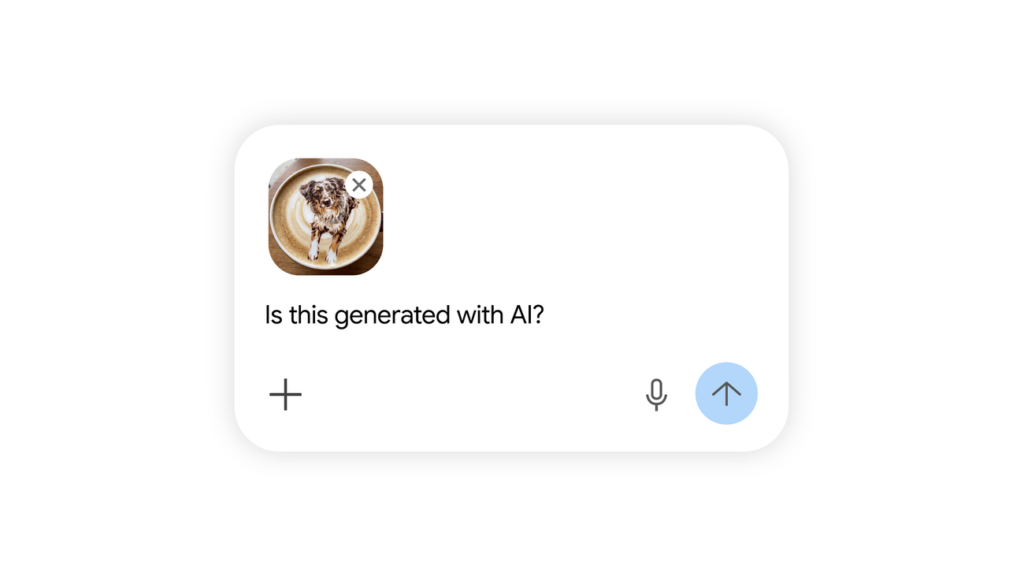
At the same time, Ask YouTube handles complex search queries and follow-ups within the YouTube catalogue — returning structured, interactive responses rather than a simple video list. The feature is currently available to Premium subscribers in the US via the new YouTube interface. Beyond that, a new Neural Expressive design language arrived in the Gemini app — featuring fluid animations, vibrant colours, haptic feedback, and a redesigned navigation drawer.
TF Summary: What’s Next
Gemini 3.5 Flash is available now across the Gemini app, Search, Antigravity 2.0, and the API. Spark reaches AI Ultra subscribers in the US next week. 3.5 Pro arrives next month. Omni rolls out today to AI Plus, Pro, and Ultra subscribers. Daily Brief, Gmail Live, and Docs Live arrive this summer for AI Pro and Ultra subscribers. The Antigravity 2.0 desktop app is available today. WebMCP launches as an origin trial in Chrome 149. Googlebook hardware specs and release dates are expected at a separate event later in 2026.
MY FORECAST: Google I/O 2026 announcements confirm that Google has closed the product narrative gap with OpenAI more decisively than at any prior I/O. Gemini Omni directly competes with Sora. Gemini Spark directly competes with Operator and Codex. Antigravity 2.0 directly competes with Cursor and Claude Code. The Universal Cart is the most underrated announcement — it will quietly capture a significant share of e-commerce transaction data that currently flows through individual retailers and comparison sites. By Q4 2026, Google AI Ultra’s subscriber base will grow materially — driven by Spark access and Antigravity usage limits. The Googlebook category, however, will take longer than expected to gain traction. Android on a premium laptop has failed before. Gemini integration is a genuine differentiator. Whether it is sufficient to change consumer laptop purchasing behaviour against Apple and Microsoft is a harder question. That answer arrives in 2027.