



Five prominent U.S. Senators introduced a landmark bill to ban members of Congress from participating in prediction markets. The legislative measures followed reports of political candidates actively betting on their own election results. The bipartisan group, led by Senator Jeff Merkley, raised concerns about the integrity of democratic processes. They argued that financial incentives could distort public servants’ focus. Historically, Capitol Hill faced criticism over stock trading. The rise of decentralized platforms like Polymarket has forced a new regulatory confrontation.
The proposed Ban on Congressional Gambling Act specifically targets the intersection of legislative power and speculative betting. Lawmakers previously enjoyed a relatively unregulated environment regarding these emerging fintech tools. However, the recent surge in election-related betting volume, which reached over $2 billion (€1.84 billion) globally, triggered this defensive posture. The senators aimed to prevent even the appearance of a conflict of interest. Consequently, the bill seeks to preserve public trust in the finality and fairness of American elections.
What’s Happening & Why This Matters
The Crackdown on Political Wagering
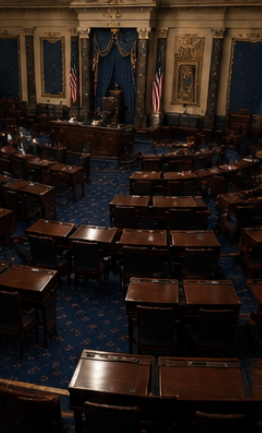
Legislators are close to a perceived loophole in federal ethics rules. Specifically, the new bill prohibits senators, representatives, and their immediate staff from placing bets on any political outcome. This includes primary races, general elections, and even specific policy votes. Lawmakers want to ensure that insiders cannot profit from that information through prediction markets. Furthermore, they believe that betting on one’s own success creates a dangerous incentive structure.
The Commodity Futures Trading Commission (CFTC) previously attempted to block political betting on platforms like Kalshi. Nevertheless, court rulings recently allowed some of the markets to continue operating under strict guidelines. This legislative move provides a more permanent solution than regulatory litigation. “Congress should not be gambling on the very elections they are meant to lead,” stated one senior policy advisor. Therefore, the bill represents a proactive step toward modernizing government ethics for the digital age.
Conflict of Interest and Public Trust
The rise of AI-driven forecasting and blockchain-based markets makes betting easier than ever. Consequently, the potential for market manipulation has increased significantly. For example, a candidate could theoretically use campaign funds to influence market odds. This would create a false sense of momentum or “electability”. Lawmakers argue that such tactics undermine the principle of one person, one vote. They want to protect the sanctity of the ballot box from speculative capital.
Public trust in Congress is at historic lows. Therefore, even the perception of a senator betting on a bill’s failure could be catastrophic. The bill addresses this by imposing heavy fines for violations. Specifically, offenders face penalties equal to $50,000 (€46,000) or the total amount of the wager. This financial deterrent aims to keep the focus on public service rather than private gain. Furthermore, it aligns with efforts to restrict congressional stock trading.
The Rise of Platforms Like Polymarket

Polymarket recently became a household name during the 2024 election cycle. The platform allows users to buy and sell shares on the outcome of future events. Although it technically bars U.S. users, many bypass the restrictions via VPNs. Consequently, the sheer volume of money flowing through markets is impossible for regulators to ignore. The total betting pool for the presidency surpassed $1.5 billion (€1.38 billion) earlier this year.
High liquidity makes the markets more accurate but also more tempting for those with influence. Senators believe that blockchain transparency does not eliminate the risk of corruption. Specifically, they fear that foreign actors could use platforms to bribe domestic officials. By banning themselves from the game, lawmakers hope to set a moral precedent. However, critics argue that the ban will be difficult to enforce against anonymous wallets.
Impact on the Fintech Industry
The fintech sector watches the developments with a mix of caution and frustration. Many advocates for prediction markets believe they offer superior data compared to traditional polling. They argue that having “skin in the game” forces participants to be more honest. Consequently, a ban on lawmakers could stifle the development of valuable forecasting tools. Furthermore, companies like Kalshi continue to argue that their markets are useful for hedging risk.
Nevertheless, the bipartisan consensus on this issue is growing. Both Democrats and Republicans seem to agree that political betting is a bridge too far. This unity is rare in the current polarized environment. It suggests that the desire to protect institutional integrity outweighs the benefits of market data. Specifically, the bill’s sponsors stress that democracy is not a spectator sport for profit. Therefore, the prediction market industry may need to pivot away from political events to survive.
Monitoring Foreign Interference

National security agencies are weighing in on the risks of unregulated betting. They worry that adversarial nations could use markets to secretly fund preferred candidates. For example, a foreign entity could intentionally lose a large bet to a candidate’s associate. This would effectively launder money into a campaign. Senators note this as a primary reason for the strict ban. They want to close every possible avenue for illegal campaign financing.
The bill requires the Department of Justice (DOJ) to coordinate with the CFTC on enforcement. This cross-agency collaboration is essential for tracking complex digital transactions. Furthermore, it empowers the government to seize illicit gains from unauthorized betting. The aggressive stance indicates the high stakes of modern election security. Consequently, the bill serves as a warning to both lawmakers and platforms that the era of “anything goes” is ending.
TF Summary: What’s Next
Congress currently debates the specific language of the Ban on Congressional Gambling Act in committee. We expect a full vote in the Senate by late 2026 as election season approaches. Meanwhile, the CFTC continues to monitor platforms for compliance with existing federal laws. If the bill passes, it will likely trigger a massive audit of congressional financial disclosures.
The prediction market industry will continue integrating with sports, weather, and corporate events to avoid regulatory heat. However, the debate over the accuracy of markets versus traditional polling will only intensify. We will watch if other nations follow the U.S. lead in banning officials from political wagering. Ultimately, this move seeks to define the ethical boundaries of the digital economy.
MY FORECAST: I predict that this ban will pass with a massive majority, but its enforcement will be a total nightmare. You will see a world where “insider betting” simply moves to the dark web using privacy coins that even the DOJ can’t track. By 2028, a major scandal will erupt when a senator’s relative is caught winning millions on a “lucky” policy guess. This will force Congress to launch a full-scale war on anonymous crypto, turning the fight against political betting into a fight for the future of the internet itself.