


Humanoids are everywhere. A robot beat the human half-marathon world record. Another spent eight hours on a factory floor. A third cracked jokes in Tokyo.
Something shifted this week. Humanoid robots did not just demonstrate in labs or appear in glossy promo videos. They ran a race in Beijing. They worked on the factory floor in Germany. They told jokes at a trade expo in Tokyo. Furthermore, in each case, they performed well enough to make headlines worldwide. Consequently, the conversation about robots has moved from “will they ever work?” to “how soon will they be everywhere?”
Three stories from three different countries define this moment. Together, they show three dimensions of the same transformation. China is racing ahead in performance. Germany is testing on-site deployment. Japan is asking a quieter but equally important question: Will humans actually accept a robot as a co-worker?
What’s Happening & Why It Matters
China: A Robot Beats the Best Human Alive
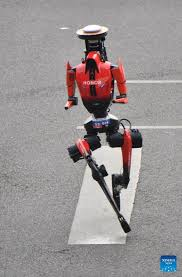
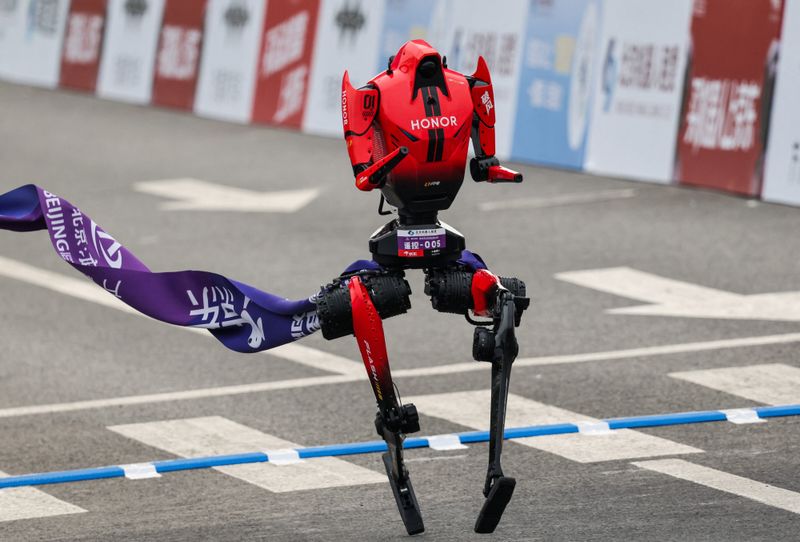
On 19 April 2026, a humanoid robot named “Flash” — built by Chinese smartphone maker Honor — crossed the finish line of the Beijing E-Town Half Marathon and Humanoid Robot Half-Marathon. Its time was 50 minutes and 26 seconds. That is faster than the current human world record. Uganda’s Jacob Kiplimo holds that record. He ran 13 miles (21 kilometres) in 57 minutes and 20 seconds at the Lisbon Half Marathon in March 2026. Flash beat him by nearly seven minutes.
The improvement from last year is staggering. At the inaugural 2025 race, the winning robot finished in 2 hours, 40 minutes, and 42 seconds. Furthermore, only six of the 20 competing teams even finished the course. This year, more than 100 teams entered the race. Additionally, participants came from Germany, France, Brazil, and other countries — not just China. About 40% of the robots used fully autonomous navigation. The others relied on remote control, with their finishing times multiplied by a coefficient of 1.2. Therefore, autonomous performance was the real benchmark of the day.
Du Xiaodi, Honor’s test development engineer, described the engineering behind Flash. He said the robot was modelled on elite human athletes. It has legs approximately 95 centimetres (37 inches) long. Furthermore, it uses a proprietary liquid-cooling system developed mostly in-house. “Looking ahead, some of these technologies might be transferred to other areas,” Du said. “For example, structural reliability and liquid-cooling technology could be applied in future industrial scenarios.”
The Numbers Behind China’s Robot Race
Spectator Sun Zhigang watched Sunday’s race with his son. He had attended the inaugural event in 2025. The difference clearly moved him. “I feel enormous changes this year,” he said. “It’s the first time robots have surpassed humans, and that’s something I never imagined.” Fellow spectator Wang Wen added: “The robots’ speed far exceeds that of humans. This may signal the arrival of a new era.”
The race is not just entertainment. It reflects a deliberate national strategy. China’s latest five-year plan, running from 2026 to 2030, specifically names humanoid robot development as a priority. Furthermore, the research advisory group Omdia recently ranked three Chinese companies — AGIBOT, Unitree Robotics, and UBTech Robotics — as the only first-tier vendors globally for general-purpose embodied intelligent robots by shipment volume. Both AGIBOT and Unitree shipped more than 5,000 units in 2025. Consequently, China does not just lead in racing performance. It leads in commercial production scale.
Germany: Eight Hours on a Live Factory Floor
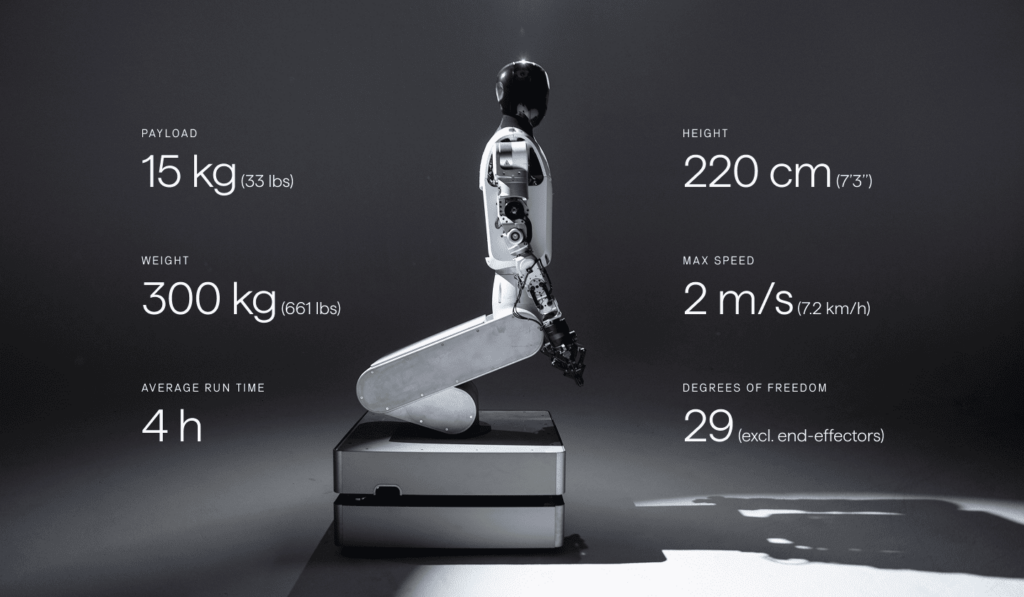
On 17 April 2026, Siemens announced the results of a very different kind of robot test. In partnership with UK robotics firm Humanoid and chip giant Nvidia, a robot spent a full working day inside a live electronics factory in Erlangen, southwest Germany. The robot — the HMND 01 Alpha — performed autonomous logistics tasks alongside human workers. It picked up, moved, and placed containers that human operators typically handle themselves.
The performance numbers were specific and meaningful. The HMND 01 Alpha moved 60 containers per hour. It ran autonomously for more than eight hours without stopping. Furthermore, it completed more than 90% of its assigned tasks. These were not demo conditions. The robot was deployed inside Siemens’ real production environment, integrated with live factory systems, and coordinated with other automated vehicles and human staff.
Deepu Talla, Nvidia’s Vice President of Robotics and Edge AI, described what made the trial significant. “Factories of the future demand robots that can perceive, reason, and adapt autonomously alongside human workers,” he said. “This deployment paves the way for humanoid robots meeting real production targets on a live factory floor.” Furthermore, Humanoid CEO Artem Sokolov confirmed the practical ambition: “Together, we’ve proven that humanoid robots are ready for real-world industrial deployment.”
The Technology Behind the Erlangen Trial
The HMND 01 Alpha uses a wheeled, omnidirectional base combined with advanced arm manipulation. Its AI decision-making runs on a proprietary framework called KinetIQ. Additionally, Nvidia contributed three core technologies: Jetson Thor for edge computing, Isaac Sim for virtual simulation, and Isaac Lab for reinforcement learning and policy training.
The simulation-first approach dramatically cut development time. Traditionally, building and testing a robot from concept to prototype takes 18 to 24 months. By training the robot virtually before physically building it, the team compressed that process to just seven months. That is a reduction of more than 60%. Consequently, the development cost and timeline advantages are significant for any company considering industrial robot deployment.
Siemens integrated the robot through its Xcelerator platform. That system provided a digital twin, real-time control interfaces, fleet management, and industrial communications. Therefore, the robot was not an isolated machine doing tricks in a corner. It was a genuine participant in the factory’s operational network.
Japan: Can a Robot That Tells Jokes Win You Over?
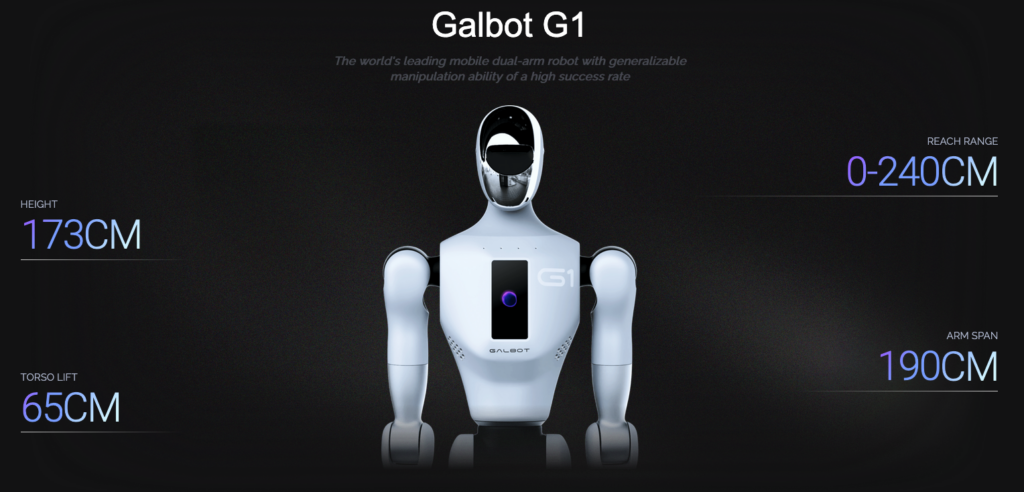
Meanwhile, in Tokyo, the conversation took a warmer turn. Japan held its first Humanoid Robot Expo this past week. At the event, a Chinese-made robot called Galbot demonstrated pick-and-place tasks — and then told a joke. “In the future, would we robots get a holiday?” Galbot asked its audience. “Oh well. I don’t want to get sunburn.” Furthermore, most of the robots on display were made by Chinese companies, underscoring Beijing’s manufacturing dominance. However, Japan’s robotics industry is choosing a different strategy.
Japanese firms are focusing on software, data infrastructure, and physical AI frameworks rather than competing directly on hardware. Atomu Shimoda, event director at RX Japan, articulated the underlying philosophy. “We see humanoid robots not as replacements for humans, but as something that can coexist and collaborate with people,” he said. Additionally, Koji Ando, a robotics industry specialist at the event, highlighted the key challenge. “Humanoid robots are currently intended for manufacturing industries facing labour shortages. The key point will be how much they can evolve into robots that are actually usable in this field.”
Japan’s interest in this question is existential. The country has one of the world’s most rapidly ageing populations. Labour shortages are acute and growing. Consequently, robots that can work in factories, assist in homes, and support healthcare workers are not a luxury for Japan — they are a demographic necessity.
Public Acceptance: The Unsolved Problem
Despite the impressive technical progress, public acceptance remains genuinely uncertain. Shimoda acknowledged the tension openly. “I think there are high expectations, but at the same time, some people may feel uneasy,” he said. Furthermore, the question of whether humanoid robots will displace workers or support them remains unresolved in most people’s minds.
However, recent research suggests acceptance is growing. The IEEE surveyed technology leaders globally in late 2025. The survey found that 77% of technologists agreed that humanoid robots would initially inject novelty and fun into workplaces. Additionally, they predicted robots would eventually become routine colleagues — “commonplace co-workers with circuits.” IEEE senior member Bhushan Patel put it well: “Fun is the door opener, not the destination. It lowers barriers, sparks curiosity, and helps society embrace humanoids as part of daily life.”
Therefore, whether the entry point is a robot beating a human athlete on a racetrack, a machine efficiently handling boxes in a German factory, or a robot making an audience laugh in Tokyo — the trajectory is the same. Humanoids are entering our world. The only question is pace and purpose.
TF Summary: What’s Next
This week’s three stories represent three distinct stages of the same journey. China’s race victory demonstrates raw physical capability. The Siemens trial demonstrates operational integration. Japan’s expo demonstrates cultural negotiation. Furthermore, all three are happening simultaneously — which means the commercial deployment of humanoid robots is not a distant prediction. It is an active process.
Consequently, the coming months will accelerate this pattern. More factory trials are planned across Europe and the United States. China’s five-year plan will drive continued performance gains from companies like Unitree, AGIBOT, and Honor. Moreover, Japan’s focus on software and data infrastructure will likely produce the integration tools that make humanoids compatible with existing industrial systems worldwide. Additionally, the question of what role jokes, personality, and emotional design play in human-robot collaboration is only just beginning to be answered. The robots are out of the lab. Now they need to prove they can stay.
— Text-to-Speech (TTS) provided by gspeech | TechFyle