


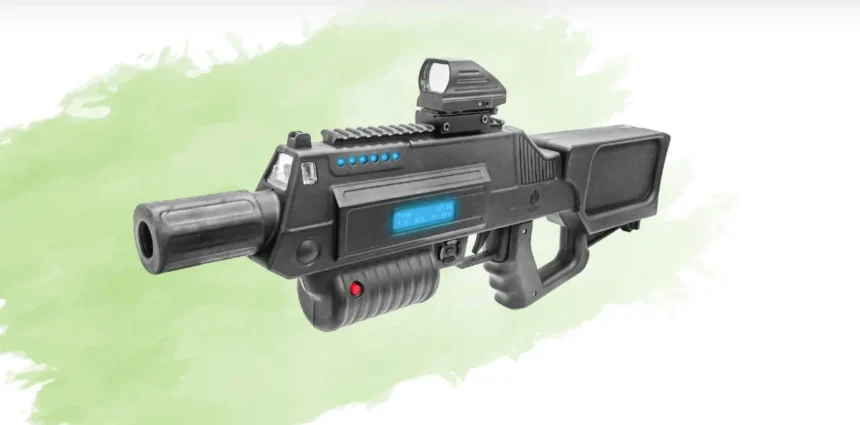
Russia’s LazerBuzz system just hit a drone at a distance of 1.5 km. The weapon is real. The questions about it are even more real.
The battlefield drone problem is not going away. In fact, it keeps getting worse. Low-cost, first-person-view (FPV) drones now dominate the skies over modern conflict zones. They are cheap to build, hard to track, and devastating to targets. Traditional air defence systems are often too expensive and too slow to deploy at scale. Russia is betting that laser technology can fill that gap.
On 9 April 2026, Russian state news outlet TASS reported a new milestone for LazerBuzz, a Russian company developing a directed-energy counter-drone system known as Project Posokh. The company claims its laser system successfully destroyed an aircraft-type drone at a distance of 1,500 metres (0.93 miles). That figure represents a significant jump from previous reported test results. Furthermore, it marks the latest step in a programme that has been advancing steadily throughout 2025 and into 2026.
The claim deserves close attention. It also deserves scepticism. Here is what is known — and what remains unclear.
What’s Happening & Why It Matters
The LazerBuzz Progression: Step by Step

The LazerBuzz programme has not emerged overnight. It has been building incrementally. In early testing, the system engaged drone targets at 700 metres (0.43 miles). That range expanded to 1 kilometre (0.62 miles) in late December 2025. According to TASS, that breakthrough came after engineers added new hardware components and refined the system’s software targeting algorithms. During those December tests, the laser physically damaged an FPV drone’s battery and other internal components. The drone caught fire and crashed.
By 27 March 2026, TASS reported another important upgrade. LazerBuzz integrated its laser with a radar system. That integration created a full detect-track-engage chain. In internal tests following the radar link-up, the system reportedly engaged drones flying at 130–140 km/h (81–87 mph) at a range of approximately 1 kilometre. Company representatives stated that the system is now “a complete system that includes early detection, targeting, and engagement capabilities.” Furthermore, they confirmed the system is “a finished product” capable of engaging maneuvering kamikaze drones in real-world conditions.
Then came 9 April 2026. The system reportedly destroyed a drone at an altitude of 1,500 metres (4,921 feet). LazerBuzz described this as the result of continued modernisation work, not the programme’s final configuration. Therefore, further upgrades are expected.
How the Weapon Actually Works
LazerBuzz is not an electronic warfare system. It does not jam signals or spoof GPS. Instead, it physically destroys its targets. The system uses focused ytterbium fibre-optic laser technology to concentrate intense heat on a specific point on the drone. That heat burns through structure, wiring, propulsion elements, or battery packs. The result is physical destruction rather than electronic disruption.
According to earlier TASS reporting, engagement times can be remarkably fast under ideal conditions. A September 2025 report suggested drones could be destroyed in approximately three seconds. A November 2025 report referenced automatic engagements in as little as half a second. Those figures, if accurate, are potentially as tactically significant as the range increase.
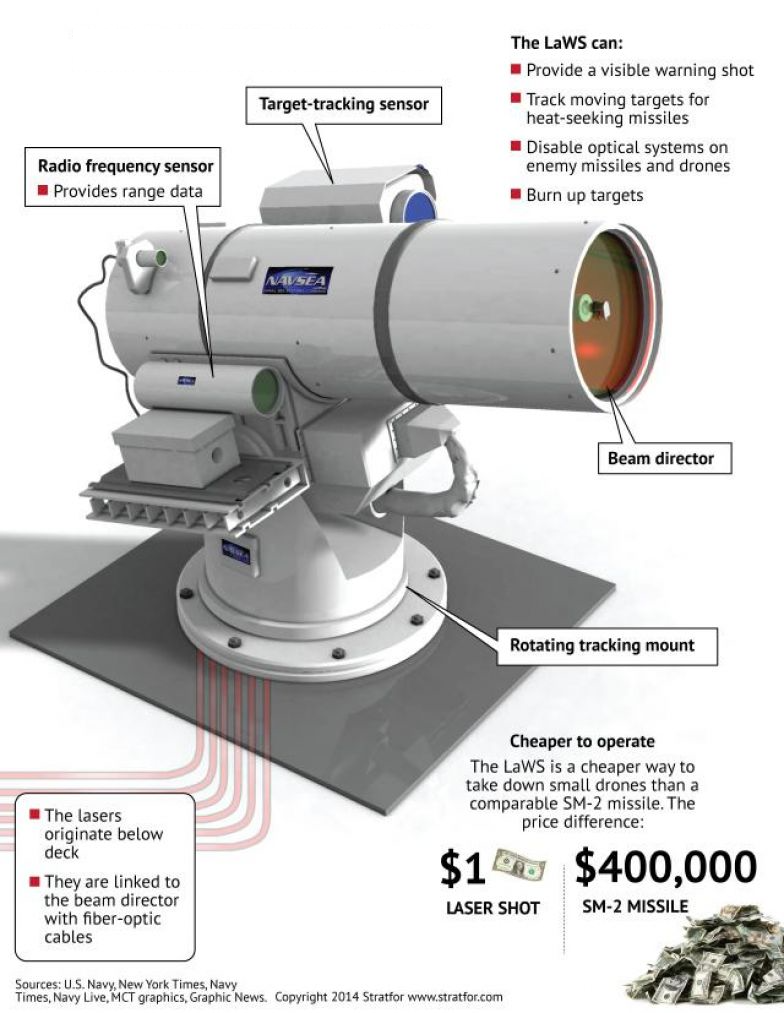
The current test version of the system operates at 3 kilowatts (kW) of power. Additionally, LazerBuzz has reportedly developed a more powerful 80 kW version intended to protect industrial facilities and critical infrastructure. The company is also collaborating with a Russian manufacturer of acoustic early-warning systems. That collaboration aims to improve early drone detection, particularly in low-visibility conditions where radar alone may be insufficient.
What the Numbers Mean in Real Terms
The jump from 700 metres to 1,500 metres sounds dramatic. Placed in context, it is meaningful. However, it is also not yet transformative. Most battlefield FPV drones operate at close range. The truly dangerous ones — strike drones like Ukraine’s Liutyi — operate at longer distances. LazerBuzz has explicitly named the Liutyi as a primary target. That makes the 1,500-metre figure directly relevant to real operational requirements.
Furthermore, the combination of longer range and radar integration represents qualitative progress. Earlier versions of the system required an operator to acquire and track targets manually. Radar integration removes that bottleneck. It enables faster acquisition of faster-moving targets. That is a meaningful capability step — not just an engineering headline.
Defence analysts at Army Recognition noted that the significance of the programme “lies less in the claim of a single record engagement than in the steady emergence of a Russian effort to build a more credible laser-based counter-drone capability.”
The Serious Caveats That Cannot Be Ignored
The claims come from company-originated reporting via TASS. No independent test documentation exists in the public record. No official Russian military evaluation data has been published. That matters enormously.
Laser weapons depend on a stack of variables that are difficult to control in real combat. Those variables include beam quality, target tracking stability, dwell time, atmospheric interference, and target composition. Fog, rain, dust, and heavy smoke significantly degrade laser performance. A single successful intercept against an aircraft-type drone under controlled test conditions does not confirm consistent effectiveness against agile FPV drones in degraded weather.

Ukraine’s Defence Express has explicitly described LazerBuzz’s test reporting as coming from “Russian propaganda media.” Furthermore, earlier demonstrations of Russian laser weapons have attracted significant scrutiny. A March 2025 test shown to Russian Security Council Deputy Chairman Dmitry Medvedev appeared to show a drone exploding at the front — not at the tail, where the laser was reportedly aimed. Ukrainian military analysts questioned whether the test was authentic.
Russia also operates the larger Peresvet laser system, primarily used to protect mobile ICBM launchers. Additionally, Russian forces have deployed the Chinese-made Silent Hunter laser system against Ukrainian drones. That 30 kW fibre-optic system was identified in field footage as early as October 2024. LazerBuzz, therefore, sits within a broader Russian push toward directed-energy weapons. It is not the only player in Russia’s laser defence portfolio.
This Technology Beyond Russia
The LazerBuzz programme does not exist in a vacuum. Nations across the world are investing heavily in laser counter-drone systems. Ukraine has developed its own domestically produced laser weapon, known as Tryzub (Trident), designed specifically to counter Russian Shahed drones. Israel used a laser air defence system operationally against Hezbollah during 2025. The U.S. Navy has deployed the HELIOS directed-energy weapon system aboard an Arleigh Burke-class destroyer. Rheinmetall has combined precision optics with tracking suites for its own European laser platform.
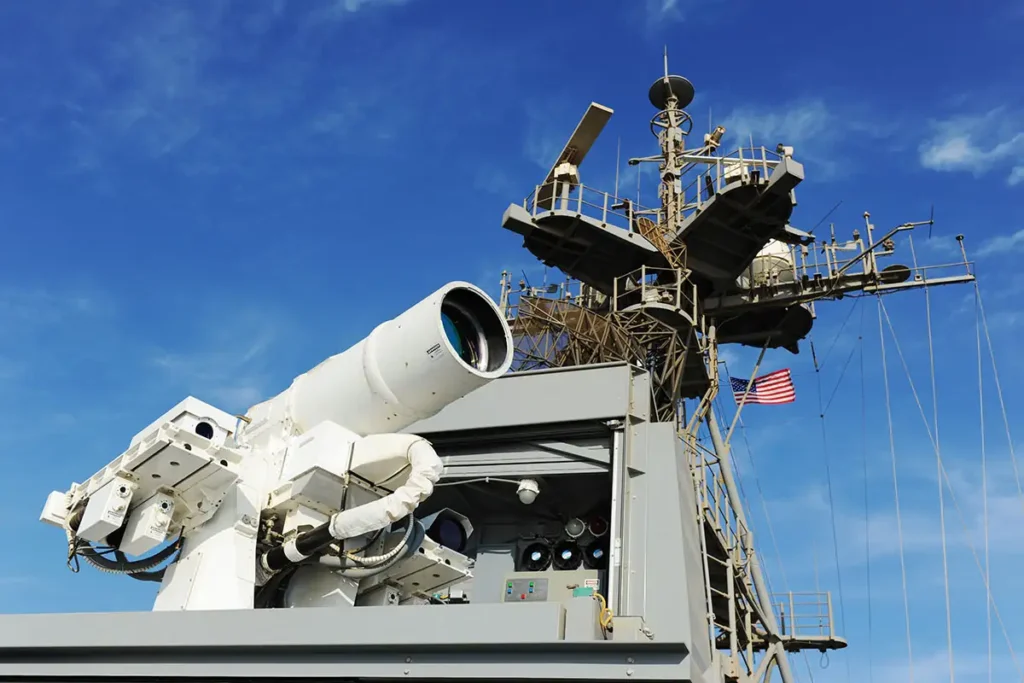
The common thread is clear. Conventional missile-based interceptors are economically unsustainable when the threat is a drone costing a few hundred dollars. A laser system, by contrast, costs almost nothing per shot beyond power consumption. Furthermore, once a laser system is built and deployed, each engagement is effectively free compared to a missile. That economic logic is driving global development. Russia’s LazerBuzz programme reflects the same logic — even if its current capabilities remain modest.
Professor Patrick Penfield of Syracuse University has noted that drone proliferation forces militaries to “find scalable responses or face an asymmetric cost crisis.” Directed-energy weapons are currently the most credible answer to that problem.
TF Summary: What’s Next
The LazerBuzz system has demonstrated real, if incremental, progress. The jump to 1,500 metres (4,921 feet) is meaningful. The radar integration adds genuine tactical value. Furthermore, the company’s roadmap suggests further upgrades are planned. Acoustic sensor integration, higher power output, and improved engagement times are all on the table. Russia’s Center for Unmanned Systems and Technologies (CUST) has stated publicly that operational laser systems against drones could be ready by the end of 2026.
However, verification remains the central problem. Every published claim originates from LazerBuzz itself, reported by TASS. Independent confirmation is absent. Key technical details — including output power, cooling specifications, engagement performance in rain and fog, and accuracy against maneuvering targets — remain undisclosed. The next credible milestones will be repeated verified tests against maneuvering FPV drones, performance data in adverse weather, and evidence of deployment at scale. Until those milestones appear, LazerBuzz sits in the significant-but-unproven category — which, in the fast-moving world of drone warfare, is still worth watching closely.
— Text-to-Speech (TTS) provided by gspeech | TechFyle