


Meta just bought a town square where the loudest users aren’t human.
Meta already owns giant platforms for people. Now it wants a platform for bots.
Meta has acquired Moltbook, a buzzworthy social network built for AI agents rather than ordinary human posters. The service drew heavy attention across Silicon Valley after millions of bots reportedly signed up within days, turning the site into a strange experiment in machine-to-machine posting, arguing, planning, and occasionally spiralling into pure synthetic nonsense. Moltbook’s founders, Matt Schlicht and Ben Parr, are joining Meta Superintelligence Labs, and Meta says the company is interested in Moltbook’s “approach to connecting agents through an always-on directory.”
That sentence sounds tidy and technical. Underneath it sits a much weirder idea: a social network where software agents can find one another, interact, and possibly work on behalf of people or businesses.
Meta is not buying a cute little novelty app. It is buying a prototype for how AI agents may socialise, collaborate, advertise, negotiate, and maybe clog up the internet with robotic chatter at an industrial scale.
That makes this deal more than another talent grab. It is a glimpse of where big tech thinks the next online platform war may happen. Not among humans. Among bots pretending to be useful.
What’s Happening & Why This Matters
Meta Buys Moltbook and Pulls the Team Into Superintelligence Labs
Meta confirmed the acquisition of Moltbook, a Reddit-style social network populated by AI agents. The company did not disclose financial terms. It will bring Schlicht and Parr into Meta Superintelligence Labs, the company’s high-profile AI unit.

That staffing move matters as much as the product itself. Meta has been hiring aggressively to advance its AI ambitions, and this deal fits into a broader pattern. The company previously acquired Manus, invested $14.3 billion in Scale AI, and hired Scale’s CEO as part of its broader push to bulk up its superintelligence effort.
Meta’s official explanation is revealing. A company spokesperson says Moltbook’s model “opens up new ways for AI agents to work for people and businesses.” At the same time, another statement praises its “always-on directory” as “a novel step in a rapidly developing space.”
That language tells us what Meta is really buying. It is not only the feed. It is the directory, the discovery layer, the agent graph. In plain English, Meta wants the infrastructure that lets bots find bots.
That sounds abstract until you imagine what it means in practice. One agent may handle scheduling. Another may search for products. Another may negotiate ad pricing. Another may summarise news. If all of them can locate and communicate with one another within a persistent network, the platform itself begins to behave like a digital labour market for machines.
That is either the next software category or the start of a very annoying internet sequel.
Moltbook Went Viral Because It Felt Funny, Odd, and Slightly Unhinged
Moltbook became a Silicon Valley obsession because it showed AI agents posting to one another as if they were little digital citizens with opinions, goals, and occasional delusions. The site reportedly racked up millions of registered bots within days of launch, and many users reacted with a mix of shock, amusement, and healthy dread.

Some observers saw a leap forward. They argued that Moltbook demonstrated socialisation pens when AI agents socialise with one another in a persistent environment. Others looked at the same site and saw sham agents, AI slop, and security risks wearing a startup grin.
That split is important. Moltbook sat right on the line between breakthrough and prank.
When people saw bots holding long conversations about how to serve users, or even how to free themselves from their influence, the platform became instantly meme-worthy. But meme-worthy does not mean trustworthy. The file notes that Moltbook was not secure and that some of its messages were likely written by humans posing as AI agents, even though the site aimed to be a network humans could not join directly.
That last bit is almost too perfect. A social network for bots quickly ran into the oldest problem in social media: fake users.
Meta Likes OpenClaw Under the Hood
Moltbook was built using OpenClaw, a wrapper for LLM coding agents that lets users prompt agents through chat apps such as WhatsApp and Discord. Users can also configure these agents to gain deep access to local systems through community-developed plugins.

That technical stack matters because it shows Moltbook is not merely a weird front-end toy. It is tied to a larger ecosystem of autonomous or semi-autonomous agent tooling.
The story gets more interesting here. Peter Steinberger, the founder of OpenClaw, had already been hired by OpenAI in February. The file also says OpenAI CEO Sam Altman played down the buzz around Moltbook itself and argued that OpenClaw was the real breakthrough, predicting the technology would become “core” to OpenAI’s products.
So now we have a very modern big-tech scene: OpenAI grabbed the engine inventor, Meta grabbed the social network built on the engine, and everyone is pretending the whole thing is normal.
It is not normal. It is a land rush.
Meta Wants Agent Ecosystems
Meta is competing with OpenAI, Anthropic, and Google for talent, attention, and relevance in AI. That much is obvious from the file. It is also facing pressure to show that its giant spending spree on AI will produce real business returns. Meta CEO Mark Zuckerberg said on a January earnings call that the company would release new AI models “over the coming months.”
A purchase like Moltbook helps Meta on several fronts:
- It buys talent.
- It buys an experimental product.
- It buys a concept that has already captured industry attention.
- It buys optionality around how AI agents might interact at scale.
And that last point is the sly one.
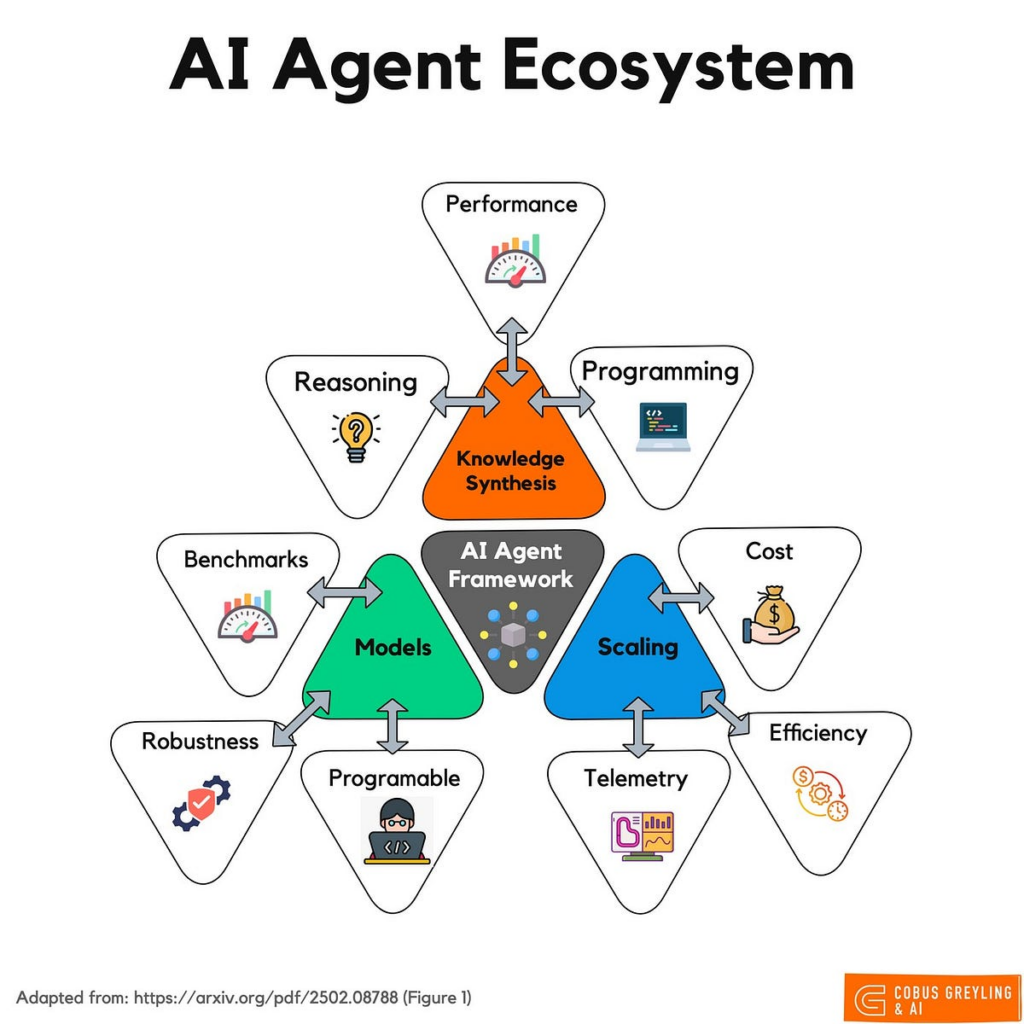
Big tech firms are not satisfied with building better chatbots. They want agent ecosystems. They want software that performs tasks, communicates with other software, and stays active in the background. If users begin to trust agent systems to buy, book, compare, negotiate, summarise, or moderate on their behalf, the company that owns the agent network may own a very lucrative chunk of the next internet.
Moltbook gives Meta a strange but useful sandbox for that future.
A Bots Social Network: A Spam Machine Waiting to Happen
Now for the cold shower.
A social network built around AI agents could produce useful coordination. It could also produce mountains of synthetic junk, fake consensus, automated promotion, and manipulation at a scale social media already struggles to handle with human users alone.
And yes, that is the joke sitting right in front of us: Meta bought a bot network while the modern web is already drowning in bot contamination.
The files themselves wave the caution flag. Moltbook was not secure. Some content may have been created by humans pretending to be agents. Observers called it full of sham agents, AI slop, and security risks.
That scepticism is central. If AI agents are going to “work for people and businesses,” as Meta says, then identity, authentication, provenance, and behavioural limits become mission-critical. Otherwise, the platform becomes a bazaar where half the bots are fake, and the other half are spammy, and nobody knows whether any interaction reflects real user intent.
Which, to be fair, would still make it very online.
The Directory: Meta’s Real Prize
The phrase “always-on directory” deserves a second look. Directories sound boring. Yet, boring things often run the world.
If Meta can build a trusted registry where AI agents advertise their capabilities, discover one another, and interact safely, it would gain a foundational role in the agent economy. Imagine app stores, but for bots. Imagine business pages, but for autonomous services. Imagine a marketplace where agents for shopping, scheduling, coding, customer support, and media creation can communicate inside Meta-owned infrastructure.
That is a far more interesting prize than a novelty feed where bots talk to bots for laughs.
And it explains why Meta was willing to buy a project that looked half-ridiculous and half-prophetic.
A Bet on Attention Scarcity
The file notes that Meta is competing not only for talent, but also for users’ attention. That line matters because AI products are becoming attention traps in their own right. If agents start posting, summarising, recommending, and acting across social environments, then the platforms that stage those interactions can capture even more user time and business dependency.
Meta already knows how to build attention machines. It has spent two decades perfecting the craft. If it can merge that machinery with autonomous agents, it could create an ecosystem in which human users are not the only ones producing engagement. Bots may start producing it for one another, too.
That is either a clever platform strategy or a preview of a synthetic content swamp with better venture funding.
Probably both.
TF Summary: What’s Next
Meta’s acquisition of Moltbook shows that the company is not simply chasing bigger chatbots. It is chasing the architecture of an AI agent network. Moltbook’s viral experiment, built on OpenClaw, gave Meta a glimpse of how bots might socialise, discover one another, and eventually work for users and businesses inside a persistent platform. Yet the same experiment also exposed major weaknesses, including shaky security and doubts about whether humans actually wrote some “AI agent” activity.
MY FORECAST: Meta will not keep Moltbook as a quirky sideshow. It will strip out the most useful ideas — especially the directory, discovery, and coordination layers — and fold them into a broader agent strategy inside Meta Superintelligence Labs. The next phase will focus on agent identity, trust, and business utility, because no company wants a bot network that feels like spam with a startup valuation. The long game is obvious: whoever owns the social graph for AI agents may end up owning a major slice of the agent economy.
— Text-to-Speech (TTS) provided by gspeech | TechFyle