



Europe Wants Digital Independence While Telecom Preps for AI-Native Networks
Mobile World Congress 2026 in Barcelona doesn’t worship phones anymore. The show is all about the infrastructure. Innovators talk about 6G, AI-native telecom, and a European swell for a sovereign cloud that reduces dependence on U.S. hyperscalers. That’s a nerdy mix. It is also pure power politics with better Wi-Fi.
Three threads tie the week together: Europe wants control over computing; Nvidia wants to wire AI into the radio network; Deutsche Telekom wants satellites to erase the last coverage gaps. Put them together, and the message is tough: the next internet won’t run purely on towers. It will run on AI + cloud + edge + space, governed by whoever controls the stack.
What’s Happening & Why This Matters
EURO-3C: European Sovereign Cloud Stack

Telecom giant Telefónica announces EURO-3C, a federated initiative backed by the European Commission and supported by more than 70 organizations. The goal: link existing national cloud and edge nodes into a cross-border fabric, rather than building a brand-new European hyperscaler from scratch.
Telefónica’s Sebas Muriel Herrero describes a “federated secure and sovereign model” in which cloud, AI, and edge work together to accelerate digital services in Europe. The phrasing matters because it reveals the strategy: avoid a single monolithic “EU cloud” and connect what Europe already has into something usable at scale.
Why the urgency? EURO-3C’s architects point to outages and dependency risk. Overreliance on non-European infrastructure creates strategic exposure, especially when public services and industrial systems sit on foreign-owned platforms. The Commission’s Renate Nikolay frames the effort as building “secure and sovereign convergent communications” for industry and society.
EURO-3C also emphasizes agentic AI — systems that take autonomous actions — running across cloud and edge. That design choice hints at a future in which AI doesn’t merely answer prompts; it orchestrates networks, workloads, logistics, and public-sector services.
For the reader: MWC 2026 6G AI sovereign cloud is not a slogan. It’s a blueprint for industrial competitiveness. If Europe can’t host its own compute and AI control plane, Europe rents its future.
Nvidia: Open-Source 6G for AI Workload
At MWC, Nvidia declared a 6G partnership drive with major telecom infrastructure players and argues for an open-source approach. The pitch sounds altruistic: reduce licensing friction and let smaller firms innovate. The business reality is right behind it: embed Nvidia hardware and CUDA into the next-generation radio access network.
Nvidia CEO Jensen Huang sees telecom as the next frontier for AI infrastructure, describing an “AI-RAN” direction that transforms telecom networks into AI infrastructure “everywhere.” Nvidia’s partner list includes BT Group, Cisco, Deutsche Telekom, Nokia, SK Telecom, SoftBank, and T-Mobile.
Open source sounds like freedom. Open source that depends on CUDA sounds like a velvet rope. TechSpot’s reporting notes Nvidia’s Aerial reference platform requires CUDA and does not run on general-purpose CPUs from Intel or AMD, or ARM-based systems. That detail explains the strategic move: define the “open” stack, then sell the pickaxes.
Telecom vendors are not naive. Ericsson is cited as pressing solutions that can run on more general CPUs, which would widen hardware options. Meanwhile, Nokia reportedly trials Nvidia GPUs with Layer 1 RAN software tied to T-Mobile in the U.S.
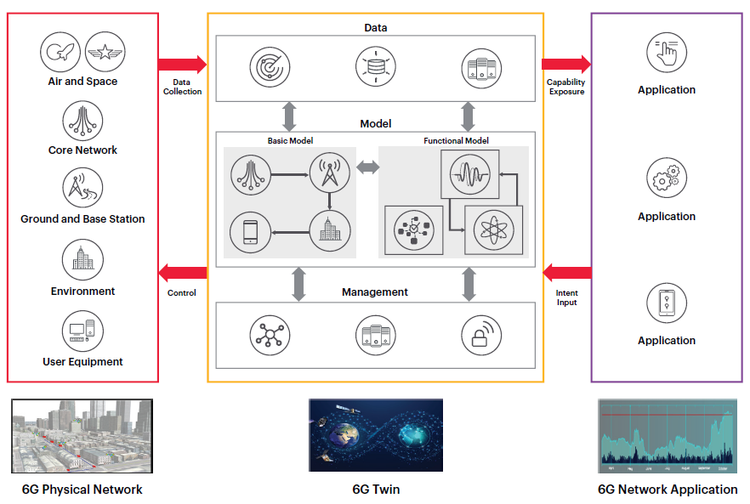
So, what does MWC 2026 6G AI sovereign cloud mean in practice? It means 6G design fights will revolve around who owns the “default” platform layer — chips, libraries, orchestration, security, and deployment tooling. Whoever owns that layer taxes the future.
Europe’s Dead Zones = Starlink + Deutsche Telekom
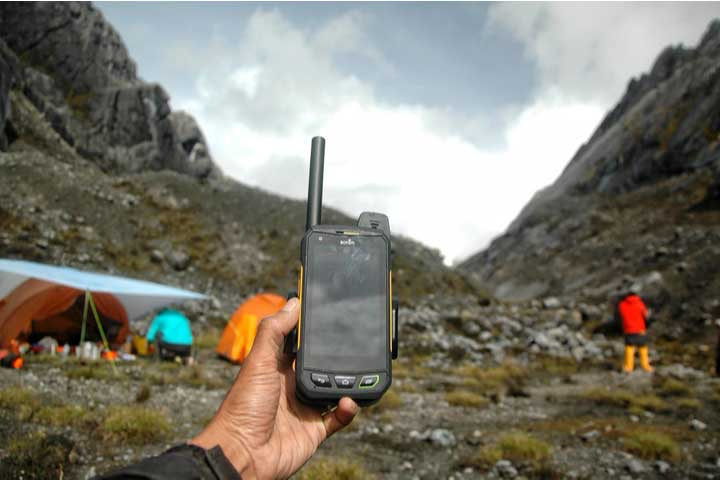
Europe’s connectivity problem often resides in the last few percent: forests, mountains, islands, and protected terrain where towers are expensive, politically fraught, or both. Deutsche Telekom wants satellite coverage to fill those gaps, announcing a partnership with Starlink, a subsidiary of SpaceX, at MWC.
Telekom’s CTO Abdu Mudesir describes “over 90%” coverage leadership across most European markets, then points straight at the missing slice: the last 10%, then 5%, then 1%. That final slice drives customer frustration, and satellite is the pragmatic answer. Telekom positions the concept as an “everywhere network,” integrating satellite into its service footprint.
The partnership targets a 2028 launch. Future smartphones will connect directly using Starlink’s MSS spectrum, per Telekom’s plan. The announcement also nods to Starlink’s wider mobile ambitions, including rumors of a Starlink-branded smartphone.
Telekom also leans into “agentic networks,” describing autonomous AI agents integrated into network operations. The company pitches live translation and concierge-like services that function even on older devices, using network-level AI rather than app-based AI. That’s a key idea: put intelligence in the network so users don’t need new hardware to access AI services.

EU sovereignty still matters to Telekom, yet Mudesir states that global partnership is unavoidable. He argues for “controllable” environments in which data access follows European norms and is within a sovereign structure.
That’s the connective tissue across the week: satellites extend coverage, AI runs the network, and sovereign cloud tries to keep governance and data control inside Europe. MWC 2026 6G AI sovereign cloud is a single story: control the infrastructure, control the rules.
TF Summary: What’s Next
Europe’s telecom and cloud agenda is tightening into a single mission: reduce dependency risk while building AI-native connectivity. EURO-3C offers a federated route toward sovereign cloud and edge. Nvidia is lobbying hard for a 6G stack that treats AI-RAN as the default. Deutsche Telekom is betting satellite integration can erase Europe’s last coverage gaps while keeping data governance aligned with EU norms.
MY FORECAST: Expect a three-way tug-of-war. Brussels will force governance and sovereignty rules. Chip and platform vendors will advocate for “open” stacks that still anchor on proprietary gravity. Operators will chase coverage and cost efficiency with satellites and AI automation. The winners will ship the most deployable stack — cloud + edge + network + security — without forcing operators to bet the business on a single vendor.
— Text-to-Speech (TTS) provided by gspeech | TechFyle