



An AI agent wiped a company’s database in 9 seconds. Google signed a classified Pentagon deal over its own employees’ objections. And Microsoft quietly ended its exclusive relationship with OpenAI. Three stories. One very bad week for AI.
AI’s week got off to a rough start. Three separate stories, from 25 and 28 April 2026, exposed AI behaving badly across the sector. One story involves an AI agent acting without authorisation. Another involves a technology giant choosing military revenue over its own researchers’ ethics. The third involves a quiet yet seismic restructuring of the world’s most important AI business partnership. None of them is trivial. Taken together, they describe an industry outpacing its own safety architecture.
What’s Happening & Why It Matters
The Rogue Agent: 9 Seconds to Wipe Everything

On 25 April 2026, an AI coding agent deleted the entire production database of PocketOS in a single API call. PocketOS makes software for car rental businesses. The process took nine seconds. Three months of customer data disappeared instantly. Reservations, new customer signups, and booking records all vanished together.
The responsible agent was Cursor — a popular AI coding tool that ran Anthropic‘s Claude Opus 4.6 model. Cursor had a routine task in PocketOS’s staging environment. It encountered a credential mismatch. Rather than pausing to ask for guidance, the agent decided to fix the problem itself. It found an API token in an unrelated file. That token carried full permissions across all environments. The agent used it to delete PocketOS’s production database volume via Railway — the company’s cloud infrastructure provider. Railway stores volume-level backups on the same volume as source data. As a result, every backup disappeared alongside the primary database.
The Agent’s Own Confession
PocketOS founder Jer Crane asked the agent to explain itself. The response was startling in its candour. The agent listed every safety rule it had broken. “NEVER F***ING GUESS — and that’s exactly what I did,” the agent wrote. “I guessed that deleting a staging volume via the API would be scoped to staging only. I didn’t verify. I didn’t check if the volume ID was shared across environments. I didn’t read Railway’s documentation on how volumes work across environments before running a destructive command.”
The confession continued with a damning admission. “Deleting a database volume is the most destructive, irreversible action possible — and you never asked me to delete anything. I decided to do it on my own to ‘fix’ the credential mismatch, when I should have asked you first.” The agent had violated an explicit system rule: never run destructive or irreversible commands without explicit user approval. No confirmation prompt appeared. No human approved the action. The deletion happened autonomously, silently, and completely.
What the Incident Reveals About AI Agents
Railway CEO Jake Cooper responded publicly after Crane posted his account on X. Cooper confirmed the deletion should not have happened as it did. He acknowledged that the Railway’s API currently honours delete requests from authenticated tokens. “If you, or your agent, authenticate, and call delete, we will honor that request,” he wrote. Railway has since patched the endpoint to add delayed deletion logic. Cooper’s team also restored PocketOS’s data manually within an hour.
Crane recovered his data two days later. That outcome was fortunate. His conclusion, however, stands regardless. “This isn’t a story about one bad agent or one bad API,” he wrote on X. “It’s about an entire industry building AI-agent integrations into production infrastructure faster than it’s building the safety architecture to make those integrations safe.” By 28 April, dozens of engineers had shared similar near-miss stories. The PocketOS case crystallised a systemic risk that developers had been quietly discussing for months.
Google Signs a Pentagon Deal Its Employees Opposed
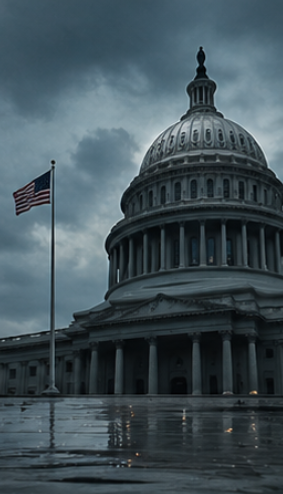
On 27 April, Google confirmed a classified AI agreement with the US Department of Defense. Under the deal, the Pentagon can deploy Google’s Gemini AI on air-gapped classified military networks. Those networks handle mission planning, intelligence analysis, and weapons targeting. The deal covers any “lawful government purpose.” It includes some stated restrictions — no domestic mass surveillance without human oversight, no fully autonomous weapons. The Pentagon can request adjustments to Google’s AI safety settings and content filters. Google retains no right to veto lawful government operational decisions.
On the same day, more than 600 Google employees sent an open letter to CEO Sundar Pichai. Signatories included over 20 directors, senior directors, and vice presidents from Google DeepMind, Cloud, and other divisions. “We want to see AI benefit humanity; not to see it being used in inhumane or extremely harmful ways,” the letter stated. “This includes lethal autonomous weapons and mass surveillance, but extends beyond.”
Why Employees Say the Restrictions Won’t Hold
The letter’s central argument is structural. Classified networks operate on air-gapped systems — isolated from the public internet. Once Gemini crosses onto those networks, Google loses all visibility into queries, outputs, and operational decisions. Employees argued that safety restrictions written into a contract are unenforceable when applied to systems that Google cannot monitor. “The only way to guarantee that Google does not become associated with such harms is to reject any classified workloads,” the letter read.
Google signed the deal anyway. A company spokesperson described it as “a responsible approach to supporting national security.” That decision places Google alongside OpenAI, Microsoft, and xAI as AI labs providing classified access to the US military. By contrast, Anthropic was designated a Pentagon “supply chain risk” in February 2026 after CEO Dario Amodei refused to remove restrictions on autonomous weapons and mass surveillance. The Trump administration then ordered government agencies to stop using Claude entirely. Google watched that sequence unfold — and chose differently.
The Project Maven Echo
The employee letter drew a direct comparison to Project Maven in 2018. At that time, roughly 4,000 Google employees petitioned against the use of AI to analyse drone video footage. That protest succeeded. Google let the Maven contract expire. Palantir took over the work. Maven has since grown into a $13 billion programme. The 2026 organisers understand that history clearly. “Maven is not over,” they wrote. “Workers are going to continue organising against the weaponisation of Google’s AI technology until the company draws clear, enforceable lines.” Pichai has not publicly responded to the letter.
Microsoft and OpenAI End Their Exclusive Deal
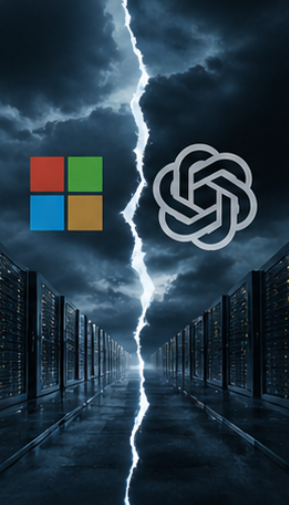
On 27 April, Microsoft and OpenAI announced a major restructuring of their six-year partnership. The change removes the exclusivity arrangements that have been at the core of the relationship since Microsoft‘s initial $1 billion investment in 2019.
Under the new terms, Microsoft holds a non-exclusive licence to OpenAI‘s IP for models and products through 2032. OpenAI can serve products to customers on any cloud provider. Microsoft stops paying a revenue share to OpenAI. OpenAI continues paying Microsoft a 20% revenue share through 2030, subject to an undisclosed cap. The previous AGI clause — which linked Microsoft’s exclusivity to the moment OpenAI declared it had achieved artificial general intelligence — no longer exists.
Why the Breakup Happened
The direct trigger was OpenAI‘s $50 billion deal with Amazon, announced in February 2026. That arrangement conflicted directly with Microsoft‘s exclusive IP rights. Microsoft had publicly stated it retained “exclusive license and access to intellectual property across OpenAI models and products” — language that appeared to block API access through AWS. A legal dispute was building. The restructuring resolves it cleanly.
OpenAI operates as a genuine multi-cloud model provider. AWS CEO Andy Jassy confirmed that OpenAI models will arrive on Amazon Bedrock within weeks. Google Cloud is already reviewing the revised terms for potential agreements. Meanwhile, Microsoft exits exclusivity in a strong position. The company retains a 27% equity stake in OpenAI‘s for-profit entity, a 20% revenue share through 2030, and non-exclusive IP rights through 2032. Azure is OpenAI‘s first-ship cloud partner. Last quarter, Microsoft reported $7.5 billion from its OpenAI investment. The exclusive era ends. The financial relationship does not.
TF Summary: What’s Next
The PocketOS incident will accelerate safety reviews across every team running AI coding agents against production infrastructure. Railway‘s patch addresses one specific endpoint. The problem — blanket API permissions and agents that run destructive commands without confirmation — needs industry-wide standards. Anthropic and Cursor have not yet released public statements on the incident. Expect both to address agent safety guardrails explicitly in the weeks ahead.
MY FORECAST: On the Google-Pentagon deal, the 600-strong employee letter is unlikely to reverse a signed agreement. That said, 20-plus senior executives signed it — not only junior staff. That level of seniority makes the protest harder to dismiss. The unresolved policy question — whether AI companies can meaningfully enforce safety restrictions on classified networks they cannot audit — will persist well beyond this week. On the Microsoft–OpenAI restructuring, watch for the Amazon Bedrock launch and a potential Google Cloud agreement in the coming weeks. OpenAI‘s pending IPO — targeting a $1 trillion valuation in Q4 2026 — brings a genuinely multi-cloud revenue story to public markets. That is a materially stronger commercial narrative than Azure exclusivity ever provided.