


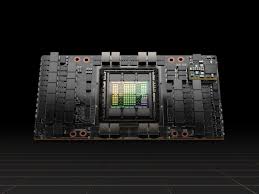
Nvidia is the leading supplier of AI chips and processing.
The semiconductor industry runs on a contradiction. When demand explodes, supply collapses. That paradox is at the crux of Nvidia’s latest earnings call, where record profits collided with warnings of an impending chip scarcity.
Nvidia posted massive revenue gains, fueled by AI’s insatiable appetite for computing power. Yet executives caution that shortages will persist for months. Consumers feel the pain first through rising prices and delayed launches. Enterprises experience it later through constrained infrastructure expansion.
In short, the world needs more chips than the planet can currently produce.
What’s Happening & Why This Matters
AI Demand Devours Supply
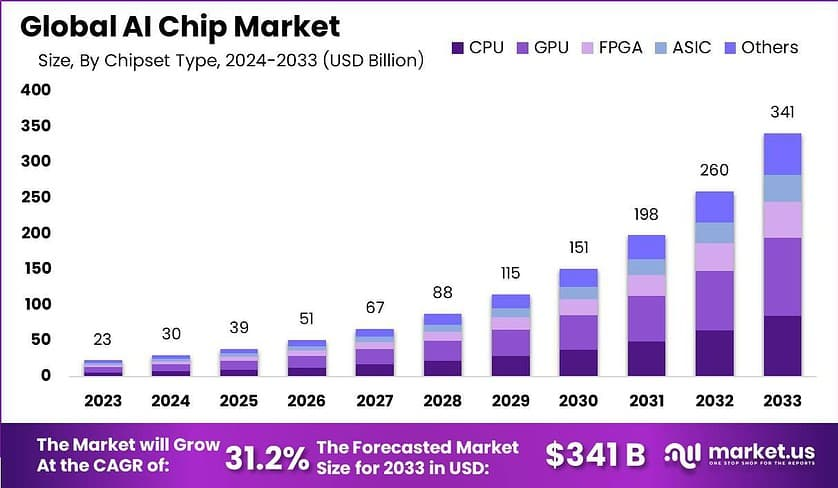
Artificial intelligence drives a gold rush unlike anything the tech sector has seen since the early internet. Data centers require specialized processors capable of training massive models. The processors depend on advanced memory components already stretched thin.

During its earnings update, Nvidia reports extraordinary growth in its data-center segment while acknowledging a supply bottleneck. Company leadership states that inventories remain “very tight” and may stay constrained for multiple quarters.
Chief Financial Officer Colette Kress notes that supply constraints will be a “headwind” for gaming products in the near term. That polite corporate phrase translates to something more visceral: fewer GPUs on shelves and higher prices at checkout.
Memory shortages worsen the situation. High-bandwidth memory, essential for AI workloads, requires complex manufacturing processes and limited fabrication capacity. When hyperscale data centers buy aggressively, consumer markets receive leftovers.
Think of it as a buffet where tech giants arrive first and fill every plate.
Consumers Pay the Price
Gamers and PC builders already notice the squeeze. Premium graphics cards sell far above suggested retail prices. Some models jump hundreds of dollars beyond launch pricing, transforming enthusiast hardware into luxury items.
Nvidia’s gaming revenue still climbed year-over-year, yet quarter-to-quarter declines signal constrained shipments rather than weak demand. Customers still want the hardware. They cannot get enough of it.
Rumors circulate about delayed next-generation consumer GPUs. Analysts speculate that new flagship releases might slip by years, not months. If accurate, the traditional cadence of GPU upgrades could slow dramatically.
For enthusiasts accustomed to rapid progress, the slowdown feels almost unnatural. Silicon, once obeying Moore’s Law with clockwork precision, crawls behind logistical and manufacturing realities.
Data Centers Eat First
Corporate buyers command priority because they generate larger margins. A single AI server cluster can consume thousands of GPUs, dwarfing consumer demand. From a business perspective, allocating supply to data centers makes perfect sense.
From a societal perspective, it creates tension. AI advances improve while everyday technology is more expensive.
Nvidia’s data-center revenue dwarfs its gaming segment, reinforcing where the company’s future lies. Massive cloud deployments drive profits, research investment, and strategic planning.
The change is a transformation in computing. Personal devices no longer anchor innovation. Infrastructure does.
Supply Chains Stretch to the Limit
Semiconductor manufacturing resembles a planetary-scale machine. Raw materials travel across continents. Specialized equipment comes from a handful of suppliers. Fabrication plants cost tens of billions of dollars and require years to build.
When one link strains, the entire chain tightens.
Geopolitics complicates matters. Export controls, regional tensions, and industrial policy all influence chip availability. Nations increasingly treat semiconductors as strategic assets, not commercial goods.
Meanwhile, demand is surging from autonomous vehicles, robotics, edge computing, and smart infrastructure. AI simply bolsters a trend already underway.
Pricing Pressure Ripples Out
Chip shortages are not confined to tech enthusiasts. They cascade into automotive manufacturing, telecommunications equipment, healthcare devices, and consumer electronics.
Higher component costs translate into higher product prices. Businesses pass expenses downstream. Eventually, consumers shoulder the burden.
The inflationary effect is subtle at first. A slightly pricier phone. A more expensive gaming console. A delayed product launch. Multiply that across global markets, and the economic impact is substantial.
Innovation Slows Without Hardware
Software breakthroughs often overshadow hardware limitations. Yet advanced algorithms require advanced silicon. Without sufficient compute capacity, progress stalls.
Researchers may design more efficient models, but frontier AI still depends on raw processing power. The shortage thus acts as a throttle on technological acceleration. Ironically, the same AI boom driving demand even motivates efforts to optimize performance per watt and per transistor. Necessity forces creativity.
TF Summary: What’s Next
The chip shortage story will not end soon. Building new fabrication plants takes years. Scaling memory production takes time. Training skilled workers takes even longer. Expect tight supply conditions to persist while demand continues its climb.
AI’s rise transforms semiconductors from commodity components into strategic infrastructure. Companies that secure supply chains gain enormous leverage. Those who cannot risk falling behind.
MY FORECAST: Consumers will continue paying premium prices. Enterprises will race to lock in long-term contracts. Governments will invest heavily in domestic manufacturing capacity. The silicon age has entered its resource-constrained chapter. The world wants intelligence in every device, service, and system. But intelligence still requires atoms arranged with nanometer precision. And those atoms do not assemble themselves on demand.
— Text-to-Speech (TTS) provided by gspeech | TechFyle