



AI-Powered Performers Turn Tradition Into A Futuristic Spectacle
China’s Lunar New Year celebrations included an unexpected guest: robots. At a prominent temple fair in Beijing, humanoid machines dance, cook, and even play football, drawing crowds and raising questions about how far artificial intelligence has advanced. What once looked like science fiction unfolds beside lanterns, fireworks, and traditional lion dances.
The event blended ancient customs with cutting-edge robotics. Organisers position the fair as both an entertainment event and a showcase of China’s technological ambitions. Visitors watch robots move autonomously, coordinate with teammates, and perform complex routines once reserved for humans. The spectacle fascinates audiences while also hinting at a future where machines share public spaces with people in everyday life.
What’s Happening & Why This Matters
Robots Perform Traditional Cultural Roles
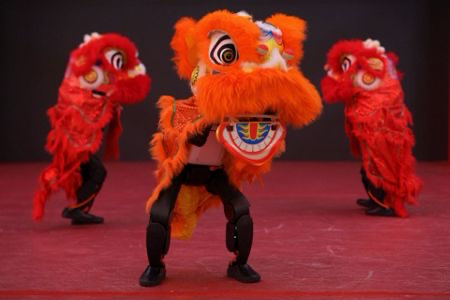
At a technology-themed temple fair in western Beijing, compact humanoid robots take centre stage. Some wear colourful lion costumes and perform choreographed dances. Others prepare snacks or interact with visitors. The machines measure roughly one meter tall, making them approachable and almost toy-like rather than intimidating.
Developers train these robots using motion capture, video learning, and pre-programmed routines. Engineers feed the machines large volumes of recorded human movement. Algorithms convert that data into repeatable physical actions. As a result, the robots can recreate traditional performances with surprising precision.
Organisers set the event up as proof that AI can both preserve and transform culture. One fair representative notes that technology evolves quickly, and the celebration evolves alongside it. The message feels clear: tradition and innovation no longer sit on opposite sides of the table.
Autonomous Robot Football Matches
The fair’s most dramatic attraction features fully autonomous 3-on-3 robot football games. Once the whistle blows, human operators step aside. The machines make their own decisions, pass the ball, guard the goal, and coordinate strategy in real time.
A robotics company executive explains that the environment relies on AI decision-making rather than remote control. Each robot acts as part of a team. One serves as the goalkeeper. Others position themselves, pass, and shoot. The system demonstrates group intelligence rather than isolated machine behaviour.

The capability matters far beyond sports. Autonomous coordination forms the backbone of future robotic logistics, manufacturing, disaster response, and even defence systems. Watching robots play soccer today resembles watching early computer chess matches decades ago. The entertainment masks deeper technical progress.
A National Showcase Of Technological Ambitions
Robots also dominate China’s most-watched television event, the Spring Festival Gala. There, humanoid machines perform dance routines, martial arts, and comedic skits alongside human actors. The synchronised movement of multiple robots demonstrates improvements in balance, coordination, and motion control.
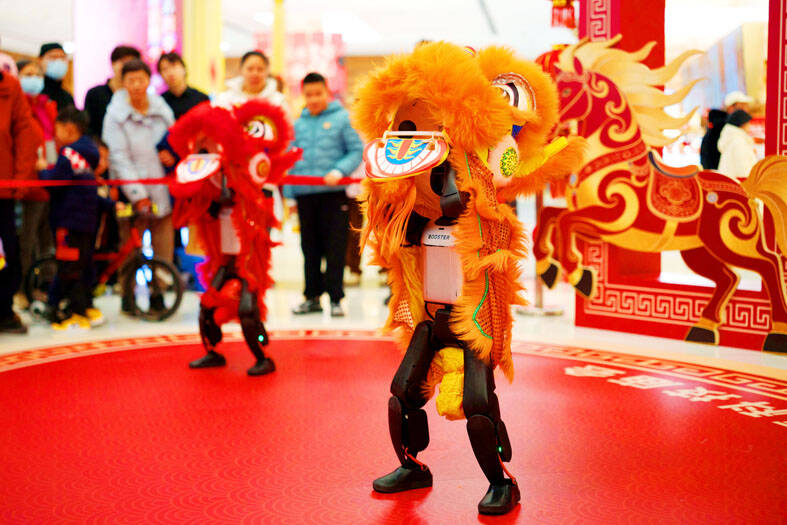
Experts say such displays serve a dual purpose. They entertain audiences while signalling technological strength. Public robotics demonstrations create visible proof of progress that abstract software achievements cannot easily convey. One analyst notes that humanoid robots provide a tangible symbol of national capability because viewers can immediately grasp what they see.
However, specialists also caution against overestimating what stage performances reveal. Choreographed routines occur in controlled environments. Robots repeat motions that have been trained hundreds or thousands of times. They do not yet show the adaptability required for unpredictable real-world tasks.
Growth In China’s Robotics Sector
China’s robotics push reflects a long-term industrial strategy rather than a short-term publicity effort. Government initiatives prioritise AI, automation, and advanced manufacturing as pillars of economic development. State data shows hundreds of thousands of robotics-related companies operating across the country, backed by massive capital investment.
Analysts forecast rapid growth in humanoid robot production over the next several years. Sales projections suggest a steep climb as manufacturing scales and costs fall. Some observers even argue that China currently leads in the large-scale deployment of humanoid systems.
International competition intensifies the stakes. Industry leaders warn that Western countries underestimate China’s pace of development. Robotics could reshape global manufacturing just as dramatically as previous waves of automation.
Public Reaction: Wonder Mixed With Scepticism
Visitors at the fair expressed excitement about the technology, but also drew emotional boundaries. Many admire the robots’ precision and novelty. Children treat them like animated toys. Adults capture videos on smartphones, eager to share the futuristic spectacle.
Yet several attendees stress that machines cannot replace human connection. One parent remarked that robots might perform tasks better than people in some cases, but they cannot replicate emotional value.
That sentiment resonates in global debates about AI. Technical capability does not automatically translate into social acceptance. The public often embraces robots as helpers while resisting the idea of machines replacing human relationships.
TF Summary: What’s Next
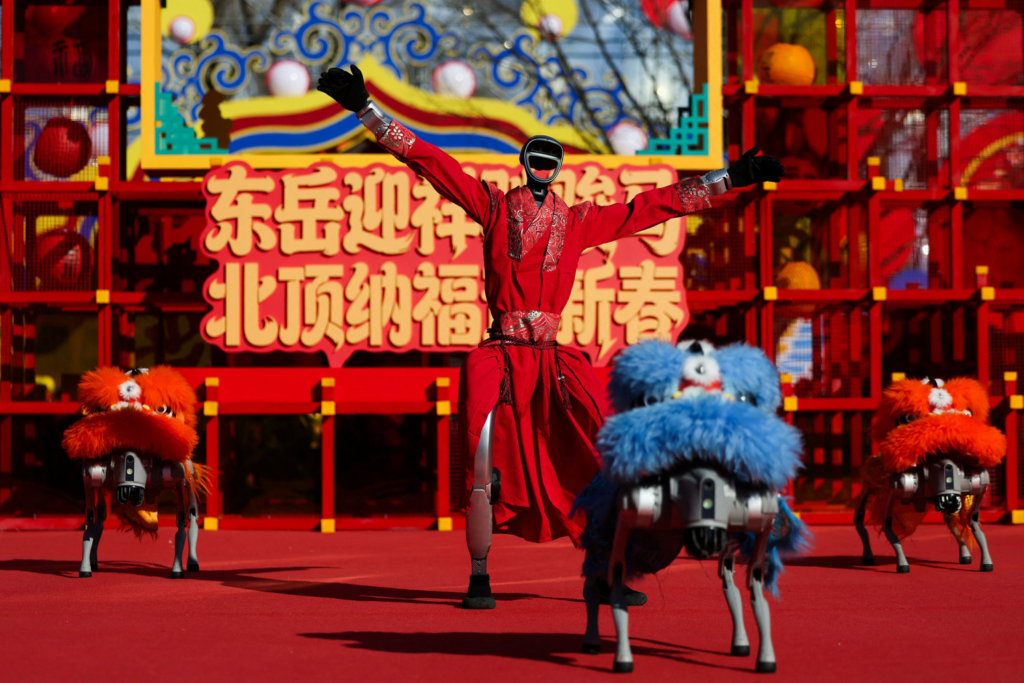
China’s robot-filled Lunar New Year fair illustrates a world where AI moves from factories into public life. Performances that once felt experimental entertain mass audiences. Autonomous teamwork, motion learning, and human-robot interaction continue to improve. As costs fall, similar technologies could appear in retail, healthcare, hospitality, and education.
MY FORECAST: Future festivals may feature robots not just as performers but as guides, assistants, or vendors. However, widespread adoption depends on trust as much as engineering. People must believe machines enhance life rather than diminish it. The robots bow, dance, and score goals under glowing lanterns — a preview of a future arriving one celebration at a time.
— Text-to-Speech (TTS) provided by gspeech | TechFyle