


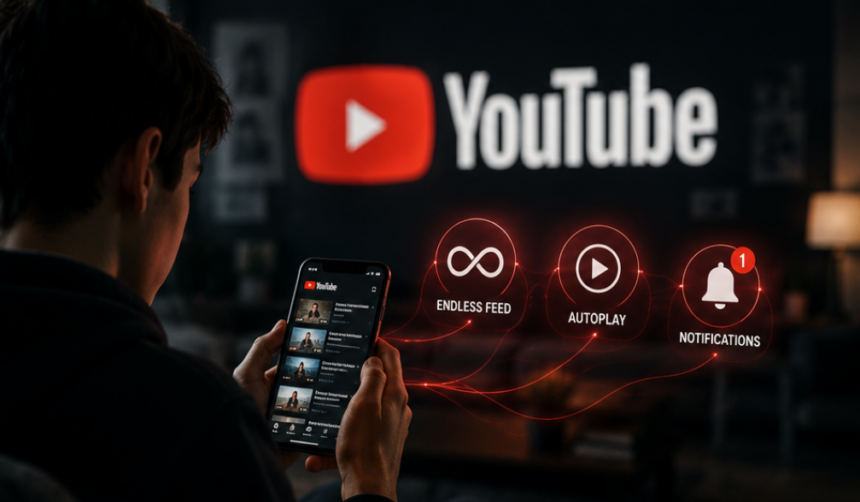
A 16-year-old boy from Florida started using social media at age 8. He became addicted. He suffered sleep disruption, depression, and anxiety. YouTube settled his case on 23 June — five weeks before the trial was scheduled to start. Meta, Snap, and TikTok are still going to court on 27 July.
This article discusses child mental health harm including depression, anxiety, and suicidal ideation. If you or a young person you know needs support, please contact the 988 Suicide and Crisis Lifeline by calling or texting 988 in the US, or the Samaritans at 116 123 in the UK.
YouTube’s settlement in the R.K.C. social media addiction case arrived — and the timing says everything. Over a month before a second potentially seminal social media trial is set to start in California, YouTube has reached a deal to get out of having to show up in court. The plaintiff — identified in court filings only as R.K.C. — is a 16-year-old boy from Florida. He claimed he became addicted to social media after beginning to use the platforms at around age 8. According to the filings, the teen suffered sleep disruption, anxiety, and depression as a result. His case named four defendants: YouTube, Instagram, Snapchat, and TikTok. Only YouTube settled. By contrast, Meta, Snap, and ByteDance face trial in Los Angeles on 27 July 2026 — with Mark Zuckerberg currently listed to testify.
What’s Happening & Why It Matters
What the R.K.C. Case Alleges
YouTube’s settlement in the R.K.C. social media addiction case is a state court case, not part of the federal multidistrict litigation. It is the second individual trial in the California state court track — following the March 2026 K.G.M. verdict, in which a Los Angeles jury awarded $6 million to a 20-year-old woman who alleged addiction to YouTube and Instagram caused depression, anxiety, self-harm, and suicidal thoughts. The lawsuit is set to be the second trial in California state court testing claims by individuals who say they were harmed by social media platforms deliberately designed to be addictive.
R.K.C.’s case mirrors K.G.M.’s structurally. It alleges that YouTube‘s algorithm and design features — autoplay, infinite scroll, recommendation systems — deliberately maximised engagement by exploiting the developing psychology of a child who first accessed the platform at age 8. The case argues that YouTube and its co-defendants knew their design produced the effects and continued regardless.
“YouTube’s Decision to Resolve This Speaks for Itself”
The plaintiff’s lawyers did not view this as a mutual resolution. “YouTube’s decision to resolve this case before having to face a jury speaks for itself,” attorneys John Morgan and Emily Jeffcott said. “As jurors saw in the first bellwether trial, leadership at [the] social media companies have been strategising for years to hook children early and maximise their usage with insidious features like autoplay and infinite scroll, all with the aim of increasing profits at the expense of the mental health of our youth.”
Google spokesperson José Castañeda offered a more measured statement. “Our focus [is] on building age-appropriate products and parental controls that deliver on that promise.” By contrast, neither statement contains any admission of liability. Terms of the settlement were confidential. The gap between the plaintiff lawyers’ framing — “speaks for itself” — and the Google spokesperson’s words — “amicably resolved” — captures the entire dynamic of the social media addiction litigation in two sentences.
Where Litigation Stands
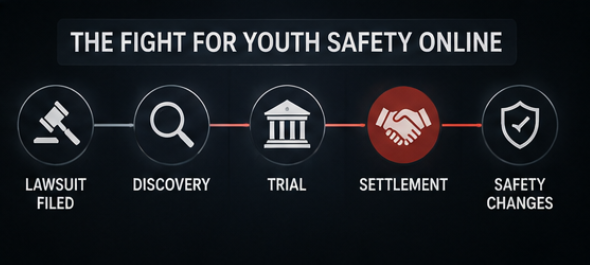
YouTube’s settlement in the R.K.C. social media addiction case is the latest data point in a rapidly accelerating legal calendar. More than 3,300 lawsuits involving addiction claims against social media companies are pending in California state court. Another 2,600 cases brought by individuals, school districts, municipalities and states are pending in California federal court.
In March 2026, a Los Angeles jury found Meta and Google liable for K.G.M.’s addiction and ordered Meta to pay $4.2 million in damages and Google to pay $1.8 million. Earlier this month, the judge rejected the companies’ bid to set aside that verdict. In May 2026, Meta, Snap, TikTok, and YouTube settled the Breathitt County School District case — as TF covered in its social media lawsuits article — for a combined $27 million. Each settlement strengthens plaintiff lawyers’ negotiating position in the next case.
The Zuckerberg Testimony Looms — Again
The July trial carries a specific feature that distinguishes it from every preceding settlement. Very similar to the successful case earlier this year of the plaintiff known as K.G.M., R.K.C.’s action seeks to expose the addictive algorithm assault against minors and spiralling mental health issues. Mark Zuckerberg is currently on the list to testify in what will surely be a déjà vu display of deflection and denial.
Zuckerberg appeared in the K.G.M. trial in February 2026 — the first time a major tech CEO had given in-person testimony in social media addiction litigation. His testimony attracted extraordinary press attention. A second Zuckerberg testimony in July would coincide with Meta‘s own preparations for its IPO-adjacent financial disclosures and its ongoing legal exposure across nearly every US state. Additionally, nearly every state in the country has filed lawsuits in its local courts against the companies, accusing them of misrepresenting the safety of their platforms for young users and of designing them to addict children.
The 2026 Platform Response — and Its Limitations
Every platform named in the R.K.C. case has announced child safety measures during 2026. As TF covered in its Starmer UK social media ban article and Canada Digital Safety Act article, the legislative pressure globally has accelerated those announcements. YouTube introduced stricter defaults for under-18 accounts in March 2026. Meta launched Teen Accounts on Instagram in 2025. Snap added Family Centre parental monitoring tools.
By contrast, plaintiff lawyers argue consistently that product safety announcements do not address the underlying design. The lawsuits accuse the companies of misrepresenting the safety of their platforms for young users and of designing them to addict children. Each new safety feature YouTube announces in 2026 is evidence of what the platform could have done earlier — not proof that the earlier design was safe.
TF Summary: What’s Next
The R.K.C. trial against Meta, Snap, and ByteDance begins in Los Angeles on 27 July 2026. Zuckerberg is listed to testify. The settlement terms in the R.K.C.-YouTube case are confidential. The next federal court MDL trial — covering individual personal injury claims — begins with jury selection on 3 February 2027. More than 3,300 California state court cases and 2,600 federal cases are pending.
MY FORECAST: YouTube’s settlement in the R.K.C. social media addiction case sets the pattern for every major platform’s litigation strategy through 2027.
YouTube has settled twice in quick succession — Breathitt County in May, R.K.C. in June — avoiding jury exposure each time. By contrast, Meta faces the July trial with Zuckerberg on the witness list and a K.G.M. verdict already entered against it that a judge refused to overturn.
Meta will attempt to settle the R.K.C. case before 27 July — but Meta‘s settlement calculus is different from YouTube‘s. YouTube paid $1.8 million in K.G.M.
A second trial with the same K.G.M. verdict pattern would cost YouTube comparably. Meta paid $4.2 million in K.G.M. A second trial at the same ratio would cost considerably more — and Bloomberg‘s $400 billion total exposure estimate covers more than 1,300 school district cases alone.
Meta will try to settle. Whether the settlement amount satisfies plaintiff lawyers who know Zuckerberg’s courtroom testimony is its own strategic liability is the question 27 July will answer.
If you or a young person you know is struggling with social media or mental health, please contact the 988 Suicide and Crisis Lifeline by calling or texting 988. In the UK, the Samaritans can be reached at 116 123.
Related Stories
- Social Media on Trial: Lawsuits Mount From Spain to San Francisco
- Starmer Confirms Full UK Under-16 Social Media Ban — Here’s the Timeline
- The Social Reckoning Trailer Drops — Sorkin Returns to Zuckerberg