


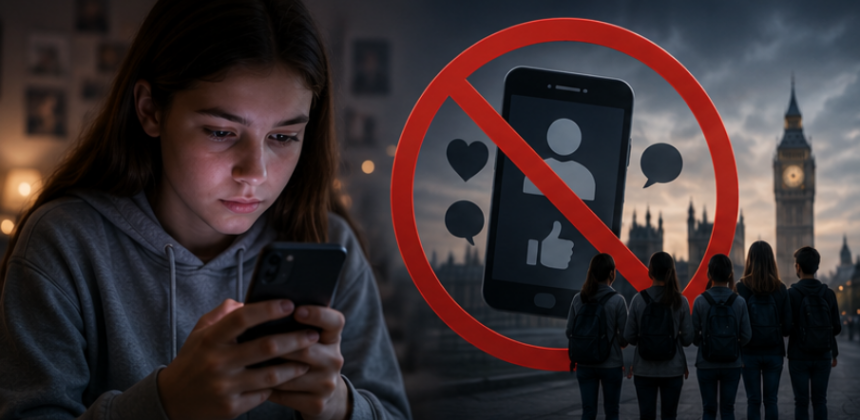
The platforms are named. The timeline is early 2027. But the central question — how does the UK actually verify that a 15-year-old isn’t on Instagram? — has no clean answer yet. Here is everything we know, and everything the government still has to figure out.
The UK under-16 (U16) social media ban mechanics are the story the day after Starmer’s announcement. As TF covered in its full ban article, Prime Minister Keir Starmer confirmed the ban on 15 June 2026. The legislation targets 10 platforms — TikTok, Instagram, Facebook, X, YouTube, Snapchat, Threads, Twitch, Kick, and Reddit. Technology Secretary Liz Kendall subsequently confirmed Bluesky falls under the definition as well — matching Australia’s covered list exactly. The reaction from parents, child safety advocates, digital rights groups, and the platforms themselves splits into three distinct camps. Each camp is making a coherent case. None of them fully agrees with the others.
What’s Happening & Why It Matters
Camp One: The Parents and Child Safety Advocates

The UK U16 social media ban mechanics enjoy their strongest backing among parents who have experienced child online harm directly. Esther Ghey — whose 16-year-old daughter Brianna was murdered in 2023 by two teenagers who had accessed harmful content online — said the ban would “potentially save so many children’s lives.” She added an important qualifier: the ban must come alongside other protective measures, not instead of them.
The NSPCC — the UK’s leading children’s charity — praised the government’s ambition. By contrast, the NSPCC immediately pressed for more specificity. The charity urged authorities to ensure platforms deploy “robust age checks” and actually enforce the policy — not simply announce it. That conditionality is telling. Supportive organisations are backing the policy’s intent while reserving judgement on its execution. The Smartphone Free Childhood campaign — which generated mass email campaigns in January that first pressured Starmer toward considering the ban — described today’s announcement as vindicating months of grassroots advocacy.
Camp Two: The Critics — Privacy, Data, and Enforcement
The Open Rights Group leads the sceptical camp — and their argument is the most technically grounded of the three. A ban on U16s requires verifying that every user accessing a platform is 16 or older. At scale, that means building what the Open Rights Group describes as “a mass age-verification system for the entire internet.” That system, they argue, creates serious risks to privacy, data protection, and freedom of expression — not just for children, but for every adult who must prove their age to access platforms they currently use without any verification requirement.
Additionally, the Molly Rose Foundation — a charity established in the memory of Molly Russell, who took her own life after encountering harmful content on Pinterest and Instagram — holds a nuanced position. The foundation supports stronger child safety but argues strongly that platforms should be made safer, not merely gated. Rushing a ban, it argues, risks creating unintended consequences while leaving harmful content available to everyone who successfully circumvents age verification — which teenagers, the foundation notes, are highly capable of doing.
The Age Verification Problem — Three Methods, No Guarantees

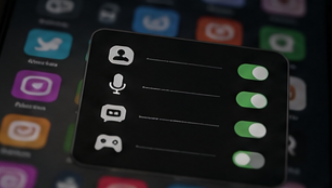
The UK government has cited three possible age assurance mechanisms. First, face or voice recognition — estimating age biometrically from a selfie or voice sample. Second, government ID verification — requiring a passport or driving licence to create an account. Third, age inference systems — analysing behavioural signals like content preferences, posting patterns, and app usage to estimate whether a user is likely U16. Each method carries specific limitations. Biometric approaches raise privacy concerns and can be fooled. Government ID creates a database of adults’ social media accounts that could be breached or misused. Behavioural inference produces false positives and false negatives that no one has yet solved at population scale.
Australia’s experience provides the most relevant live evidence. There, platforms including TikTok, YouTube, and Instagram deployed a combination of behavioural analysis and selfie-based age estimation. Meta revoked access to 4.7 million accounts identified as belonging to U16s. Furthermore, Australian data shows that many teenagers found workarounds within weeks — using VPNs, altering birthdate fields, or accessing platforms through a parent’s account.
The Platforms Respond — YouTube Fights Back
The platform responses have been measured — and not uniformly supportive. A YouTube spokesperson described the platform as “a vital resource for young people, educators and parents” — a statement that frames the ban’s scope as potentially counterproductive for legitimate educational use. Notably, YouTube occupies a specific position in the debate. It is simultaneously one of the platforms young people use most harmfully — and one of the platforms most used for legitimate learning. Teachers, students, and parents all depend on it for educational content that has no social-network equivalent.
By contrast, the government confirmed that platforms operating “social media” functions are covered — while educational or professional tools without social networking components fall outside the scope. Where YouTube is within that definition is unresolved. Liz Kendall is expected to publish a precise definitional framework in forthcoming secondary legislation.
The Political Pressure That Accelerated the Timeline
One detail of the announcement timeline has received less coverage than the policy itself. More than 60 Labour MPs, led by Fred Thomas, signed a parliamentary letter demanding bold action on child online safety. Additionally, Manchester Mayor Andy Burnham applied public pressure ahead of the Makerfield by-election on 18 June — a constituency where child online safety is a prominent local issue. Downing Street fast-tracked its decision-making in response. That political acceleration is the reason a policy that entered consultation in March reached formal announcement in June — a three-month timeline that experts note is unusually fast for legislation of the complexity.
TF Summary: What’s Next
Liz Kendall publishes implementation guidance in the coming months — defining which platforms are covered, specifying age assurance requirements, and setting enforcement penalty levels. The modified legislative pathway bypasses the need for entirely new primary legislation — using amendments to existing crime and child protection law. Early 2027 is the stated implementation date. The government will run pilots with families and teenagers before the ban takes full effect, examining which verification methods work in practice.
MY FORECAST: The UK U16 social media ban mechanics will produce a two-speed outcome. Major platforms — Meta, TikTok, Snap — will invest in age assurance infrastructure and achieve substantial but imperfect compliance. Smaller platforms and VPN-accessible alternatives will absorb the displaced U16 audience that the ban sends off mainstream services. By contrast, the ban’s most durable impact will be on the youngest users — 10 to 13-year-olds — who are less likely to find workarounds than teenagers. That outcome is exactly what Esther Ghey and the Molly Rose Foundation most care about. The debate between privacy advocates and child safety groups will continue long after the ban takes effect. The question of whether the UK built the right balance between protection and proportionality will not be answered in 2027.
Related Stories
FOCUS KEYPHRASE:
META DESCRIPTION: The UK under-16 social media ban covers 11 platforms from early 2027. Age verification is unresolved. Reactions split three ways. Here’s what we know — and what the government still must figure out.