


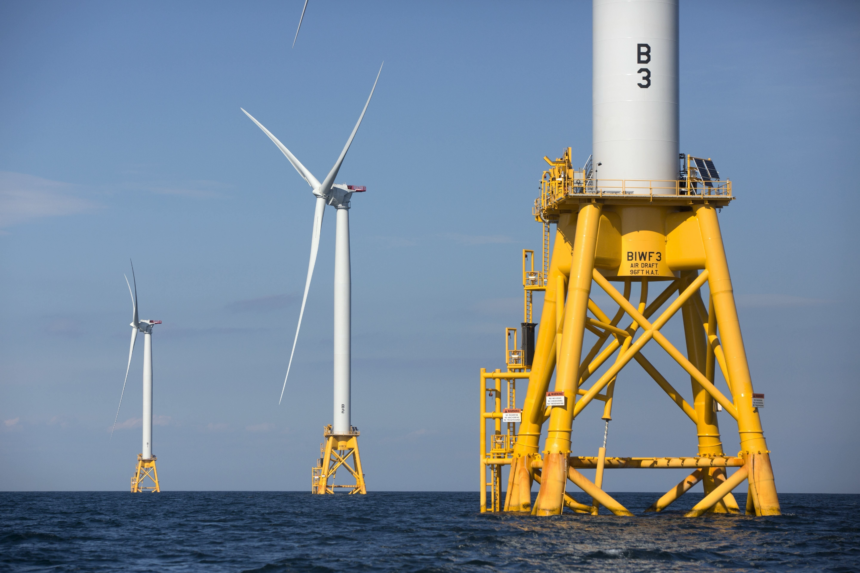
Federal courts reopen stalled offshore wind projects, questioning government process and national security claims.
A U.S. federal judge clears the way for offshore wind construction to resume.
After a sudden government order halts multiple projects, the courts step in. Judges rule that the shutdown lacks proper justification. They also rule that the harm to developers outweighs the government’s case. Construction restarts while legal battles continue.
The decision is far beyond a single wind farm.
It changes U.S. energy policy, affecting billions in investment. The decision tests how far executive power can reach when climate, security, and infrastructure collide.
Most of all, it sends a signal. Courts still demand evidence. Courts still expect process.
What’s Happening & Why This Matters
Courts Block U.S. Government’s Construction Freeze
A federal court orders the restart of all U.S. offshore wind construction projects that the Department of the Interior abruptly halted. The injunction stays in place until a final ruling resolves the legal challenge.

The government claims the construction pause protects national security. Officials argue that offshore wind turbines pose risks linked to surveillance and military readiness. The order stops new construction and repairs. It does not stop already built turbines from operating.
The inconsistency raised red flags in court.
U.S. District Judge Brian E. Murphy reviews classified material tied to the government’s argument. He finds it unpersuasive. He also finds the policy logic difficult to defend.
“If the government’s concern is the operation of these facilities,” Murphy writes, “allowing the ongoing operation of the 44 turbines while prohibiting the repair of the existing turbines and the completion of the 18 additional turbines is irrational.”
It states the entire case as a process failure. Courts do not need to decide whether offshore wind creates risk. Courts need only determine whether the government acts rationally and lawfully.
In this case, the judge says no.
Sudden Orders Trigger Immediate Harm
The court also focuses on how the government issues the shutdown. The Interior Department delivers the halt without warning. It does not consult developers or provide an appeal process. It does not explain why partial operation is acceptable while construction stops.

Judges intervened.
They note that the order inflicts “substantial harm” on companies that already invest billions in near-complete projects.
Some wind farms sit weeks from completion. Turbines stand installed but unfinished. Construction vessels wait idle. Workers face layoffs. Supply chains stall.
The court sees this as avoidable damage.
So it grants immediate relief.
The injunction blocks the construction freeze. It allows work to continue until the legal merits are thoroughly reviewed. The government can still appeal. Yet the consistency of these rulings suggests limited success ahead.
Several projects will likely finish before any appeal reaches a decision.
That reality changes leverage.
Offshore Wind: Core to U.S. Energy Goals
Offshore wind plays a critical role in U.S. climate strategy. Federal targets call for tens of gigawatts of offshore wind capacity by 2035. Coastal states rely on these projects to decarbonize grids, stabilize energy prices, and meet emissions goals.
Private capital responds.
Developers invest billions in port upgrades, vessels, and long-term supply contracts. Utilities sign power purchase agreements. States plan transmission upgrades around these projects.
A sudden halt in construction disrupts everything. That is why the ruling resonates. It restores predictability, and energy infrastructure cannot be shut down overnight without a solid legal foundation.
The decision reinforces the judiciary’s role in energy governance. Courts remain a check when policy shifts arrive without process.
Courts Strike Down Secretive Climate Advisory Efforts
This offshore wind case does not exist in isolation.
In a separate ruling, a federal judge declares that the Department of Energy’s Climate Working Group violates the law. The court finds that the group operates illegally under the Federal Advisory Committee Act.
The working group forms to undermine the Environmental Protection Agency’s greenhouse gas endangerment finding. That finding underpins U.S. authority to regulate carbon emissions.
The group operates in secret.
Emails show members use private accounts to avoid public scrutiny. The group avoids open meetings. It keeps no transparent records. The Department of Energy later dissolved the group and argues that the lawsuit no longer matters.
The judge rejects that argument. “These violations are established as a matter of law,” the ruling states.
The court orders disclosure of all communications. Advocacy groups publish the emails. The deliberations are public as required by law.
There is a pattern. Courts respond strongly when agencies bypass transparency rules. They react even more strongly when those actions aim to shape climate policy without evidence or balance.
Together, the two rulings draw a clear line. Energy policy still requires a lawful process. Courts still enforce it.
Construction Resumes, Confidence Improves
For offshore wind developers, the immediate impact is relief. Construction crews return to work. Installation resumes. Timelines reset. Financing stabilizes.
The ruling does not remove risk entirely. Legal uncertainty remains until final judgments land. Yet the injunction buys time. It also restores momentum.
For investors, the message is subtle but essential. Courts remain skeptical of abrupt regulatory reversals. Infrastructure investments still enjoy some protection against sudden political shifts.
That matters for long-horizon projects like offshore wind, nuclear, grid upgrades, and carbon capture. These projects require certainty. Without it, capital retreats.
The ruling supports the idea that courts help maintain that certainty.
National Security Claims Under Scrutiny
The government states its original order around national security.
That structure carries weight. Courts typically defer to security arguments. Yet deference does not mean blind acceptance.
In this case, judges review classified material. They still reject the logic. They focus on inconsistencies and a lack of proportional responses.
That sets an important precedent. Security claims must align with policy actions. Agencies must show coherence. They must also show necessity.
Allowing turbines to operate while blocking construction weakens the argument. Courts notice that. Future cases will feel this effect.
Agencies will need more unmistakable evidence. They will need narrower actions. Broad freezes without explanation will struggle in court.
Clean Energy Policy Is Contested, Resilient
The rulings indicate a more profound truth. Clean energy policy in the U.S. remains contested. Politics shift. Administrations change. Strategies diverge.
Yet the legal system continues to anchor the process. Courts enforce transparency, demand rational action, and protect reliance interests.
That does not guarantee smooth progress. It does guarantee debate within the rules. For offshore wind, that distinction matters.
Projects move forward not because courts favor renewables. They move forward because courts enforce the law.
Distinction strengthens legitimacy.
TF Summary: What’s Next
A federal judge orders the restart of offshore wind construction after finding the government’s shutdown order irrational and procedurally flawed. Courts block the freeze while legal challenges continue, allowing nearly complete projects to proceed. Parallel rulings also strike down secretive climate advisory efforts inside the Department of Energy.
MY FORECAST: Offshore wind construction accelerates through 2026 as courts continue to push back on abrupt regulatory disruptions. National security arguments face tighter scrutiny. Clean energy investment regains stability. Legal process, not politics, shapes the next phase of U.S. energy infrastructure.
— Text-to-Speech (TTS) provided by gspeech | TechFyle