


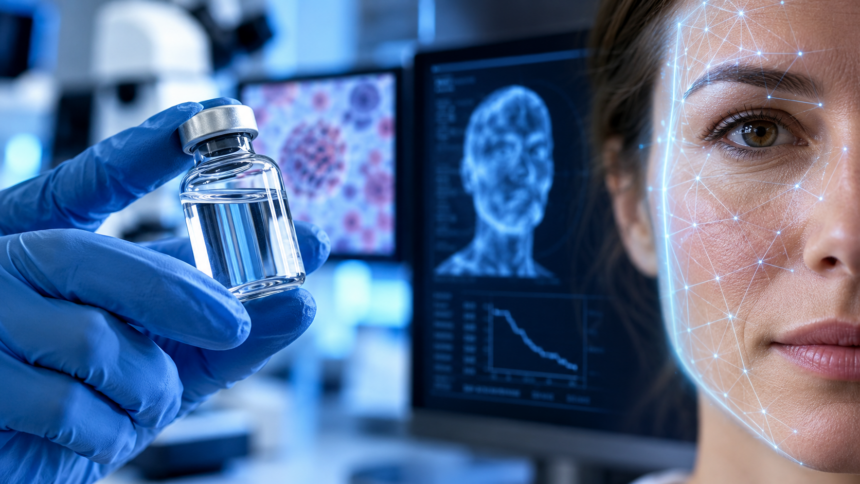
Moderna and Merck report phase 3 gains, while Mass General Brigham trains a face-reading model on 40 million photos
An mRNA vaccine cut melanoma recurrence or death risk by 42%, and an AI tool predicts cancer survival from a selfie, TF has learned.
Moderna and Merck released the vaccine data on 22 October. Researchers at Mass General Brigham published the selfie study in The Lancet Digital Health three days earlier. Each result is promising, but each has limits.
What’s Happening & Why It Matters
A Personalised Vaccine Meets Phase 3 Goal
The INTerpath-001 trial randomised 1,137 people with resected stage IIB to IV melanoma. Two-thirds received the personalised vaccine, intismeran autogene, plus Keytruda. The rest received a placebo plus Keytruda. After a median follow-up of 24.6 months, recurrence-free survival improved with a hazard ratio of 0.58.
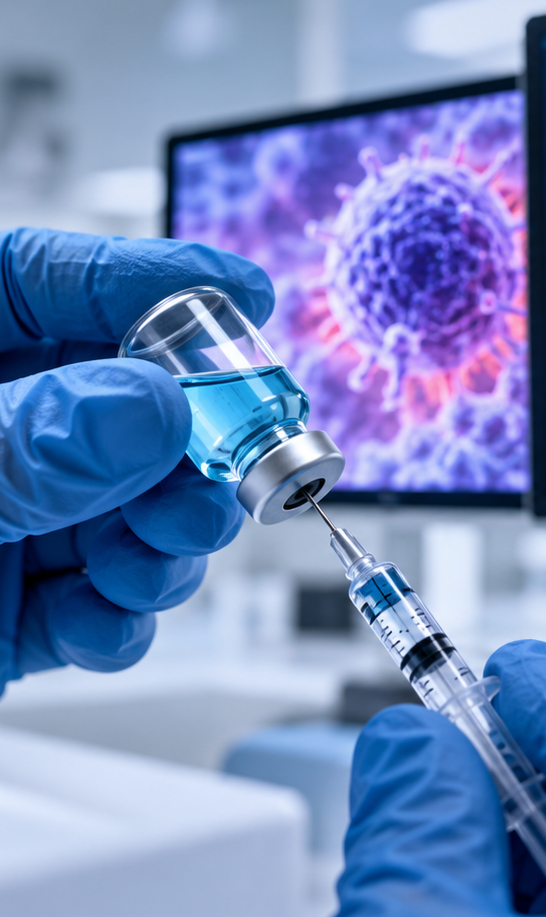
Two-year recurrence-free survival reached 82.2% with the combination, against 70.0% with Keytruda alone. The risk of distant spread fell 38%, and two-year distant metastasis-free survival reached 88.5% versus 80.2%. Each vaccine is built from a patient’s tumour and encodes up to 34 neoantigens.
Reading Outcomes Carefully
The 42% figure covers recurrence or death combined. Overall survival data are immature, though the companies report a favourable trend. Benefit arrived late. The first six months showed no difference, and after six months the hazard ratio fell to 0.42.
Safety looks manageable. Treatment-related adverse events reached 95.8% with the combination and 90.0% with Keytruda alone. Grade 3-5 events were similar at 14.2% and 13.4%. Fever (52.2%) and injection-site pain (51.0%) were the common complaints. About 7% of vaccine recipients stopped treatment because of an adverse event, compared with 5% in the comparison group.
Investors wanted more. Moderna had called a 35% reduction meaningful, yet analysts hoped for 40% to 50%. Moderna’s shares fell by more than a fifth after leaked data circulated. The full results will be presented at the ESMO Presidential Symposium, and The New England Journal of Medicine has accepted the paper.
The Selfie Model
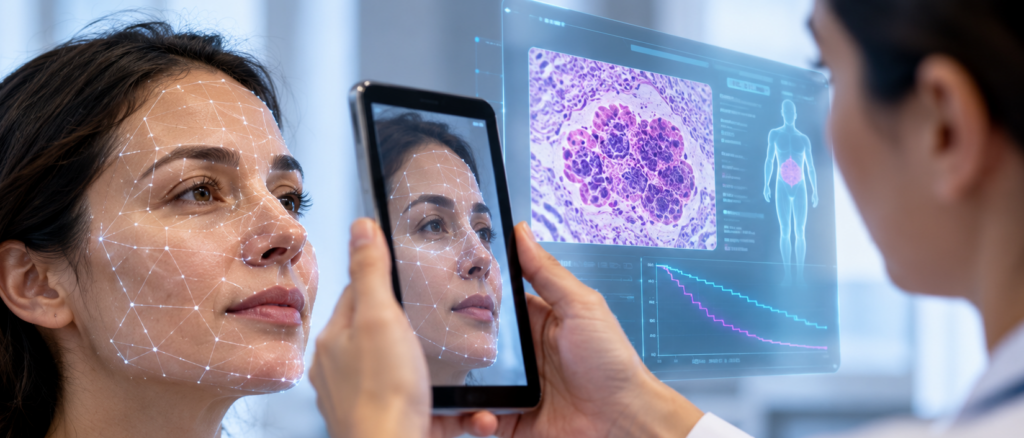
Mass General Brigham built FAHR-Face on more than 40 million facial photographs. The model powers FAHR-FaceAge, which estimates biological age, and FAHR-FaceSurvival, which predicts survival from the image. Patients who looked at least five years older than their calendar age carried a 21% higher risk of death. Patients who looked five years younger carried a 17% lower risk.
The team tested the model on 3,820 patients and validated the model on 4,892 patients in the Netherlands. In the highest-risk group of one test set, 64 of 122 patients died within 90 days. The scores rank relative risk across a group and do not provide individual odds. Researchers describe the tool as support for clinicians.
Where the Selfie Tool Falls Short
The training data came from a Boston-area population that was mostly white. Facial age did not link to survival for Black patients after adjustment. A smile or a change in lighting shifted age estimates by about two years. The study could not show the scores beat a doctor’s read of a patient’s fitness.
Privacy raises a larger worry. An ethicist, Matthew Liao, warned insurers or employers could misuse face-based risk scores. Hospitals would need strict rules for storing face images and limiting who can see the scores.
My take: The vaccine result is the stronger story, with 1,137 randomised patients behind the finding. Patients and doctors should wait for overall survival before calling the vaccine a cure. The selfie tool is clever, but a face-based risk score in a medical record invites misuse. Research use is fine until hospitals publish clear consent and data rules.
TF Summary: What’s Next
Moderna and Merck will present full vaccine data at ESMO and publish in The New England Journal of Medicine. Nine phase 2 and 3 trials continue across other tumour types, including three in lung cancer. Mass General Brigham plans more diverse training data and tests in more hospitals.
MY FORECAST: Merck and Moderna will seek approval for intismeran in melanoma by mid-2027. Overall survival data will decide the label. Hospitals will test the selfie model in trials through 2027, with no routine clinical use before 2028.
Related Stories
- Microsoft’s Nadella and Smith Back an AI Emergency Brake
- Anthropic Plans 5% Share Pledge for a Public Benefit Fund
- Meta Muse Wonder: First Frontier AI Model
- Gemini Personal Intelligence Arrives in Android Auto
- Google DeepMind Staff Resign Over Military AI Contracts