


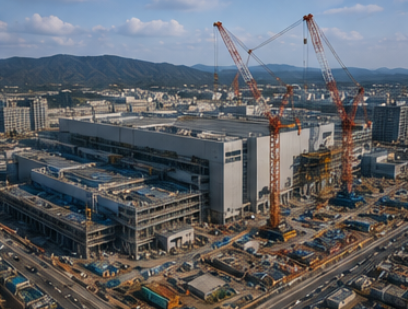
The last time Micron’s stock fell sharply, the company signed a $9.3 billion expansion two days later. Tokyo is putting up $3.1 billion of it. Shipments start 2028. And Micron just locked in a supply deal with Anthropic — memory architecture and a Series H investment, all in the same week.
Micron’s Hiroshima expansion broke ground — a ¥1.5 trillion ($9.3 billion) undertaking to produce advanced high-bandwidth memory chips essential for AI processors. Micron Technology CEO Sanjay Mehrotra joined senior Japanese officials at the ceremony, including Economy, Trade and Industry Minister Ryosei Akazawa. Delivery and installation of manufacturing equipment is scheduled to begin in the second half of 2028. Japan’s Ministry of Economy, Trade and Industry has allocated up to ¥500 billion ($3.1 billion) to help cover the cost. “When American boldness meets Japanese craftsmanship, you do not get a compromise,” Mehrotra said at the ceremony. “You get the best in the world.” The expansion targets HBM — the specialised chip stacked alongside AI accelerators including NVIDIA‘s — and is directly inside the memory shortage TF has covered extensively across 2026, including its semiconductor chaos article.
What’s Happening & Why It Matters
The Timing Problem — After a Historic Stock Slide
Micron’s Hiroshima expansion was committed to two trading days after Micron‘s stock logged its sharpest slide since the AI rally began. Michael Burry disclosed a new short position against Micron on 2 July, and the stock closed down 5.5% that day — part of a two-day slide of roughly 15%. By contrast, Micron shares are up approximately 698% over the past year, and the company crossed a $1 trillion market cap in May. That combination — a historic short-term slide alongside historic year-on-year gains — captures the specific volatility currently defining AI memory stocks.
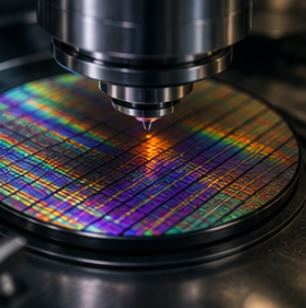
Burry’s public argument, cited on Stocktwits, rests on Micron’s long documented cycle of boom and bust: 34 drawdowns of more than 30% over 42 years, calling the company a “destroyer of capital” one quarter out of three. Micron‘s own guidance for Q4 fiscal 2026 calls for $50 billion in revenue — a bet, in Burry’s ideal, the AI-driven cycle behaves fundamentally differently from every prior memory cycle in the company’s history.
Why Hiroshima and HBM
Micron’s Hiroshima expansion targets the single tightest bottleneck in current AI chip supply. Micron took over the Hiroshima facility when it acquired bankrupt Japanese DRAM maker Elpida Memory Inc. in 2013. Micron’s very first HBM production wafer was made at the same Hiroshima site. Additionally, Kota Nosaka, representative director of Micron‘s Japan unit, noted a specific supply chain advantage. “Roughly 80% of chip materials the Hiroshima factory needs comes from Japan” — a domestic supply concentration that reduces geopolitical exposure compared to a fully imported materials chain.
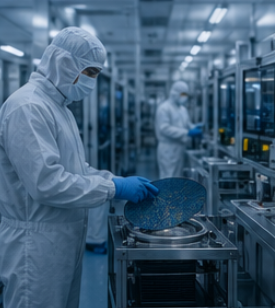
The competitive stakes are precise. According to Counterpoint Research, SK Hynix led the global HBM market at approximately 57% at the end of 2025, with Samsung at 22% and Micron at 21%. All three companies are racing toward next-generation HBM4E and HBM5 products simultaneously. As TF covered in its Chip World in Chaos article, those same three companies — Samsung, SK Hynix, and Micron — currently face a joint class-action lawsuit alleging DRAM price-fixing filed 25 June. The Hiroshima expansion proceeds regardless of that pending litigation.
The Anthropic Connection — Long-Term Supply
Micron’s Hiroshima expansion arrives alongside a specific strategic move designed to reduce exposure to the boom-bust pattern Burry cites. Just before breaking ground, Micron signed a strategic partnership with AI startup Anthropic. The two companies are pursuing joint development of memory architecture and long-term supply agreements, and Micron participated in Anthropic‘s Series H investment round. That deal is a direct hedge against the historical memory cycle Mehrotra has publicly acknowledged. New fabs take years to build, and next-generation memory is far more complex to manufacture — limiting oversupply risk in a way earlier DRAM cycles did not experience.
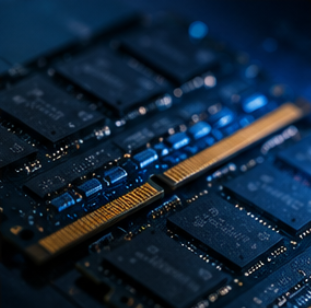
Mehrotra’s strategy connects across geographies simultaneously. Micron is building two leading-edge fabs in Boise, held a groundbreaking ceremony in January for a $100 billion production site outside Syracuse, New York, and is expanding in Singapore and Taiwan. Together those investments target 40% domestic US DRAM production — a supply chain diversification effort that treats memory as strategic infrastructure rather than a purely cyclical commodity business.
TF Summary: What’s Next
Delivery and installation of manufacturing equipment at Hiroshima begins in the second half of 2028, with commercial shipments targeted for summer 2028. Micron reports fiscal Q4 2026 results with guidance of approximately $50 billion in revenue and 86% gross margins. The Anthropic partnership’s memory architecture collaboration continues alongside the Series H investment. Japan’s Prime Minister Sanae Takaichi unveiled a ¥101.6 trillion chip and AI investment roadmap through March 2041 the previous month.
MY FORECAST: Micron’s Hiroshima expansion will not resolve the current HBM shortage before 2028 — a multi-year gap that keeps AI memory prices elevated regardless of today’s groundbreaking. By contrast, the more consequential development is the Anthropic supply agreement, which signals a structural shift toward AI labs locking in dedicated memory capacity years ahead of need — the same strategy OpenAI pursued with its Jalapeño chip partnership, as TF covered in its OpenAI Broadcom article. Expect Google DeepMind and Meta AI to announce comparable direct memory-supply partnerships within 12 months. Burry’s short position will be tested well before 2028’s shipment date — Micron’s next two quarterly reports will show whether AI memory demand sustains the pricing power justifying today’s valuation, or whether the historical boom-bust pattern he cites reasserts itself first.
Related Stories
- Chip World in Chaos: $518B Investment, a Smuggling Raid, a Price-Fixing Lawsuit, and a Record Surge
- OpenAI and Broadcom Unveil Jalapeño — a Custom AI Chip Built to Cut NVIDIA Costs by 50%
- IBM Claims the World’s First Sub-1-Nanometre Chip Technology