


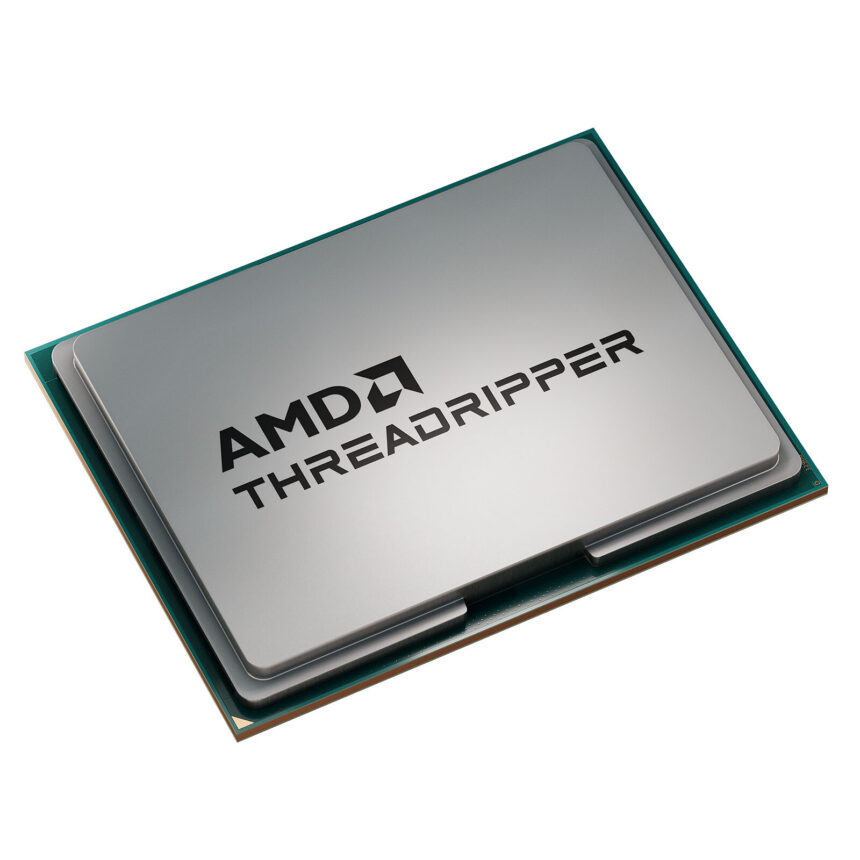
Two terabytes of memory. Trillion-parameter models running without touching a cloud server. AMD’s pitch is direct: 3.4 times more memory than Nvidia’s comparable machine, at a fraction of the price gap the specs alone suggest.
AMD unveiled the Threadripper Halo Station at Berlin’s IFA trade show, a desktop workstation the company is calling a “personal supercomputer” built to run AI models exceeding a trillion parameters on local hardware. AMD Senior Vice President Jack Huynh called it “the most powerful workstation in the world, designed and engineered for a new era of computing.” The machine packs a 96-core Threadripper Pro 9995WX processor, two MI350P data centre accelerators expandable to four, up to two terabytes of system memory, and up to 576 gigabytes of HBM3E high-bandwidth memory — all liquid-cooled. Huynh demonstrated the system live, generating an entire 3D world and flight simulator from a single prompt.
What’s Happening & Why It Matters
A Direct Shot at Nvidia’s DGX Station
AMD’s target here isn’t subtle. The Threadripper Halo Station competes with Nvidia’s DGX Station, the reigning machine in high-end AI workstations, and AMD’s own comparison numbers make the positioning explicit: 3.4 times the total system memory of Nvidia’s comparable offering, and more than three times its memory bandwidth. That’s a meaningful technical edge on paper — running large models locally depends on how much memory a single machine can hold, not just raw processing speed.
Nvidia’s advantage is elsewhere. The DGX Station offers more seamless integration when moving code from a local workstation into cloud deployment, and critically, it’s already shipping — available at €100,000. AMD’s own commercial release is planned for early 2027, meaning the company is announcing a genuine technical lead months before customers can buy the hardware that delivers it.
Why “Local” Is the Pitch
AMD called the target buyer: individuals and small teams doing serious AI work who are constrained by cloud access — developers who’d rather not send their data to a cloud provider every time they want to run inference on a trillion-parameter model. That’s a different value proposition than raw performance alone. Cloud AI subscription costs compound over time for institutions running frequent large-model workloads, and a machine that can run those same models on local infrastructure removes both the recurring cost and the data-exposure question a cloud dependency creates.
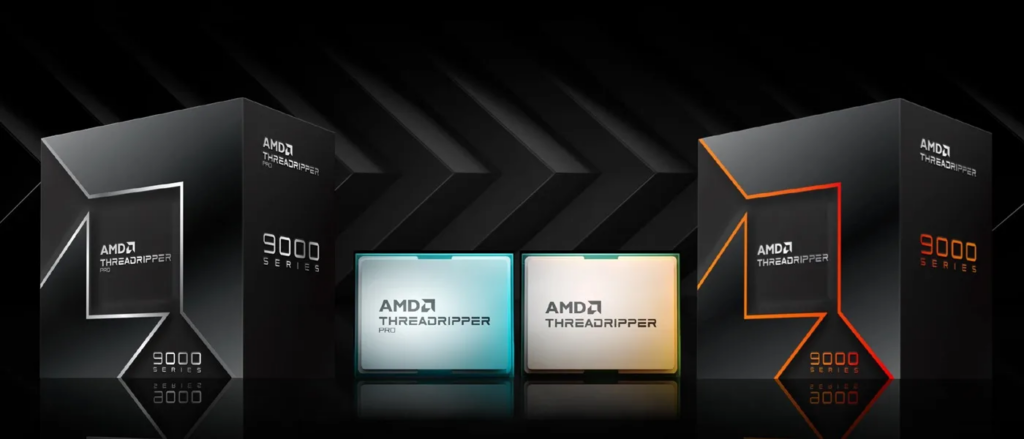
Huynh backed that point with a specific usage statistic: AMD estimates monthly AI token processing rose from 0.7 quadrillion to 1.7 quadrillion in a single year, with projections pointing toward 120 quadrillion tokens processed monthly by 2030. That’s the demand curve AMD is betting justifies building powerful local hardware rather than assuming every serious AI workload defaults to the cloud.
Local-AI
The Threadripper Halo Station wasn’t AMD’s only announcement at IFA. The company also introduced Strix Halo and Gorgon Halo chip architectures, aimed at running models up to 125 billion parameters on Windows machines — smaller than the Threadripper’s trillion-parameter ceiling, but built for laptops and compact desktops rather than a dedicated workstation. Lenovo confirmed a ThinkCentre X model powered by Gorgon Halo, and HP is building a new laptop line under the codename “Sunday.”
AMD paired the hardware announcements with software partnerships aimed at making local AI usable, not just possible. Microsoft’s Pavan Davuluri appeared at the keynote to announce Project Zenith, a developer-focused initiative. At the same time, SUSE CEO Dirk-Peter van Leeuwen described a partnership giving developers a path from local experimentation on Ryzen AI Halo systems to secure, manageable production deployment through SUSE AI Factory and SUSE Rancher. That’s AMD building the full stack — chips, software tooling, and a production pathway — rather than just shipping powerful hardware and leaving developers to figure out the rest themselves.
TF Summary: What’s Next
The Threadripper Halo Station’s commercial release is planned for early 2027, with no confirmed pricing announced yet. Strix Halo and Gorgon Halo-powered devices, including Lenovo’s ThinkCentre X and HP’s codenamed “Sunday” laptop line, are expected to reach market on a nearer-term timeline. Microsoft’s Project Zenith developer initiative, announced alongside AMD’s hardware, has no confirmed launch date.
MY FORECAST: Expect Nvidia to respond with its own next-generation DGX Station refresh within the next year, given how AMD’s 3.4x memory advantage challenges the current generation’s core selling point. The local-versus-cloud AI computing question is becoming a real market segment rather than a niche concern, and AMD’s own token-processing growth estimates — if they hold anywhere close to accurate — suggest demand for local, private, large-model computing will keep expanding well beyond the developers and small teams AMD is targeting first. Watch whether AMD’s early-2027 pricing is below Nvidia’s €100,000 DGX Station; a genuine price advantage on top of the memory lead would make the competitive gap harder for Nvidia to answer with hardware specs alone.
Related Stories
- Nvidia Buys Hugging Face for $12.9 Billion
- Nvidia Doubles AI Revenue, Stalks on China Question
- RAMageddon Hits MacBook Air Supply as Chip Shortage Deepens