


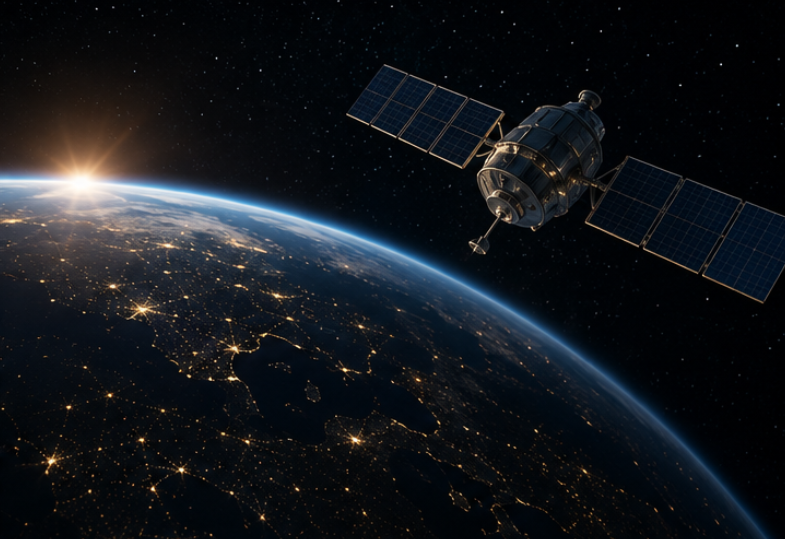
Impulse Space raised $500 million at a $4.26 billion valuation. Blue Origin says it can return to flight despite a launchpad that exploded in May. And Amazon’s satellite rival to Starlink reached the threshold needed to start commercial service. That’s one very active week in orbit.
The week’s space sector developments span three distinct stories that together capture the current state of the commercial space race. Impulse Space — the in-space mobility company founded by former SpaceX propulsion lead Tom Mueller — closed a $500 million Series D funding round, pushing its valuation to $4.26 billion. Meanwhile, Blue Origin continues an aggressive recovery effort following a catastrophic May launchpad explosion, with CEO Dave Limp maintaining a return-to-flight target before the end of 2026. And Amazon Leo — Amazon’s satellite internet constellation, formerly Project Kuiper — confirmed on 2 July that it has completed enough launches for initial commercial service, following the deployment of its 396th satellite. Three different companies, three different challenges, and three data points on how quickly the commercial space sector is maturing in 2026.
What’s Happening & Why It Matters
Impulse Space’s $500 Million Round
The space developments begin with the largest funding announcement. Impulse Space closed a $500 million Series D round, valuing the company at $4.26 billion. Founded by Tom Mueller — SpaceX‘s former chief propulsion engineer and one of the earliest employees at the company — Impulse Space builds orbital transfer vehicles that move payloads between orbits after their initial rocket launch, rather than building the rockets themselves.
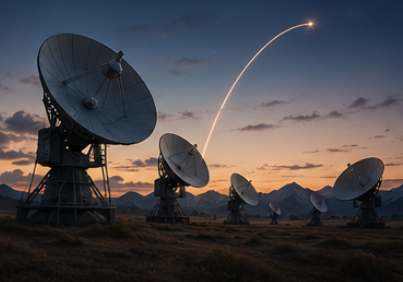
The company’s product line covers three distinct vehicles. Mira is a small orbital transfer vehicle already flying commercial missions. Helios is a larger, more powerful kick stage designed for direct-to-geostationary-orbit deployment — targeting a market currently dominated by expensive dedicated launches. Caravan extends the concept toward larger cargo and eventually crewed transport applications. That product roadmap positions Impulse Space at a specific and increasingly important layer of the space economy: not launching payloads to orbit, but moving them precisely once they get there — a capability that becomes more valuable as orbital traffic increases and satellite operators need more flexible deployment options than a single rocket launch typically provides.
Blue Origin’s Recovery — Faster Than Predicted
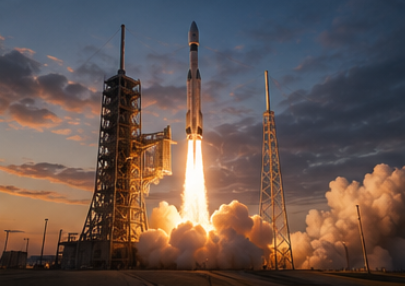
Another space development includes a genuinely surprising recovery timeline from Blue Origin. A New Glenn rocket exploded during a static fire test at Launch Complex 36 in Florida on 28 May 2026, destroying the vehicle and severely damaging the launch site. Industry sources initially predicted a 12-to-18-month stand-down. By contrast, CEO Dave Limp has consistently maintained the company aims to return New Glenn to flight before the end of 2026 — a timeline veteran SpaceX employees who dealt with the aftermath of the 2016 AMOS-6 explosion called “very aggressive,” if not unrealistic.
The recovery approach itself is notable. Rather than rebuilding the destroyed pad in its original configuration, Blue Origin is transitioning to a hybrid horizontal-vertical integration approach — transporting the rocket stack horizontally to the pad, then using a crane to rotate it vertical for launch. That approach mirrors the configuration Blue Origin had already been developing for its larger 9×4 New Glenn variant, meaning the company is accelerating a planned upgrade rather than simply rebuilding what was lost. All debris from the explosion had been cleared from the launch complex by 25 June — a genuinely rapid cleanup timeline.
NASA’s Endorsement — “Plan A Is Looking a Lot Better”
The next space development is a direct assessment from NASA itself. NASA Administrator Jared Isaacman confirmed at a 30 June briefing on the agency’s Moon Base plans that Blue Origin’s response to the situation is “almost beyond impressive” — an assessment he said was shared by the US Space Force, which has been involved in the response. “I get daily updates,” Isaacman added.
That endorsement carries real operational stakes. NASA is counting on New Glenn to launch the Blue Moon lunar landers central to its Artemis programme — as TF covered in its NASA lunar lander contracts article. Isaacman confirmed NASA has explored contingency “plan Bs” should another provider need to step in, but said “Plan A was always New Glenn and plan A is looking a lot better today than it was a few weeks ago.” NASA officials indicated confidence that New Glenn would return to flight by the end of 2026 or in the first half of 2027 — a timeline the agency says is workable for its Artemis 3 mission planning, which requires New Glenn readiness by roughly mid-2027.
Amazon Leo Reaches Service Threshold

The last development is Amazon’s most significant milestone in its multi-year race against Starlink. Amazon Leo confirmed it is ready to commence initial service with its low-Earth-orbit broadband offering following the deployment of 29 satellites on an Atlas V rocket on 2 July — the rocket’s final mission for Amazon. That launch grew the constellation to more than 390 spacecraft. “We’ve completed enough launches for initial service this year, and future missions just add coverage and capacity,” said Chris Weber, Amazon’s vice president leading the programme.
The milestone follows a specific regulatory backdrop. Amazon‘s FCC licence requires 1,618 satellites — 50% of the Generation 1 constellation — in orbit by 30 July 2026. With fewer than 400 satellites currently deployed, that original deadline is effectively unreachable. Amazon filed for a two-year extension in January, citing launcher bottlenecks. Those bottlenecks were compounded directly by Blue Origin‘s May explosion — the destroyed rocket had been scheduled to carry 48 Amazon Leo satellites that were not aboard at the time of the accident, but the resulting launch pad damage removed capacity Amazon was depending on for its 2026 deployment cadence.
TF Summary: What’s Next
Impulse Space‘s $500 million round funds continued development of Mira, Helios, and Caravan. Blue Origin targets New Glenn’s return to flight before the end of 2026, with NASA confidence extending into “the middle of 2027” before contingency planning is necessary. Amazon Leo begins limited commercial service with its current satellite count while continuing launches toward its FCC-mandated deployment targets — the extension request is pending before the 30 July deadline.
MY FORECAST: The satellite wars point toward a competitive multi-provider space economy taking shape faster than most 2024-era predictions suggested. Blue Origin will return New Glenn to flight before year-end — the pace of Launch Complex 36 recovery and NASA‘s own confidence both point in that direction, even if the timeline is genuinely aggressive by industry standards.
By contrast, Amazon Leo will not meet its original FCC deployment deadline regardless of Blue Origin’s recovery speed — the maths simply does not work with fewer than 400 satellites against a 1,618 requirement in under a month. The FCC extension is close to a formality; the regulator has little practical incentive to force Amazon offline entirely when genuine progress is documented.
Impulse Space‘s $4.26 billion valuation signals investor confidence that in-space logistics — not just launch — is where the next major space economy value pool is. As orbital traffic grows across Starlink, Amazon Leo, and dozens of smaller constellations, companies that can move payloads precisely once they reach orbit become as commercially important as the rockets that got them there.
Related Stories
- NASA Commits $590 Million to Four New Lunar Missions
- SpaceX Goes Public — the Largest IPO in Stock Market History
- Tesla Roadster Delayed Again — Demo Now August