


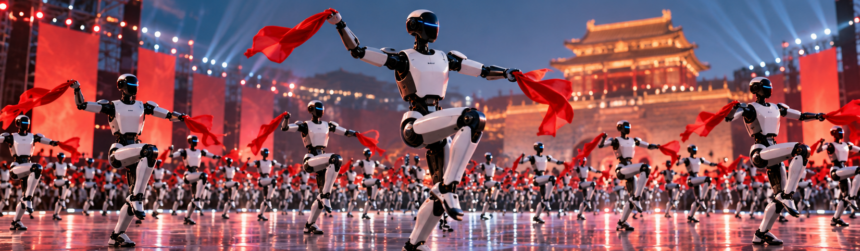
The full-size Expedition A3 machines danced as one in Jinan, all standard production units
AgiBot set a Guinness record when 110 humanoid robots danced in sync on 24 October 2026, TF reports. Jumps, waves, a moving formation, and the number 2026 spelled out by machines. The stunt is a demonstration, and a sales pitch.
What’s Happening & Why It Matters
What AgiBot Did
AgiBot, a Shanghai humanoid maker, staged the show at the Yellow River International Convention and Exhibition Center in Jinan, Shandong. All 110 robots were Expedition A3 models. A Guinness World Records adjudicator confirmed the count. A certificate followed for the most humanoid robots dancing at once.

The routine included jumps, formation changes and wave patterns. Robots arranged themselves into the number 2026. AgiBot says every unit was a standard production model, with no special changes for the event.
How the Robots Stayed in Sync
AgiBot’s LinkBots platform handled scheduling and cluster control. Ultra-wideband positioning tracked each robot to within centimetres, and 5G and Wi-Fi carried the instructions. Partner and senior vice president Wang Chuang credits identical factory calibration for the uniform moves.
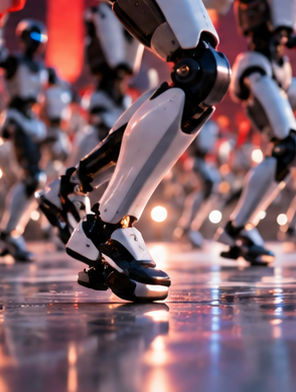
Each A3 stands 173 centimetres tall, weighs about 55 kilograms and runs for up to 10 hours, per published specifications. How well the formation adjustment and obstacle avoidance work outside a controlled hall is not public.
China’s Humanoid Output
AgiBot cites IDC data: over 8,600 shipments in the first half of 2026, about 35% of the global market. The figure comes from the company, with no independent check. China’s industry ministry counts over 40,000 humanoid robots built in the first half, with annual output forecast above 100,000. More than 400 models exist. AgiBot won 46 medals, including 18 gold, at the World Humanoid Robot Games in August.
Why a Dance Is Not a Job
Samm Sacks of the New America think tank told AP the robots are expensive, fragile and reliant on structured settings. Lighting, floor surfaces and small errors across long task chains all cause problems. AgiBot targets tourism, public services, exhibitions, research and education, and has tested guidance and customer help in subway stations. A wider rollout is planned for late 2026.
My take: Choreography is a fair stress test of fleet control. Keeping 110 bodies on beat tests timing, positioning and network load. The routine says little about a warehouse or a hospital. Watch the price per unit and the failure rate in public spaces instead of the trophy.
TF Summary: What’s Next
Rivals in China and the US will stage bigger demonstrations. Buyers will ask for unit prices, uptime data and safety certification. AgiBot says commercial deployments should start before the end of 2026.
MY FORECAST: A rival will claim a larger humanoid dance record by mid-2027. AgiBot will announce a paid public-service deployment by the end of 2026. China’s humanoid output will pass 100,000 units in 2027.
Related Stories
- China Drafts AI Export Controls on 23 Technologies
- Uber Tests Robotaxis in Manchester With Pony.ai and Verne
- Waymo Plans Toronto Robotaxi Pilot for 2028
- Google Unveils Gemini 4 Carbon, a Vulnerability-Hunting Model Few Can Use
- US Bars DeepSeek From Federal Civilian Agencies