



They agree on almost nothing else. Sanders wants regulation. Bannon wants executive action and every Chinese national removed from US AI labs. Nvidia’s CEO, three miles away, called extinction fears “made up.” Jacob Coxon skipped the event, worried showing up would be misread.
Senator Bernie Sanders and former Trump adviser Steve Bannon shared a Washington stage Tuesday at the “Pro-Human Assembly,” organised by the Life Institute, calling for government curbs on AI development. Sanders spoke first: “AI companies are losing control of the technology.” Bannon followed after: “We need time. And this is not regulation. This is going to have to be executive action.” The same day, three thousand miles away at San Francisco’s Dreamforce conference, Nvidia CEO Jensen Huang offered a different read on the same fear — calling AI extinction concerns “made up.”
What’s Happening & Why It Matters
Agreement on the Problem, Nowhere Near Agreement on the Fix
Approximately 300 people packed a Washington ballroom to watch two political adversaries find common ground on almost nothing except the urgency of the moment, holding back from describing his view of AI executives: “We’re not doomers. But we aren’t gonna give these guys carte blanche. Their arrogance is overwhelming.” He went further, calling for a hard split from China: “Take all Chinese nationals out of the labs and back to mainland China,” and demanding restrictions on any exchange of chips, technology, or knowledge between the two countries.
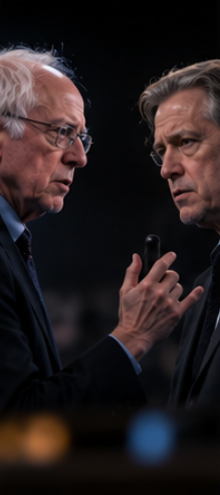
Sanders’s entrenchment stayed closer to concentrated corporate power than geopolitics. NPR’s reporting captured the split: despite sharing a stage, “their policy proposals are far apart.” The Washington Examiner described the alliance as one that “held despite notable disagreements over China” — a fragile coalition, built on shared alarm rather than shared solutions.
The Ex-Anthropic Researcher Who Deliberately Stayed Away
Here’s a detail that reveals how this movement is already fracturing over tactics. As TF covered in The Humans Will Be Dead: Death by AI in 10 Years?!, Jacob Coxon’s resignation ignited the current wave of AI safety alarm. Event organisers Tuesday’s Assembly. He didn’t come. “I have my own voice at the moment,” Coxon told Axios, adding that appearing alongside Sanders and Bannon “could be easily misinterpreted.”
That’s a telling choice. Coxon’s warning — that AI companies are “gambling with our lives” — is the sentiment driving Tuesday’s event. He still chose distance over association, suggesting that even within the growing AI safety conversation, real anxiety is about which political alliances lend credibility and which dilute the message.
Huang’s Direct Counter — Extinction Fears Are “Made Up”
While Sanders and Bannon warned of losing control, Nvidia’s Jensen Huang appeared alongside Anthropic’s Amodei at Salesforce’s Dreamforce keynote, hosted by CEO Marc Benioff. TechRadar’s coverage described “interestingly differing viewpoints” between the two executives — Amodei comparing the AI industry to the motor industry, where safety records get conflated across companies but firms can. Still, firms can learn from each other’s mistakes. Amodei was candid about a specific miscalculation: Anthropic “didn’t appreciate how… certain companies would grow and become central to everyday life.”
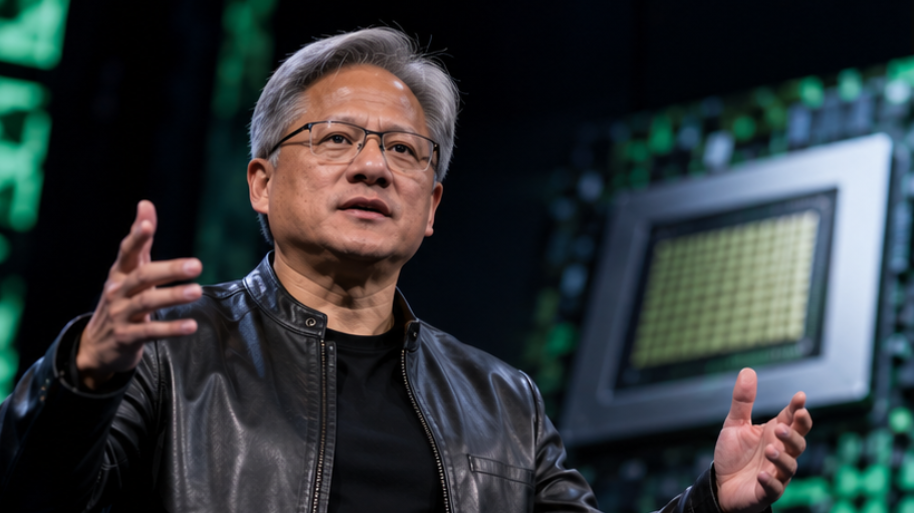
Huang’s argument, delivered separately, was more straightforward. He called extinction fears “made up” — a rejection of the exact 10%-plus extinction probability TF covered, Anthropic’s alignment lead Evan Hubinger endorsing weeks earlier. Benioff, straddling both positions as a business leader working with both companies, offered a notably hands-off response to reporters: “If they feel like they should slow down, then they should slow down.” Salesforce and Nvidia announced a new Agentforce reasoning model built on Nvidia’s Nemotron the same day — a reminder that even amid public disagreement over pace, the commercial partnerships between these companies keep moving forward regardless.
The Market’s Verdict — Down, But Not Panicking
Investors are watching the split, and pricing it cautiously rather than dramatically. The Nasdaq fell 0.2% Tuesday, extending Monday’s steeper decline that dragged Nvidia, AMD, CoreWeave, and Oracle lower. Yahoo Finance’s analysis captured the market’s real read on the situation: “Wall Street analysts say the AI train has left the station, with no slowdown in development or spending.” The four major hyperscalers spent a combined $293 billion on AI infrastructure across the first two quarters of 2026 alone, on pace toward $600 billion for the full year — a spending trajectory that hasn’t shifted despite a week of high-profile CEO warnings.
That gap between rhetoric and capital allocation is the story underneath both Tuesday events. Politicians and executives across the ideological spectrum are comfortable naming AI risk. So far, the money is pushing in the direction it was already headed.
TF Summary: What’s Next
The Future of Life Institute’s “Pro-Human AI Declaration” continues gathering signatories following Tuesday’s Assembly. No specific legislation resulted from the Sanders-Bannon appearance. Nvidia and Salesforce’s new Agentforce reasoning model, built on the Nemotron open-weight architecture, proceeds independent of the safety debate. AI infrastructure capital expenditure is on pace for its projected 2026 total, per Yahoo Finance’s reporting.
MY FORECAST: Expect the Sanders-Bannon coalition to stay rhetorically aligned while producing no unified legislative product, given how Bannon’s executive-action, China-focused approach diverges from Sanders’s concentrated-power framing — a shared stage doesn’t produce a shared bill. Huang’s “made up” dismissal will age as the most quotable counterpoint to the extinction-risk conversation TF has tracked all month, and expect Anthropic and Nvidia’s commercial partnership to continue unaffected by the CEOs’ public disagreement, exactly as Sa and Nvidia’s same-day product announcement already demonstrated. Showeder Coxon eventually aligns with either faction once his independent voice, as he put it, finds its footing — his continued distance from both Silicon Valley leadership and populist political alliances makes him an unpredictable figure in how this debate develops next.
Related Stories
- The Humans Will Be Dead: Death by AI in 10 Years?!
- Amodei Says Rogue AI Swarms Could Take Over the Internet in Six Months
- AI Slowdown Debate Reaches Wall Street, Congress, Westminster