



In August, London’s launch had stalled while the regulator admitted it wasn’t rushing. It just wasn’t rushing for three more weeks. A Ford Mustang Mach-E with a safety driver, 64 languages on the touchscreen, and a fleet so small your odds of being matched with one are slim.
Uber and Wayve launched supervised autonomous rides in London Thursday, the first time driverless technology has operated commercially in the UK. As TF reported in Waymo Robotaxis Drive into the EU via Munich; London Delays, London’s own rollout had stalled well past its original 2026 target, with Transport for London stating it wasn’t in a rush to finalise the operational guidance companies needed. That guidance arrived. Londoners requesting an UberX, Uber Electric, or Uber Comfort can be matched with a Wayve ride at no extra cost, riding in an all-electric Ford Mustang Mach-E fitted with Wayve’s AI Driver system and a human safety driver ready to take over.
What’s Happening & Why It Matters
A Small Fleet, a Big First
Just 15 Wayve Mustangs are operating across London’s 100,000-vehicle Uber fleet, meaning the odds of being matched with one are slim. Wayve has committed to expanding the fleet “thoughtfully” in line with the company’s stated ambition of becoming a leading global provider of autonomous mobility. The in-vehicle experience, designed by Uber, features an interactive screen available in 64 languages, letting riders start their trip and watch the vehicle’s planned route unfold in real time.
Andrew Macdonald, Uber’s president and chief operating officer, noted London’s complexity as the selling point, not an obstacle: “We’re proud to introduce the Wayve AI Driver to the public for the first time right here in London, our home city and one of the most complex driving environments in the world.” That matters technically. Wayve has spent a year testing its latest-generation system, called AV 2.0, on London’s narrow, centuries-old streets — a different challenge from the wide, grid-planned roads most US robotaxi testing has used.
Wayve Versus Waymo
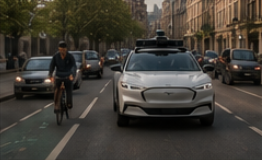
The technical distinction here is real, not just marketing language. Wayve’s system uses AI to make driving decisions, rather than relying on pre-programmed rules for specific circumstances — a lighter sensor setup than Waymo’s approach, which depends on an extensive suite of lidar and cameras calibrated to a defined operating area. Wayve says that difference cuts hardware costs and, because the system generalises from years of real-world driving data rather than memorised routes, lets its cars handle unexpected situations without needing to stay confined to a small, pre-mapped zone.
That’s the core bet behind Wayve’s global expansion plan too. The company’s technology is designed to work across different vehicle platforms and sensor configurations, which is why London serves as the first of 12 planned global markets rather than a one-off pilot. Tokyo follows soon, using modified Nissan Leaf vehicles running Wayve’s AI Driver on Nvidia’s DRIVE Hyperion platform — a different car, different market, same software.
London’s Regulatory Path
The launch traces back through a specific sequence TF tracked across multiple stories. Transport for London granted Wayve’s vehicles a private hire licence in early August, clearing the regulatory hurdle that had been holding up commercial operation. The UK government fast-tracked its accelerated framework for self-driving commercial pilots back in mid-2025, moving the original spring 2026 target forward to keep Britain competitive in autonomous vehicle development.
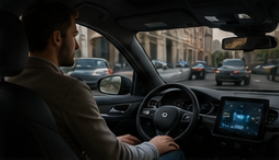
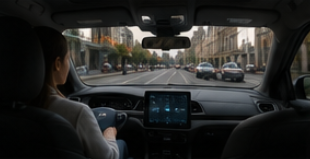
The framework still has real limits built in. Every ride today includes a human safety driver — full driverless operation, with nobody behind the wheel at all, doesn’t become possible in the UK until the Automated Vehicles Act takes effect in the second half of 2027. Bloomberg’s stance at Thursday’s launch put the competitive stakes: this positions Uber and Wayve to compete with Waymo, which TF covered targeting its own Munich launch by late 2027 — meaning London is ahead of Waymo’s EU entry by more than a year, even as Waymo continues expanding across US cities.
Forming a Crowded Field
London isn’t just getting one robotaxi operator. Chinese AI company Baidu is working with both Uber and Lyft to bring its Apollo Go fleet to London, pending its own regulatory approval — vehicles TF understands feature reclining seats, panoramic sky roofs, and mood lighting, a more consumer-facing design philosophy than Wayve’s modified Mustangs. Uber’s own stated ambition is to be “the largest facilitator of AV trips in the world” by 2029, offering driverless rides across 15 cities by the end of 2026. The company describes its long-term vision as a “hybrid network,” where autonomous vehicles and human drivers operate side by side rather than one replacing the other.
TF Summary: What’s Next
Wayve’s London fleet expands beyond its current 15 vehicles, with no specific timeline confirmed for reaching coverage across Uber’s 100,000-vehicle network. Tokyo’s launch, using Nissan Leaf vehicles, follows later as the second of Wayve’s 12 planned global markets. Baidu’s Apollo Go is pending regulatory approval in London. The UK’s Automated Vehicles Act, which would permit driverless operation without a safety driver, is law in the second half of 2027.
MY FORECAST: Expect Wayve’s fleet to expand faster than TfL’s earlier “not in a rush” posture suggested, given that Thursday’s launch shows the regulatory infrastructure is built and operational, not just approved in theory. The real competitive question over the next 18 months is whether Wayve’s lighter, camera-first approach or Baidu’s heavier, purpose-built Apollo Go vehicles prove more scalable across London’s specific driving conditions — an open technical question neither company has settled yet. Watch for Uber to use London’s launch data in its pitch to Waymo’s home advantage in the US, given how this sets Uber as the operator running actual driverless commercial service in a major European capital more than a year before Waymo’s own EU debut.
Related Stories
- Waymo Robotaxis Drive into the EU via Munich; London Delays
- Uber & Pony AI to Power 2000+ European Robotaxis
- Robotaxis Go Public in Dallas as London Approves Its Own Trial