



“Our business today is not healthy.” That’s Xbox’s new CEO, three months into the job, describing margins 3 to 10 times lower than comparable gaming businesses. Studios lose 64 cents on every dollar invested. Four studios are being spun off entirely. This is the biggest Xbox restructuring in its history — and it’s only the first half.
Microsoft announced a 4,800-job layoff — cutting 2.1% of the company’s global workforce, with its Xbox gaming division absorbing the deepest losses of any single unit.
Microsoft is eliminating 4,800 jobs, with about 1,600 of those cuts in the Xbox division specifically. “Our business is changing because the world around it is changing,” Amy Coleman, Microsoft‘s executive vice president and chief people officer, wrote in a message to employees.
Two-thirds of all positions cut at Xbox, within the company’s struggling gaming division. Xbox CEO Asha Sharma — who took over the division earlier this year — did not soften the internal framing. “Our business today is not healthy,” she wrote in a memo to staff, adding that Xbox is “operating at margins that are 3-10x lower than comparable platform and publishing businesses.”
By contrast, this is not the full Xbox reduction. Sharma confirmed an additional 1,600 roles will be eliminated over the remainder of fiscal 2027 — bringing total Xbox job losses to roughly 3,200, or 20% of the division’s global workforce.
What’s Happening & Why It Matters
Bad Numbers: 3-10x Worse Margins, 64 Cents Lost Per Dollar
Microsoft’s 4,800-job layoff rests on a specific and stark financial diagnosis inside Xbox. Sharma’s internal memo detailed the scale directly: studios have been losing 64 cents for every dollar invested. That figure describes a gaming division burning capital at a rate no comparable platform business would tolerate. Sharma called it the biggest restructuring in Xbox history. Additionally, she cited an industry pressure point — a severe “hardware crisis” as costs soar for console components, competing directly against Sony’s PlayStation and Nintendo’s Switch.
As TF covered in its Apple, Microsoft, Sony price increases article, Microsoft itself raised Xbox Series S and Series X prices by $100 to $150 in June, citing the same AI-driven memory shortage. Sharma warned that Microsoft expects console storage and memory prices to double again by fall 2027. That hardware cost crisis and the studio-level unprofitability described in her memo are two sides of the same structural problem — Xbox is paying more to manufacture consoles while its content pipeline loses money on every dollar invested.
Bye-Bye Studios: Double Fine, Compulsion, Ninja Theory, and Undead Labs
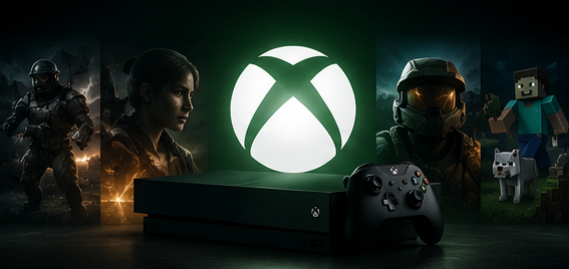
Microsoft’s 4,800-job layoff includes a structural decision beyond headcount reduction. The company is spinning off four video game development studios previously acquired by Microsoft. Double Fine and Compulsion Games are independent studios, while Ninja Theory and Undead Labs will join new ownership. Arkane Lyon is in “consultation” — a status that typically precedes either closure or a separate ownership transition.
That divestiture is significant because all four studios came to Microsoft through its acquisitions of Double Fine (2019), Compulsion Games (2018), and both through the ZeniMax and Activision Blizzard consolidation strategy Microsoft pursued over the past several years. Spinning them back out represents a reversal of that acquisition-led growth strategy — a signal that Microsoft is prioritising fewer, more profitable studios over the portfolio it spent billions assembling.
Microsoft’s Plan — Sales, Consulting, and a Voluntary Buyout

Microsoft’s 4,800-job layoff extends beyond Xbox into the company’s enterprise sales and consulting division. Microsoft is revamping its salesforce to keep pace with a rapidly changing tech industry. That reduction follows voluntary buyouts Microsoft began offering to approximately 8,750 people in May, targeting 7% of US staff. More than 30% of eligible workers accepted those voluntary retirement offers — meaning the buyout programme did not fully absorb the workforce reduction Microsoft needed, requiring the additional 6 July cuts.
Top executives sought to distinguish this round from prior layoffs, emphasising that cuts were minimised by redeploying more than 4,000 employees into new roles over the past year. By contrast, that redeployment framing sits against a documented pattern of repeated workforce reduction. Microsoft cut approximately 9,000 workers roughly a year ago and 3% of its workforce in May 2025 — with last year’s two rounds totalling more than 15,000 jobs, the largest reductions in more than a decade.
AI Capex, a Falling Stock, and the Industry Trends
Microsoft’s 4,800-job layoff lands during a period of extraordinary capital investment elsewhere in the company. Microsoft plans to spend $190 billion in costs related to infrastructure and data centres in 2026, according to its most recent earnings call. Coleman was explicit that jobs are not being directly replaced by AI, but that the technology is “changing how work gets done.” As TF covered in its Oracle layoffs article and Ford rehiring article, 2026 has produced a documented pattern of major companies reducing headcount while simultaneously increasing AI infrastructure spending — with mixed evidence on whether that trade-off produces the intended efficiency gains.
Microsoft‘s own stock performance reflects investor scepticism about that trade-off. Shares fell nearly 23% in the first six months of 2026 — making Microsoft the worst-performing megacap tech stock over that period, as investors fear that generative AI models might displace wide swaths of enterprise software, while Microsoft’s own AI models and services have yet to become significant hits. Amazon and Meta have also laid off thousands of employees this year, against combined Big Tech AI capital outlays set to top $700 billion in 2026 — a figure TF flagged as unsustainable pressure in its AI stock sell-off article.
TF Summary: What’s Next
The last 1,600 Xbox job cuts are progressively throughout fiscal year 2027 — Sharma acknowledged “a year-long restructuring creates additional challenges” but said it is “not possible to make all the necessary changes in a single day.” Four studios — Double Fine, Compulsion Games, Ninja Theory, and Undead Labs — transition to independence or new ownership on undisclosed timelines. Arkane Lyon’s consultation process continues. Microsoft‘s Washington state workforce is expected to remain stable at approximately 52,000 despite the local cuts, due to ongoing hiring elsewhere.
MY FORECAST: Microsoft’s 4,800-job layoff will not be the last Xbox restructuring announcement of fiscal 2027 — Sharma’s own memo confirms more cuts are coming, and a division losing 64 cents per dollar invested requires more than a single round of layoffs to reach profitability.
By contrast, the studio spin-offs are the more consequential long-term signal. Microsoft spent years and billions consolidating gaming studios under one roof; reversing that strategy for four specific studios confirms the acquisition-led growth model has reached its limit.
Expect Sony, which announced its own PlayStation disc discontinuation in this same period as TF covered in its Sony disc article, to face comparable margin pressure questions from its own investors within the next two quarters. The console hardware crisis Sharma describes is an industry-wide problem, not a Microsoft-specific one — and Xbox just became the first major console maker to answer it with mass layoffs rather than price increases alone.
Related Stories
- Sony Will Stop Making Physical PlayStation Game Discs in 2028
- Apple, Microsoft, and Sony Raise Device Prices — AI-Driven Memory Shortage Is the Cause
- Oracle Cuts 21,000 Jobs as AI Replaces Human Roles