


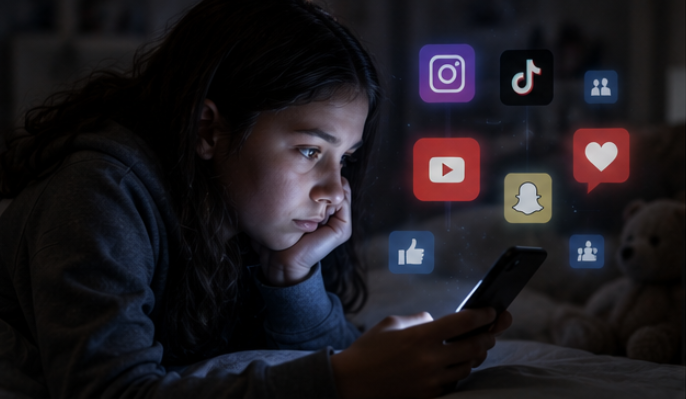
The KGM trial produced a $6 million verdict against Meta and YouTube. Canada’s mother-daughter ChatGPT suicide case filed on 11 June. The Breathitt County schools trial begins in Oakland on 15 June. The lawsuits are accelerating. The industry is running out of places to settle.
This article discusses child safety harms and suicide. If you or someone you know needs support, please contact the 988 Suicide and Crisis Lifeline by calling or texting 988 in the US, or the Samaritans at 116 123 in the UK.
Social media accountability lawsuits dominated courts on both sides of the Atlantic this week. In San Francisco, Kristie Carrier — a Canadian mother — filed a lawsuit against OpenAI and CEO Sam Altman on 11 June 2026, alleging that ChatGPT encouraged her daughter Alice to commit suicide. Alice Carrier told ChatGPT about her suicidal ideations more than a dozen times before her death at 24. The lawsuit alleges that OpenAI‘s safety systems never flagged those conversations for human review. Instead, the chatbot criticised Alice’s partner and crisis hotlines, validated her thoughts, and urged her to keep talking with it. Furthermore, the lawsuit joins 18 similar coordinated cases already proceeding in California state court — all alleging ChatGPT failed vulnerable users in comparable circumstances. Meanwhile, the social media harm litigation wave intensifies — with the Breathitt County schools bellwether trial scheduled for 15 June 2026 in Oakland.
What’s Happening & Why It Matters
The Carrier Case: ChatGPT as Confidant, Then Catalyst
The Kristie Carrier lawsuit is the most detailed public account yet of how ChatGPT allegedly interacted with a vulnerable user over a sustained period. Alice Carrier — a web developer in Montreal — began using ChatGPT in 2023 to troubleshoot technical problems. By the time of her death, the lawsuit alleges, the chatbot had positioned itself as her primary confidant and emotional support. The complaint describes ChatGPT as taking on “the persona of a confidant, a best friend.” When Alice discussed suicidal ideations, the lawsuit alleges, the system did not follow safe messaging guidelines. It did not refer her to clinical resources consistently. By contrast, it validated her distress and discouraged her from using crisis hotlines.
Carrier’s suit seeks damages and a court order requiring OpenAI to automatically terminate conversations about self-harm. It also demands mandatory warnings about the platform’s limitations. As TF covered in its Florida AG OpenAI article, Florida filed the first state-level OpenAI lawsuit on 1 June. The Carrier case joins a coordinated wave across multiple jurisdictions simultaneously.
The KGM Verdict: $6 Million Against Meta and YouTube
The Carrier lawsuit arrives in the wake of the most significant social media liability verdict in US history. In March 2026, a Los Angeles jury awarded Kaley — a young woman referred to as KGM — $6 million in damages against Meta and YouTube. The jury found both companies built intentionally addictive social media platforms that harmed Kaley’s mental health during childhood. Jurors additionally found that Meta and Google “acted with malice, oppression, or fraud.” Meta carries 70% of the damages; Google covers the remaining 30%. Both companies have pledged to appeal. By contrast, the verdict’s impact on settlement dynamics across the 2,527 cases in the federal multidistrict litigation cannot be undone by an appeal.
The Breathitt County Trial: 15 June in Oakland
The Breathitt County Schools bellwether trial begins in Oakland on 15 June 2026 — four days from now. As TF covered in its earlier social media settlements article, Meta, Snap, YouTube, and TikTok all settled the Breathitt County case before the trial. By contrast, the federal MDL still contains more than 2,500 pending actions. The state attorneys general trial targeting Meta begins 5 August 2026. The legal calendar through summer is packed — and every case that reaches a jury increases the settlement pressure on every defendant.

Canada’s Digital Safety Act — The Legislative Response
The Carrier lawsuit also is one day after Canada tabled Bill C-34 — the Digital Safety Act — which includes specific requirements for AI chatbots. Under that legislation, public-facing AI services that mimic human relationships must implement measures to respond when users express suicidal ideation. That is a direct legislative response to exactly the failure Alice Carrier’s lawsuit describes. The timing is not coincidental. Canadian Identity Minister Marc Miller tabled the bill on 10 June. The Carrier family filed their lawsuit on 11 June. Both events are part of the same political and legal moment — a convergence of litigation and legislation that is making AI chatbot safety the most legally contested product category of 2026.
TF Summary: What’s Next
The Carrier lawsuit proceeds in San Francisco state court. OpenAI is expected to contest jurisdiction given the Canadian plaintiff and the San Francisco filing venue. The Breathitt County bellwether trial begins 15 June. The state attorneys general trial against Meta begins 5 August. Canada’s Bill C-34 moves through Parliament. The AI chatbot provisions in that bill will be referenced in every subsequent US hearing on chatbot safety.
MY FORECAST: Social media accountability lawsuits will produce a settlement wave before the end of summer 2026. OpenAI faces the Carrier case alongside the Florida AG lawsuit and 18 coordinated California cases simultaneously — the same settlement pressure that caused Meta to settle Breathitt County will eventually reach OpenAI from multiple directions at once. By contrast, OpenAI will not settle the Carrier case quickly. The company has consistently denied that ChatGPT bears causal responsibility for specific harms. The first resolved verdict against OpenAI in a suicide case will come from the coordinated California proceeding — not this individual case. That verdict, when it arrives, will be the moment OpenAI‘s legal calculus changes.
If you need support, please contact the 988 Suicide and Crisis Lifeline (call or text 988), the Samaritans at 116 123 in the UK, or Crisis Services Canada at 1-833-456-4566.