


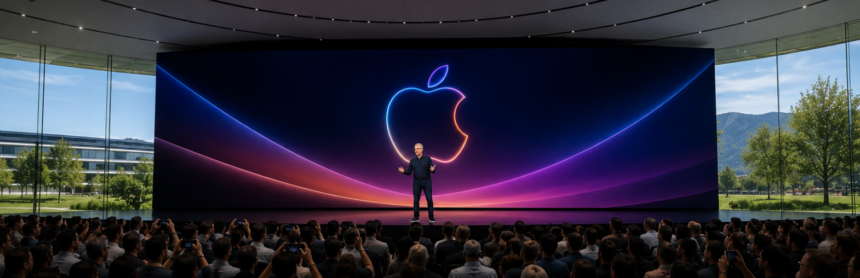
After NVIDIA launched the AI PC, Microsoft revealed MAI and the Solara badge, and Google unveiled Gemini Omni — Apple steps into the spotlight today. WWDC 2026 begins at 10 a.m. Pacific. Siri is either reborn or Apple has a very long explanation to give. Let’s find out.
Apple WWDC 2026 announcements begin this morning at 10 a.m. Pacific Time — and the stakes are higher than they have been at any WWDC in years. The annual Worldwide Developers Conference runs from 8 to 12 June 2026 — keynote today, developer sessions through the week. This year, Apple is walking into a room that NVIDIA, Microsoft, Google, and Qualcomm just finished rearranging. As TF covered this week, Computex 2026 introduced RTX Spark, the AI PC chip. Google I/O delivered Gemini Omni and Gemini Spark. Microsoft Build launched MAI models and the Project Solara wearable badge. All of them were, explicitly or implicitly, competing for the same ground Apple has held for fifteen years: the premium technology experience that people build their daily lives around. Today, Apple has to respond. The keynote is themed “Coming Bright Up.”
What’s Happening & Why It Matters
The Siri Problem of the Last Two Years
The central story of the Apple WWDC 2026 announcements is Siri — and it has been building since June 2024. At WWDC 2024, Apple unveiled what it called Apple Intelligence — a new, dramatically smarter version of Siri built with large language model capabilities. The promise was a Siri that could understand context, handle multi-step tasks across apps, and engage in genuine conversational dialogue. It would arrive with iOS 18. Then it was delayed, then delayed again. Then a report surfaced that Apple had quietly partnered with Google to license a custom version of Gemini — a 1.2-trillion-parameter model — to power the upgraded assistant. Apple reportedly pays Google approximately $1 billion annually for that licence.
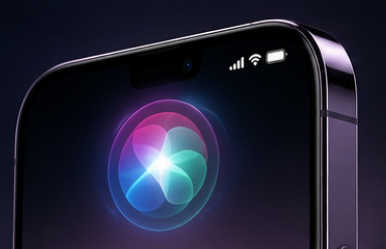
That partnership is simultaneously an admission and a solution. It admits that Apple‘s internal AI development could not deliver the Siri upgrade on schedule. It provides a foundation — Google‘s frontier model capability — on which Apple‘s signature value-add can be applied. That value add is privacy. Every Apple AI communication emphasises on-device processing, Private Cloud Compute, and data minimisation. How the company reconciles its privacy positioning with a $1 billion Google licensing deal will be one of today’s most closely watched communications.
What Today’s Keynote Is Expected to Deliver — Six Categories
The preview materials, rumour reporting, and developer leaks converging ahead of today’s keynote point to six categories of announcements.
- 1) Siri 2.0 — the rebuilt assistant powered by Gemini, with context awareness, multi-step task handling, screen understanding, and a new standalone Siri chatbot app.
- 2) iOS 27 — the full platform update, dropping support for Intel Macs and introducing AI features across the operating system.
- 3) macOS 27 — codenamed potentially “Big Bear” based on the WWDC 2026 hashmoji filename on X.
- 4) A new smart home hub tied to the new Siri — a product that has been in development for two years and is designed to anchor Apple’s home environment strategy.
- 5) Apple Intelligence updates across all platforms — watchOS, tvOS, visionOS, and iPadOS are all receiving AI feature updates.
- 6) AI glasses, possibly — rumoured wearable hardware that would put Apple directly in competition with Meta, Ray-Ban, and Samsung‘s Android XR glasses announced at Google I/O.
The Tim Cook Factor — His Last WWDC Keynote
Beyond the product announcements, today’s keynote carries a biographical dimension. Multiple reports indicate that WWDC 2026 may be Tim Cook‘s final WWDC as Apple‘s CEO. Cook has led Apple since Steve Jobs stepped down in August 2011. He has delivered fifteen years of growth, the M-series silicon transition, the Services business expansion, and Apple Vision Pro. If today is his last WWDC keynote, it will be the first since 2011 without a Jobs-era product to anchor the narrative. The AI story is the one Cook needs to tell — and it is a story of catching up, not leading, for the first time in his tenure.
That context gives today’s keynote specific weight. A strong Siri demo that genuinely shows the upgraded assistant functioning as marketed in 2024 clears the backlog of disappointment. By contrast, a soft announcement that delays further — or admits continued limitations — extends a narrative that Apple has been trying to escape for two years.
The Competition: The Arena WWDC Joins
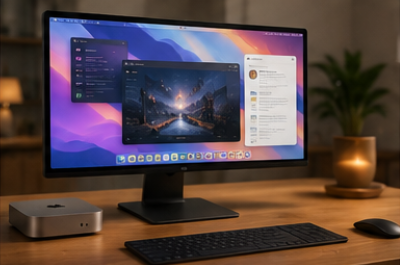
The timing of WWDC 2026 is unusual this year. Apple traditionally announces its software roadmap before the summer developer conference season. It follows Google I/O, Microsoft Build, and Computex — all of which ran in late May and early June. That sequencing puts Apple in the unusual position of responding rather than setting the agenda. Google has already launched Gemini Spark, Gemini Omni, and the AI Intelligent Search Box. Microsoft has launched MAI models and Project Solara. NVIDIA has launched RTX Spark — which will power Windows AI PCs in fall 2026.
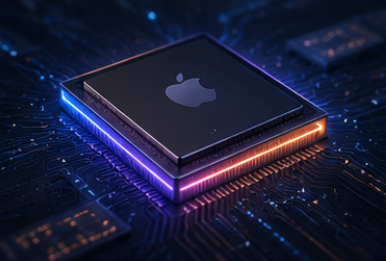
Apple‘s competitive advantages are significant and real. The company has 2.35 billion active devices globally. Its hardware-software-services integration is the tightest in the industry. On-device processing capability through Apple Silicon — the M5 chip family — gives it a privacy-preserving AI architecture that no competitor has replicated. The developer ecosystem is the most commercially productive in the world. And it has a $1 billion annual Google licensing deal that should deliver frontier-model capability at the user layer, regardless of what Apple‘s internal models can produce independently.
The Smart Home Hub: The Missing Piece
One of the most anticipated [Apple WWDC 2026 announcements] is a product that has been in development for years. Apple is expected to reveal a new smart home hub — a device to anchor the home environment. Expected functionality includes an always-on display, smart home control, FaceTime, and the new Siri as its primary interaction layer. The device would compete directly with Amazon Echo Show and the Google Nest Hub — both of which are already AI-enhanced. By contrast, the Apple version arrives with the hardware quality, privacy architecture, and ecosystem integration that those products cannot match. It is also arriving two years later than planned. For a product in the category, that delay has a commercial cost. The smart home AI market is not waiting for Apple.
Predictions — What the Community Expects
PCMag polled its readers ahead of today’s keynote. The results are a useful proxy for community expectations. Reader predictions ranked Siri upgrades and iOS 27 AI features as the top-anticipated announcements by significant margins. Hardware announcements — including Mac refreshes and potential AI glasses — ranked lower. Reader sentiment on whether Apple would deliver something genuinely surprising was mixed — a significant portion of respondents expressed scepticism based on recent years’ pattern of announced-then-delayed features.
By contrast, a meaningful number of readers flagged that Apple‘s history includes genuine surprise announcements that no rumour cycle predicted. The M1 chip‘s performance at launch exceeded every pre-announcement estimate. Apple Vision Pro arrived as a complete spatial computing platform with no leaked hardware category. Today may hold a similar moment.
What Would Make WWDC a Success
Analysts and investors have defined three success conditions for today’s keynote. First: a Siri demo that genuinely shows multi-step task execution, screen awareness, and conversational capability — live, on device, without caveats. Second: an iOS 27 AI feature set that goes beyond previous Apple Intelligence announcements and introduces something developers have not seen before. Third: at least one hardware surprise — AI glasses, a new Mac category, or a wearable product that changes the conversation the same way AirPods did in 2016. If Apple delivers all three, the narrative shifts from “catching up” to “reset.” If it delivers only Siri improvements and incremental OS updates, the narrative stays exactly where it has been since June 2024.
TF Summary: What’s Next
WWDC 2026 runs through 12 June 2026. Developer sessions begin today following the keynote. iOS 27 Beta 1 is expected to be released on the same day as the keynote, giving developers immediate access to the new platform. Developer labs and one-on-one sessions with Apple engineers run throughout the week. Hardware announced today ships in fall 2026 alongside the final iOS 27, macOS 27, and associated platform releases.
MY FORECAST: Apple WWDC 2026 announcements will deliver a genuinely impressive Siri — and that will be the story. The Google Gemini partnership gives Apple a frontier model capability to build on. Apple Silicon’s on-device processing enables a privacy environment that Google cannot use for the same product. The combination of frontier capability and private architecture is genuinely differentiated. By contrast, the smart home hub will arrive without a surprise — the product category has been rumoured too specifically and for too long. The real surprise, if it comes, will be AI glasses — a category Apple has not officially confirmed but where the competitive pressure from Meta and Samsung is most acutely felt. Whether today is Tim Cook’s last WWDC keynote or not, it needs to answer the same question that all the Apple keynotes since 2024 have circled back to:
Is Apple still the company that defines what technology should feel like — or has it morphed into the company that follows where others lead?
Related Stories
- Link “Computex 2026” via “As TF covered this week, Computex 2026” → https://techfyle.com/computex-2026-nvidia-rtx-spark-panathenea-ai-announcements
- Link “Google I/O” via “Google I/O” → https://techfyle.com/google-io-2026-gemini-android-developer-announcements
- Link “Microsoft Build” via “Microsoft Build” → https://techfyle.com/microsoft-build-2026-mai-models-project-solara-wearable-ai