


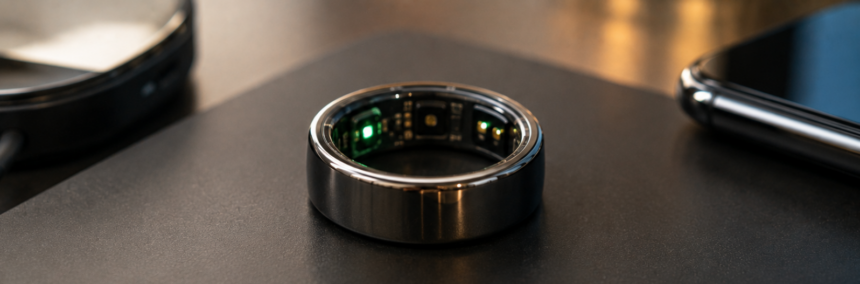
The Oura Ring IPO filing entered the public record on 22 May — and it came the same week that SpaceX filed its own S-1 targeting a $1.75 trillion valuation. Oura is considerably smaller. It is considerably more interesting from a consumer health perspective. Oura — the Finnish-American company that makes the world’s leading smart ring — confidentially submitted a draft Form S-1 to the Securities and Exchange Commission on Thursday. The company’s most recent valuation is $11 billion (€10.1 billion), established in a $900 million Series E round in October 2025. That valuation more than doubled its previous mark of $5 billion from December 2024. Oura has sold more than 5.5 million rings worldwide. It projects $2 billion (€1.84 billion) in annual revenue in 2026. The IPO, when it comes, will test whether the public market agrees that a sleek titanium ring on your finger is worth that much.
What’s Happening & Why It Matters
What Oura Is — and How It Got Here
Oura launched in Oulu, Finland, in 2015. Its founding mission was specific. Sleep is the foundation of health. Most people track steps and heart rate. Nobody was tracking sleep quality at a clinical level in a consumer wearable. Oura Ring Generation 1 changed that. The ring form factor was deliberate — fingers have cleaner blood flow than wrists, making biometric readings more accurate than wrist-based devices. Successive generations improved accuracy, added new sensors, and expanded the health metrics on offer.
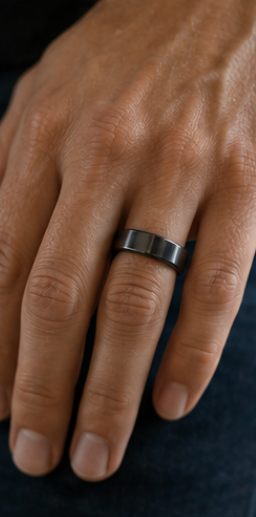
The Oura Ring 4 — the current generation — tracks heart rate, heart rate variability (HRV), blood oxygen (SpO2), skin temperature, sleep stages and quality, daily readiness, stress levels, and activity. The ring is 2 to 3mm thick and weighs between 4 and 6 grams (depending on size). It is available in silver, black, gold, and brushed titanium finishes. Battery life lasts 7 days. The device carries an IP68 water resistance rating. It pairs with an iPhone or Android app and requires a $5.99/mo. subscription for full feature access after the first six months. That subscription model is central to the IPO story.
The Story: From $500M to $2B in Two Years
The Oura Ring IPO filing is built on a genuinely impressive financial trajectory. Revenue reached over $500 million (€461 million) in 2024. CEO Tom Hale projected approximately $1 billion (€921 million) in 2025 sales. The official 2026 outlook targets $1.5 billion, with an upper-case reaching close to $2 billion. At that pace, Oura will have grown revenue fourfold in just two years. That rate of growth — in a hardware-and-subscription business — is unusual. It reflects both the expansion of the health wearables category and Oura‘s specific market position within it.
Meanwhile, the subscription business model creates recurring revenue that hardware companies typically lack. Every active Oura member generates $71.88 per year in subscription revenue on top of the ring’s purchase price, which starts at $299 (€275) for the standard Ring 4 and reaches $399 (€367) for Oura Ring 4 Ceramic. At 5 million paid members, the subscription revenue line alone approaches $360 million annually. That predictable recurring base is exactly what public market investors price at a premium.
The Oura AI Model: Women’s Health, On-Device
One of the most significant and underreported elements of Oura‘s IPO story is its AI investment. In February 2026, Oura unveiled its first proprietary large language model — built in collaboration with webAI, a specialist in privacy-preserving AI architectures. The model powers Oura Advisor — an AI health assistant focused specifically on women’s health. Its scope runs from early menstrual cycle tracking through to menopause. All conversations are processed on Oura‘s own servers. None of the data is shared or sold.
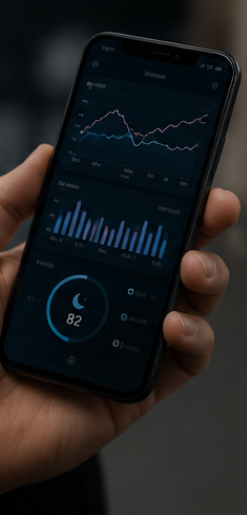
The choice to build a proprietary model rather than using OpenAI or Anthropic is strategically deliberate. Oura positioned the decision plainly. “Women’s health is too complex and too often overlooked to rely on one-size-fits-all solutions. By developing a model specifically for women and grounding it in trusted clinical science and real-world biometric data, we are building something that actually reflects their experiences.” That differentiation matters commercially. Women represent approximately **52% of Oura**‘s user base — a proportion significantly higher than most fitness wearable categories. A proprietary AI model trained on real biometric data from that cohort is a defensible product advantage that general-purpose AI models cannot easily replicate.
The Gesture Acquisition: Doublepoint Changes the Game
Earlier in 2026, Oura acquired Doublepoint — a UK-based startup specialising in micro-gesture input. The technology allows users to control paired devices — smartphones, music players, smart home systems — using small finger movements detected by the ring. That acquisition extends the Oura Ring’s utility beyond health tracking into device control. A ring that monitors your heart rate, tracks your sleep, advises you on women’s health, and controls your phone is categorically different from the single-function sleep tracker Oura launched in 2015. The gesture capability is still in the early stages of implementation. By the time the IPO prices, it will likely be presented as the product’s next major value driver.
The Competition: Ring Wars 2026
The Oura Ring IPO filing arrives in a market that has changed dramatically since Oura had the smart ring category to itself. Samsung‘s Galaxy Ring launched in August 2024 at a starting price of $399 (€367). WHOOP raised $575 million in Series G funding at a $10.1 billion valuation in March 2026. Apple continues adding health features to Apple Watch — and rumours of an Apple ring product have circulated for years without a confirmed launch. At the same time, Garmin reported a 42% increase in fitness product revenue in Q1 2026 — driven by demand for advanced health wearables.
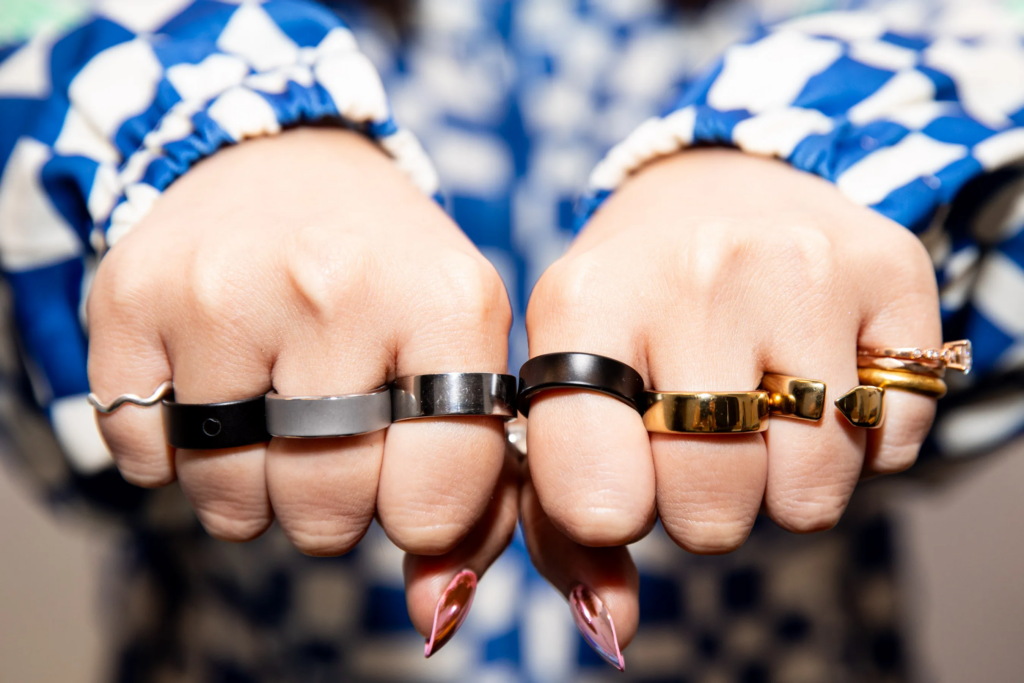
By contrast, Oura still accounts for the majority of global smart ring sales. Samsung, Ultrahuman, and others have entered the category, but none has displaced Oura as the market leader. The ring form factor is distinct from watch-based wearables in terms of accuracy and unobtrusiveness. An Oura ring is invisible under work clothes, survives swimming, and lasts a week between charges. Those advantages are real. They face the risk that Apple closes the gap — as it has done in every other wearable category it has entered.
The European IPO Behind the Story
Oura is Finnish. Its design philosophy, research origins, and core engineering team trace back to Oulu — a northern Finnish city with a strong electronics research tradition. By contrast, the company established Oura Inc. in San Francisco as its US parent entity — specifically to access American venture capital markets. Its IPO will list in the United States. Its IPO banks include Goldman Sachs, Morgan Stanley, JPMorgan Chase, Allen & Co, and Jefferies.
That pattern reflects a structural challenge for European tech companies. Europe produces world-class technology startups. It struggles to retain them as public companies. Spotify is listed on the New York Stock Exchange. ASML is one of the few large European tech companies listed in Amsterdam and stayed. Oura‘s San Francisco incorporation and US IPO plan continue a pattern that European policymakers have been trying — and largely failing — to reverse for a decade.
TF Summary: What’s Next

Oura will proceed with the IPO after the SEC completes its confidential review process. No specific timeline is announced. CEO Tom Hale has not indicated whether the listing targets a 2026 or 2027 date — though market sources suggest late 2026 is the current internal target. The price range, share count, lockup terms, and exchange have not been disclosed. Goldman Sachs, Morgan Stanley, JPMorgan Chase, Allen & Co, and Jefferies lead the deal. As TF covered in its earlier article on the Google Fitbit Air and Google Health app, the wearable health market is intensifying rapidly — making Oura‘s timing urgent.
MY FORECAST: The Oura Ring IPO filing will price at or above the $11 billion Series E valuation — not because the number is guaranteed, but because the revenue trajectory justifies it. A company projecting $2 billion in 2026 sales, growing fourfold from 2024, with a 5 million+ member subscription base and a proprietary AI model in a category with no dominant public market comparables, will attract premium pricing.
The risk is Apple. If Apple announces a smart ring at WWDC 2026 in June — or even credibly leaks one — Oura’s IPO pricing conversation changes overnight. That is the single largest variable between now and listing day. If Apple stays out of the ring category through year-end, Oura prices at a comfortably above-$11 billion valuation and is the most successful consumer health tech IPO since Fitbit‘s 2015 listing. The ring on your finger is worth more than the watch on your wrist. The market is about to decide if it agrees.