


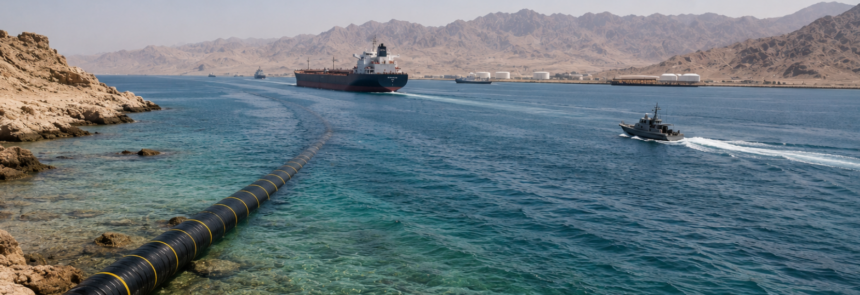
Iran’s demand for undersea cable fees is the most significant digital infrastructure threat since the Houthis’ attacks on subsea cables in the Red Sea in 2024. Iranian lawmakers discussed a plan in May 2026 to charge the world’s largest tech companies for using fiber-optic cables laid beneath the Strait of Hormuz — the narrow waterway connecting the Persian Gulf to the Gulf of Oman. Iranian military spokesperson Ebrahim Zolfaghari made the position public on X. “We will impose fees on internet cables,” he stated. State-linked media elaborated. Google, Meta, Microsoft, and Amazon should comply with Iranian law. Submarine cable companies should pay licensing fees for passage rights. Repair and maintenance rights should go exclusively to Iranian firms. And if companies refuse, traffic could be disrupted.
What’s Happening & Why It Matters
The Context: Iran’s War-Driven Leverage Play
The fee demand does not arrive in isolation. It arrives in the context of an active military conflict. The US-Iran war began on 28 February. Iran effectively closed the Strait of Hormuz to most shipping in retaliation for US and Israeli military operations. The US Navy launched a blockade on 13 April — a forceful attempt to reopen the strait to commercial vessel passage. A ceasefire took effect on 8 April. Iran announced it intended to charge tolls for safe transit through the strait once the war ended. Those toll demands — already a sticking point in peace negotiations — have a digital parallel. Iran is attempting to extend its physical chokepoint leverage into the digital infrastructure that the same waterway carries.
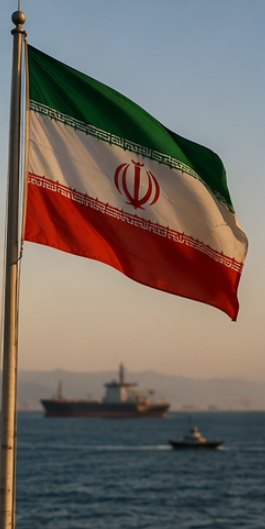
The economics are striking. Iranian parliamentary member Mostafa Taheri estimated potential annual revenues from cable transit fees at up to $15 billion. Revolutionary Guards-linked Tasnim News Agency went further — suggesting Iran could monitor data traffic flowing through the cables. That would include cloud services, financial messaging systems, including SWIFT, and a significant share of global internet communications.
The Seven Cables That Connect Three Continents
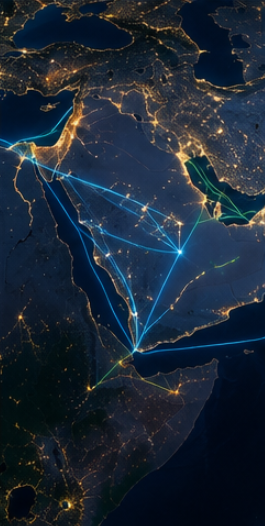
Tasnim News Agency claims that at least seven major submarine communication cables pass through the Strait of Hormuz. Those cables include FALCON, GBI (Gulf Bridge International), Gulf-TGN, SMW6 (Sea-Me-We 6), 2Africa Pearls, and AAE-1 (Asia-Africa-Europe 1). Together, the systems carry internet traffic between India and Southeast Asia to Europe, as well as providing connectivity to Gulf states, Egypt, and East Africa. The loss or degradation of those cables would not merely slow internet speeds for consumers. It would affect military communications, financial transactions, cloud computing, and critical digital services across a vast swathe of the planet.
Global undersea cables carry approximately 95-99% of all intercontinental internet traffic. Satellite services — including Starlink — handle a small fraction of that load and cannot currently substitute for the bandwidth that undersea fiber provides at scale. The Hormuz cables are not the only undersea cables in the world. They are, however, a specific geographical bottleneck. Rerouting around them adds significant latency and cost — and in some cases requires traffic to traverse other contested waterways.
The Legal Argument — and Its Weakness
Iranian state media is attempting to construct a legal basis for the fee demands. The core argument relies on the UN Convention on the Law of the Sea (UNCLOS). The cables pass through the seabed of the Strait of Hormuz. The strait’s narrow geography, Tehran argues, places its seabed under Iranian and Omani jurisdiction. Therefore, Iran claims sovereign authority to impose fees for commercial use of that seabed.
That argument has a fundamental flaw. UNCLOS does include provisions for coastal state jurisdiction over the continental shelf and seabed. By contrast, it establishes the principle of transit passage, which protects the uninterrupted flow of international navigation through international straits. That principle has been interpreted broadly by international maritime law scholars to cover subsea cables as well as surface vessels. Beyond that, UNCLOS Article 79 explicitly states that coastal states “shall not impede the laying or maintenance of such cables or pipelines” on their continental shelf. Iran is not a signatory to UNCLOS in its current form. Its legal position, as multiple analysts have noted, is weak. That does not necessarily stop Iran from acting on it.
The Tech Industry’s Response: Reroute, Repair, and Contingency
Google and Meta have already activated contingency rerouting plans following earlier threats from Iran’s Islamic Revolutionary Guard Corps (IRGC) in March 2026. The IRGC warned on 28 March that critical undersea infrastructure in Hormuz would “not be spared from attack.” That threat alone raised costs across the cable insurance market.
Neither Google nor Meta has publicly commented on the fee demand specifically. By contrast, the practical reality is that no major technology company will comply with Iranian regulatory jurisdiction over international subsea cables. The fee demand would require those companies to acknowledge Iranian legal authority over infrastructure that international law treats as common digital heritage. Beyond the legal implications, compliance would expose companies operating in Iranian-sanctioned territory to US Treasury OFAC sanctions risk.
The Repair Problem: Already a Crisis
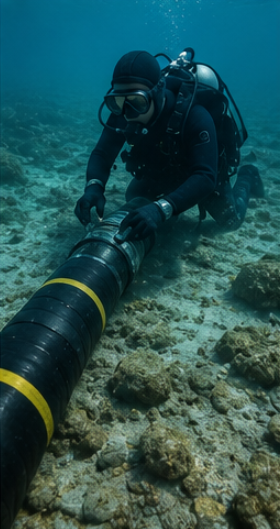
The war has already caused specific damage to the cable infrastructure. Cable repair vessels have suspended operations in the Gulf region because of the security risk. Between 150 and 200 submarine cables are faulted globally every year under normal conditions — primarily through ship anchors, trawling, and natural movement. Those faults cost between $1 million and $3 million each to repair. When repair vessels cannot safely operate in a region, any fault in the cables passing through that region is unrepaired indefinitely.
The Hawacom cable, connecting Oman to other Gulf states, reported a partial outage in February 2026 — days before the war began. The full extent of cable damage since then is not publicly known. Cable operators monitor their systems continuously and can often reroute traffic around damaged segments. At the same time, each rerouting adds latency. Over time, accumulated damage without repair degrades total capacity and speed.
Big Tech’s Longer-Term Response: Diversification and Space
The Iranian fee demand is accelerating conversations that were already underway in the tech industry. Google, Meta, Amazon, and Microsoft have collectively invested billions of dollars in their own private subsea cable infrastructure over the past decade. Google’s Equiano, Firmina, and Blue cables are all company-owned. Meta’s 2Africa Pearls cable — a joint project with multiple partners — is one of the specific cables passing through the Hormuz region.

In parallel, SpaceX‘s Starlink and Amazon‘s Project Kuiper represent satellite-based alternatives that could eventually provide meaningful bandwidth redundancy for regions at risk from cable disruption. As TF covered in its article on SpaceX’s IPO filing, Starlink serves more than 10.3 million subscribers in 164 countries. Its capacity is growing rapidly. At the same time, today’s Starlink cannot replace the bandwidth of undersea fiber for bulk data transit, financial messaging, or cloud infrastructure at scale. The gap is real and will take years to close.
Digital Infrastructure as a Geopolitical Weapon
Iran’s fee demand fits a pattern that has accelerated globally since 2024. The Houthi attacks on vessels in the Red Sea — which began in November 2023 — disrupted the seabed environment for cables passing through the same waters. Russia has conducted naval exercises near undersea cable routes in the North Atlantic — interpreted by NATO intelligence as reconnaissance for potential disruption. China has been documented to shadow cable-laying vessels in the Indo-Pacific. Subsea cables are the nervous system of the global digital economy. They are almost entirely unprotected by international enforcement mechanisms. The physical infrastructure that carries 95% of global internet traffic receives a fraction of the security attention given to satellites, which carry a tiny share of actual data.
Iran’s specific move — demanding fees rather than cutting cables — is tactically intelligent. Cutting cables would provoke an immediate and severe international response. Demanding fees creates a legal and diplomatic process that Iran can drag out indefinitely. At the same time, the vague threat of disruption if fees are unpaid provides leverage without the consequences of actual sabotage.
TF Summary: What’s Next
No major technology company has agreed to pay the Iranian cable fees. None is expected to comply. The US State Department has not formally responded to Iran’s fee demand as of this writing. UNCLOS parties — including the European Union and the Gulf Cooperation Council states — are monitoring the situation. Cable operators with assets in the Hormuz region are maintaining contingency routing plans. Peace negotiations between the US and Iran — with the cable and shipping toll disputes as key sticking points — continue at an undisclosed diplomatic level.
MY FORECAST: Iran’s demand for undersea cable fees will not yield payment from any major technology company. However, it will produce two concrete outcomes. First, it will accelerate the build-out of alternative cable routes that avoid the Hormuz corridor entirely — specifically, the India-to-Europe routes that traverse the southern edge of the Arabian Sea rather than the Persian Gulf. Google’s upcoming Blue-Raman cable system is specifically designed to provide the southern alternative. Second, the threat will drive the submarine cable industry — and the governments that depend on it — toward a formal international protection framework. Subsea cables currently exist in a governance vacuum. No equivalent of the Antarctic Treaty or Outer Space Treaty protects them from state aggression. Iran’s demand for fees makes the absence of that framework impossible to ignore. A formal multilateral subsea cable protection agreement will be proposed at the UN General Assembly session in September 2026. Whether it passes in useful form is another matter entirely.