

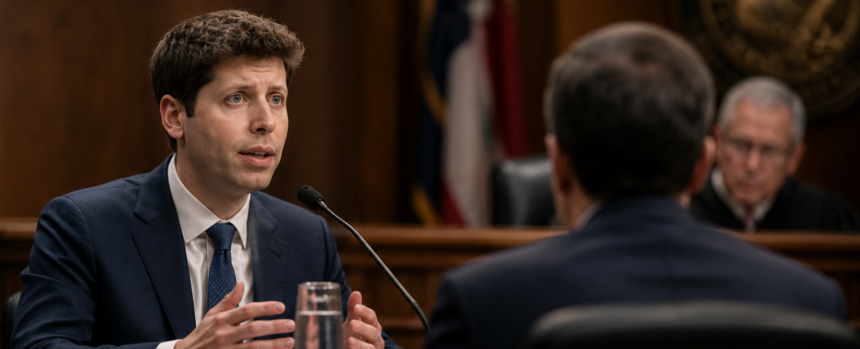
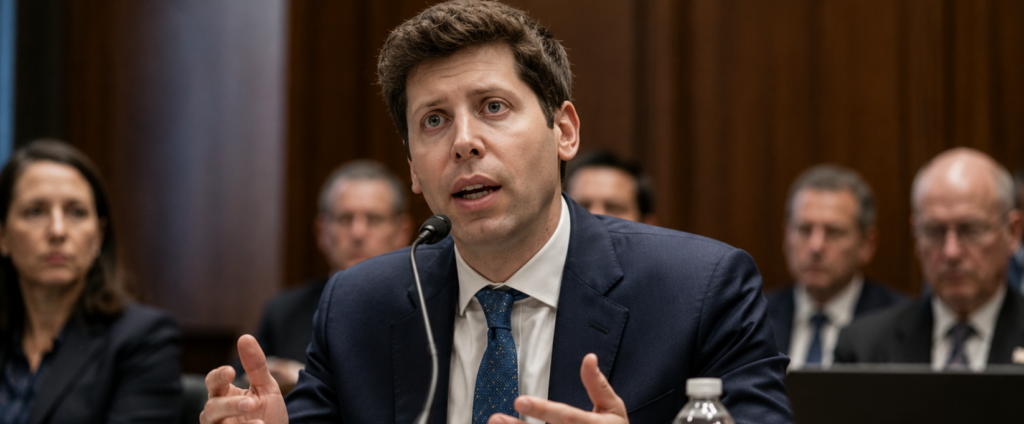
Sam Altman’s OpenAI trial testimony arrived on 12 May 2026 — the most anticipated session in three weeks of proceedings in Musk v. Altman. OpenAI CEO Sam Altman took the stand in Oakland, California. He spent roughly four hours answering questions from both sides. His delivery was calm and measured. By contrast, Elon Musk had spent four days shouting at lawyers. The difference in demeanour was striking. The difference in content was explosive.
Closing arguments are scheduled for Thursday, 14 May 2026. A verdict from the nine-person advisory jury — and a ruling from Judge Yvonne Gonzalez Rogers — could arrive as early as next week.
What’s Happening & Why It Matters
Musk Wanted 90 Percent — Altman Said So Under Oath
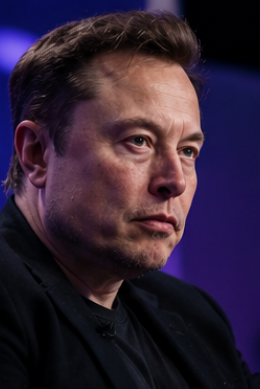
The first major revelation in Sam Altman’s OpenAI trial testimony came during direct examination. Asked about Musk‘s equity demands during OpenAI‘s early formation, Altman answered plainly. “An early number that Mr. Musk threw out was that he should have 90 percent of the equity to start,” he told the jury. “It then softened, but it always was a majority.” His justification? “He was the most well-known.”
That claim cuts directly against Musk’s courtroom narrative. Musk has spent weeks portraying himself as a selfless benefactor who gave $38 million to advance humanity and received nothing in return. Altman offered a different portrait entirely. “Musk wanted total control of any for-profit OpenAI entity,” he said. “My belief is he wanted long-term control — and he would have had that had we agreed to the structure he wanted.”
The Children Comment That Alarmed Everyone
OpenAI‘s co-founders once asked Musk a direct question. If he controlled OpenAI, what would happen to the company after his death? Musk reportedly said he hadn’t thought about it much. He might pass it on to his children.
“I didn’t feel comfortable with that,” Altman told the jury. He described the exchange as a “hair-raising moment” in OpenAI‘s early days. That moment is central evidence in the case. It supports OpenAI‘s argument that the founding team refused to hand control of advanced AI to any single person. “Control over artificial general intelligence was an important factor in OpenAI’s founding,” Altman said. “One person should not be in charge of AGI if it were achieved.”
“He Tried to Kill It” — Altman’s Verdict on Musk
In direct examination, Altman pushed back against the claim that Musk genuinely cares about OpenAI‘s mission. “Mr. Musk did try to kill it,” he told the court. He said Musk launched a rival company in xAI, tried to poach OpenAI talent, and engaged in what Altman described as “business interference.”
Altman also addressed Musk‘s departure from OpenAI‘s board in 2018. “I don’t think Mr. Musk understood how to run a good research lab,” he said. Musk‘s management style had “demotivated” several key researchers — specifically by ranking their accomplishments, which damaged the culture. His resignation, Altman added, was a “morale boost” for many employees.
A View on Elon That Changed Significantly
Musk‘s lawyer Steven Molo opened his cross-examination with the February 2023 text message. Altman had written to Musk: “I’m tremendously thankful for everything you’ve done to help. I don’t think that OpenAI would have happened without you.” Molo asked if Altman had changed his view since then. “I have changed my view on Elon significantly,” Altman said.
That admission is a double-edged sword. It confirms that genuine goodwill once existed between the two men. At the same time, it explains why a text like that could be genuine in 2023 and irrelevant in 2026. Almost nothing Altman said on Tuesday supported Musk‘s core claim. “It does not fit with my conception of the words ‘stealing a charity’ to look at what has actually happened here,” Altman told the court.
The Credibility Battle: “Are You Completely Trustworthy?”
Molo’s first cross-examination question was a doozy. “Are you completely trustworthy?” he asked. “I believe so,” Altman replied. The exchange set the tone for everything that followed. Molo then systematically challenged that answer.
He cited earlier trial testimony from Ilya Sutskever, who said Altman had shown a pattern of dishonesty. Former OpenAI CTO Mira Murati had described transparency concerns with senior leadership. Former board members Tasha MacCauley and Sue Yoon had questioned his candour. Molo also referenced a New Yorker profile: “Sam Altman May Control Our Future — Can He Be Trusted?”
The Admissions That Musk’s Lawyers Will Cite in Closing
Altman’s answers under cross-examination gave Musk‘s legal team several specific quotes to work with. Asked if he always told the truth, he said: “I’m sure there are some times in my life when I did not.” Asked whether business associates had called him a liar, he said: “I have heard people say that.” Asked if he was aware of Sutskever’s dishonest testimony, he said he hadn’t had a chance to hear it. “I believe I am an honest and trustworthy businessperson,” he said — but declined to address accusations from named individuals directly.
Those answers are carefully calibrated. They avoid outright contradiction. They leave the jury with an impression of a witness who acknowledges imperfection without conceding the specific charges. Whether that reads as honest or evasive depends on the juror.
The 2023 Firing: “An Incredible Betrayal”
Altman also addressed November 2023 — the four days when OpenAI‘s board fired him, then reinstated him. He described it as an “incredible betrayal” that was “very public” and “very painful.” He said he had been “completely caught off guard” and received little explanation. “I was not trying to deceive the board,” he said. “There were misunderstandings.”
One piece of evidence from that period has generated significant online attention. A text exchange between Altman and Mira Murati — entered as trial evidence — shows Altman asking whether things were moving “directionally good or bad” during the chaotic hours of his firing. That exchange became a meme. The jury has seen it.
The Funding Reality That Challenges Microsoft’s Role
Altman used his testimony to address Microsoft‘s status as a named co-defendant directly. He confirmed that in OpenAI‘s February 2026 funding round — $110 billion at a pre-money valuation of $730 billion — Amazon contributed $50 billion, SoftBank contributed $30 billion, and Nvidia contributed $30 billion. Microsoft contributed less than any of them. Yet Microsoft is the only investor named as a defendant.
That data point serves OpenAI‘s narrative. Microsoft‘s relative position in the investor hierarchy has shrunk considerably since the early days of the partnership. Naming it while excluding far larger investors may reflect legal strategy on Musk‘s part — or it may reflect the specific timing of Microsoft‘s early involvement that Musk’s charitable trust argument targets.
What Cornell Says About What the Trial Has Done
Beyond the legal outcome, the trial carries a reputational cost. Sarah Kreps, director of the Tech Policy Institute at Cornell University, offered a pointed assessment. “This is not looking good for any of them,” she said. “I think that’s a little bit unfortunate for the AI industry at a time when public perception of AI is quite negative and seems to be getting worse.”
That observation matters. Neither Musk nor Altman has emerged as fully sympathetic. Both men, through three weeks of testimony, have been shown as ambitious, occasionally careless with relationships, and capable of rewriting their own histories. The jury pool in the Bay Area knew Musk before the trial started. Fewer knew who Altman was — even if they used ChatGPT. That asymmetry may matter when jurors weigh credibility.
TF Summary: What’s Next
Closing arguments are slated for Thursday, 14 May. The nine-person advisory jury then deliberates on Phase One — the liability question. A verdict could arrive as early as next week. If the jury finds OpenAI liable, Phase Two begins on 18 May. Judge Gonzalez Rogers — not the jury — decides all structural remedies in Phase Two. She could order the removal of Altman and Brockman, the unwinding of the for-profit conversion, and the disgorgement of up to $150 billion to OpenAI‘s nonprofit arm.
MY FORECAST: Closing arguments on Thursday will define the jury’s final scenes. Musk‘s lawyers will use Altman’s cross-examination admissions — the “times I did not” tell the truth, the shifting view on Musk, the 2023 board breakdown — to reinforce a pattern of untrustworthiness. OpenAI‘s lawyers will use the 90% equity demand and the children succession comment to identify Musk as a control-hungry investor, not a wronged philanthropist. The jury will split on credibility rather than documents. On documents, the evidence supports both sides. On credibility, Altman’s calmer demeanour on the stand is likely to connect more with a Bay Area jury than Musk‘s combative week. Prediction markets give Musk approximately 33% odds. That assessment is probably right.