


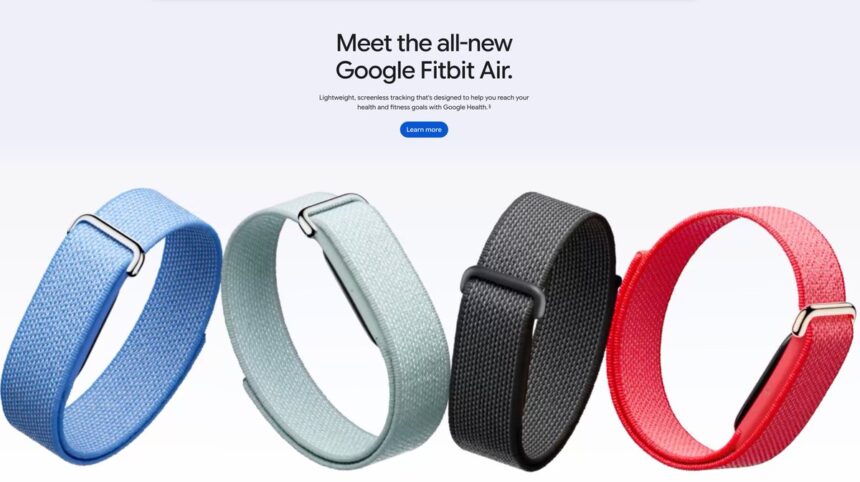
The Google Fitbit Air and Google Health app landed simultaneously on 7 May 2026 — and together they represent the most significant restructuring of Google‘s health ecosystem since the company acquired Fitbit in 2021. The Fitbit Air is Google‘s smallest tracker ever. This screenless pebble weighs 5.2 grams without the band and packs 24/7 heart rate, AFib alerts, SpO2, sleep stages, and heart rate variability into a form factor no bigger than a piece of chewing gum. It costs $99.99. At the same time, Google rebranded the Fitbit app as the Google Health app — folding Fitbit Premium, the standalone Google Fit app, and a new Google Health Coach powered by Gemini into a single health platform. Both go live on 26 May 2026.
What’s Happening & Why It Matters
The Fitbit Air: Tiny, Affordable, and Screenless by Design
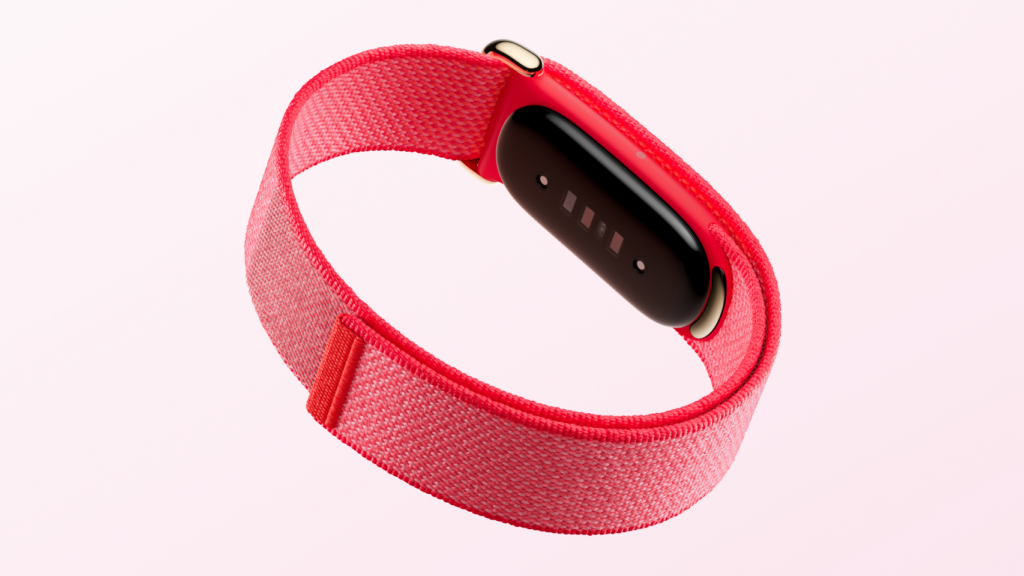
The pairing of Google Fitbit Air and the Google Health app is built on a deliberate product philosophy. Google is betting that a growing segment of consumers wants continuous health data without the distraction, bulk, and cost of a full smartwatch. The Fitbit Air does not have a screen. That is not an omission — it is the point. The device sits silently on your wrist, tracks everything, and stays out of your way. It notifies you through gentle vibrations. For alerts, workout summaries, and health insights, you check your phone.
The form factor is genuinely tiny. The tracker itself — the pebble — weighs 5.2 grams. With the band attached, the total weight is 12 grams. That makes it lighter than most coins. The pebble pops in and out of the band mechanism, which means you can swap bands without tools or expertise. The device charges magnetically. A five-minute fast charge delivers a full day of power. A full charge lasts seven days. The Fitbit Air carries an IP68 water resistance rating, meaning it can handle submersion to 50 metres (164 feet).
What the Fitbit Air Tracks
The Fitbit Air tracks the full complement of health metrics expected from a modern wearable — despite its miniature size. The sensor array delivers 24/7 heart rate monitoring, heart rhythm monitoring with AFib alerts, blood oxygen (SpO2), resting heart rate, heart rate variability (HRV), skin temperature, and sleep stages and duration. Smart Wake — a vibration-based alarm that wakes you at the optimal point in your sleep cycle — is also included.
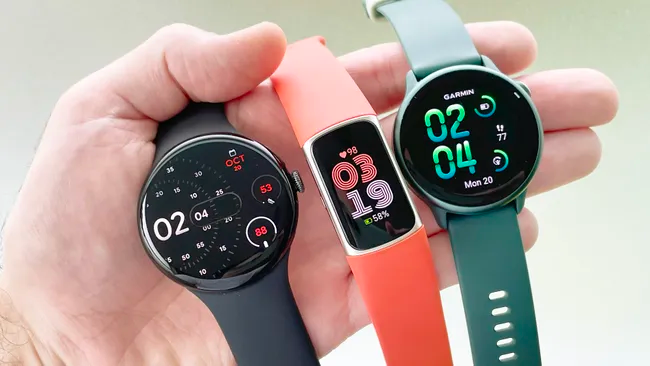
On the activity side, the Fitbit Air automatically detects and tracks common workouts. You can also start a workout from the Google Health app, follow a coach-recommended guided session, or snap a photo of a gym’s circuit training whiteboard — and the app’s AI maps out a tracking plan. The device stores seven days of minute-by-minute movement data and one day of workout data before syncing to the phone via Bluetooth. For users who already own a Pixel Watch, the Fitbit Air pairs simultaneously — so you can wear the watch during the day and switch to the lighter pebble for sleep without losing any tracking continuity.
Pricing, Bands, and Stephen Curry
At $99.99, the Fitbit Air significantly undercuts most competitors in the screenless health tracker category. WHOOP charges a monthly membership fee on top of the hardware cost. The Oura Ring starts at $299. Samsung‘s Galaxy Ring starts at $399. The Fitbit Air standard model ships on 26 May 2026. Pre-orders opened on 7 May.
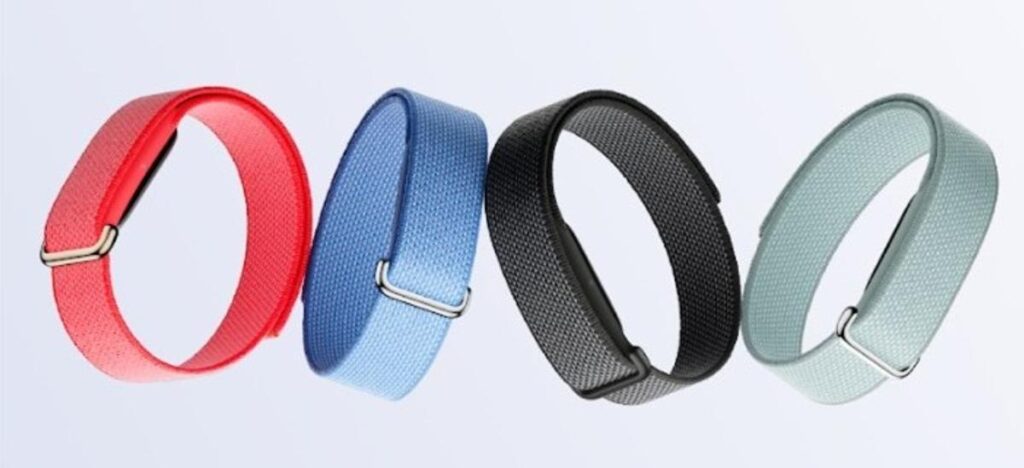
Three band types are available. The Performance Loop Band uses recycled materials with a breathable, micro-adjustable fit. The Active Band is sweat-proof, water-proof silicone for high-intensity training. The Elevated Modern Band at $49.99 uses polyurethane with a stainless steel buckle — designed to look like a fashion bracelet rather than a fitness tracker. A Stephen Curry Special Edition at $129.99 features a rye brown and game-day orange colourway, a water-resistant coating, and a raised interior print engineered for airflow during high-intensity movement. Curry serves as Google‘s “Performance Advisor” and co-designed the band. Every Fitbit Air purchase includes a three-month trial of Google Health Premium.
The Google Health App: One Platform to Rule Them All
The bigger story may not be the hardware. Google is rebranding the Fitbit app as the Google Health app — effective 26 May 2026. Existing Fitbit app users do not need to download anything. The update arrives automatically — all existing data transfers. Google Fit users will migrate later in 2026.
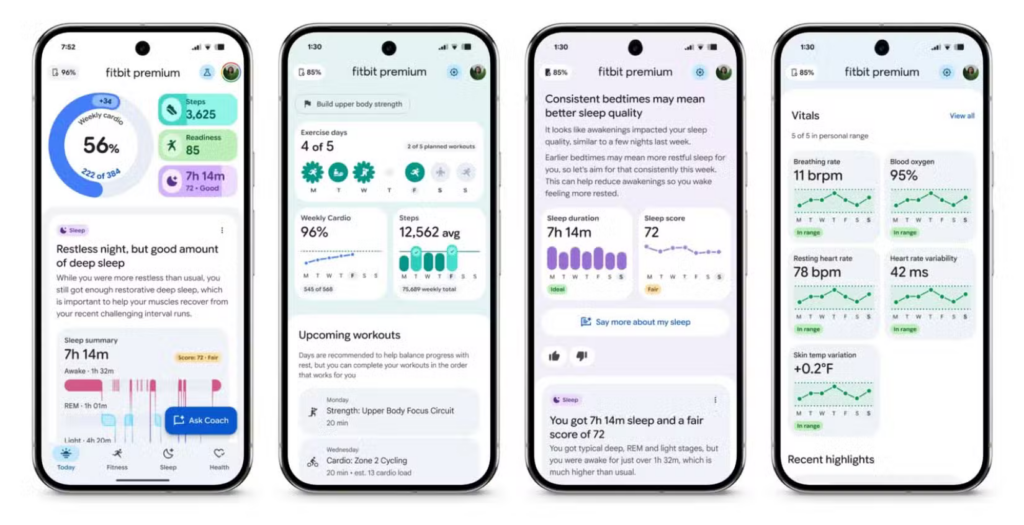
The Google Health app consolidates health data from Fitbit devices, Pixel Watch, Health Connect, Apple Health, third-party apps like Peloton and MyFitnessPal, and — critically — medical records. The interface organizes around four tabs: Today, Fitness, Sleep, and Health. Each tab is customizable. Fitness builds a weekly workout plan. Sleep tracks consistency and recovery trends. Health provides a snapshot of key vitals alongside summaries of medical records. The medical record integration is a meaningful step toward the kind of longitudinal health monitoring that clinicians have sought from consumer wearables for years.
Google Health Coach: Gemini Comes to Your Wrist
The Google Health Coach is the Gemini-powered AI assistant built into Google Health Premium. The Coach provides personalized workout suggestions, step-by-step guided training, sleep analysis, recovery recommendations, and — notably — summaries of your medical records. You can chat with it in natural language at any time.
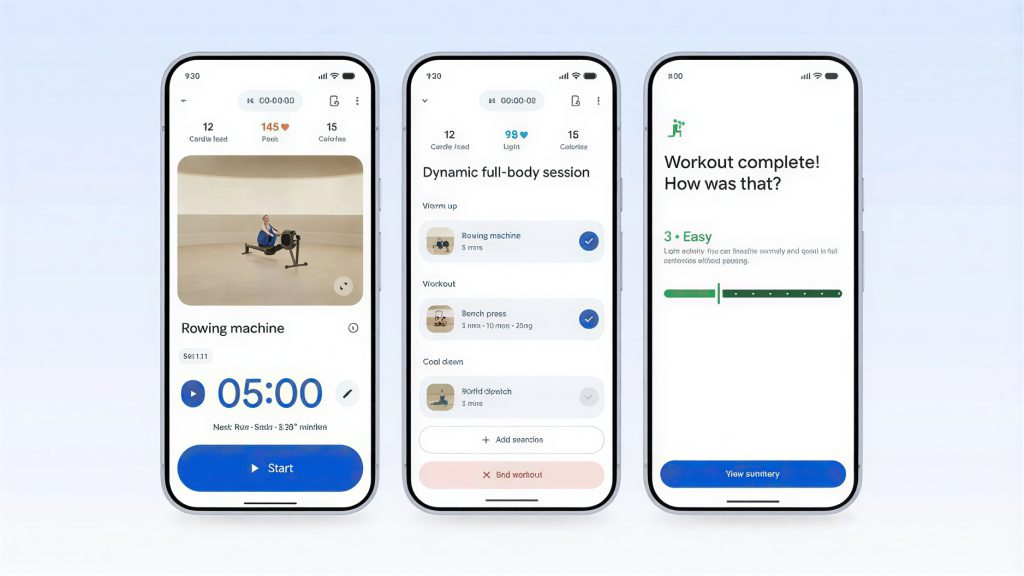
The Coach rolls out on 19 May 2026 and reaches all eligible users by 26 May 2026 — timed precisely to coincide with the Fitbit Air’s availability date. Eligible users include existing Fitbit and Pixel Watch owners. Support for other devices follows. Google Health Premium costs $9.99 per month or $99.99 per year — the same price as the legacy Fitbit Premium. Subscribers to Google AI Pro or Ultra receive Google Health Premium at no additional cost. That bundling matters. Google is explicitly positioning health services as part of its broader AI subscription ecosystem — the same axis it used to bundle Gemini Advanced into Google One. The result is a financial incentive for heavy AI users to consolidate around Google‘s health platform without paying twice.
The Competition: WHOOP, Oura, and the Screenless Market
The Fitbit Air positions Google directly against the screenless health-monitoring category that WHOOP pioneered and that the Oura Ring has expanded. Both competitors charge more — either through hardware cost, recurring membership fees, or both. At $99.99 with no mandatory subscription, the Fitbit Air undercuts that pricing model considerably. The sensor suite is comparable to both devices at launch. The key differentiator is the AI coaching layer.
Amazfit Helio is the most direct competitor in the screenless tracker category at a similar price point. WHOOP builds its value proposition around recovery-first metrics and team performance analytics — a professional-sports positioning that Google is trying to achieve through the Curry collaboration rather than on technical differentiation. Whether that strategy resonates with mass-market buyers will determine whether the Fitbit Air converts casual fitness app users into committed health ecosystem subscribers.
TF Summary: What’s Next
The Fitbit Air ships and the Google Health app go live on 26 May 2026. Google Health Coach reaches all eligible Fitbit and Pixel Watch users by the same date. The Google Fit migration to Google Health will follow later in 2026 — a process that will consolidate Google’s fragmented health app portfolio into a single platform for the first time. Pre-orders for the Fitbit Air standard edition and the Stephen Curry Special Edition are now open. Band accessories start at $34.99. Three months of Google Health Premium are included with every unit purchased.
MY FORECAST: The launch of Google Fitbit Air and the Google Health app will be Google‘s most successful Fitbit-era hardware release to date. The $99.99 price point removes the primary barrier that has kept screenless health trackers as a niche category. The Gemini-powered Health Coach bundled into Google AI Pro and Ultra subscriptions will drive cross-selling at a rate that WHOOP and Oura cannot match — neither has a comparable AI subscription ecosystem to leverage. By the end of 2026, Google Health will consolidate Fitbit, Pixel Watch, and a meaningful share of iPhone users through Apple Health integration into the largest consumer health data platform outside of Apple. The medical records integration is the long-term play. Once users connect health data to clinical records, switching costs become existential.