


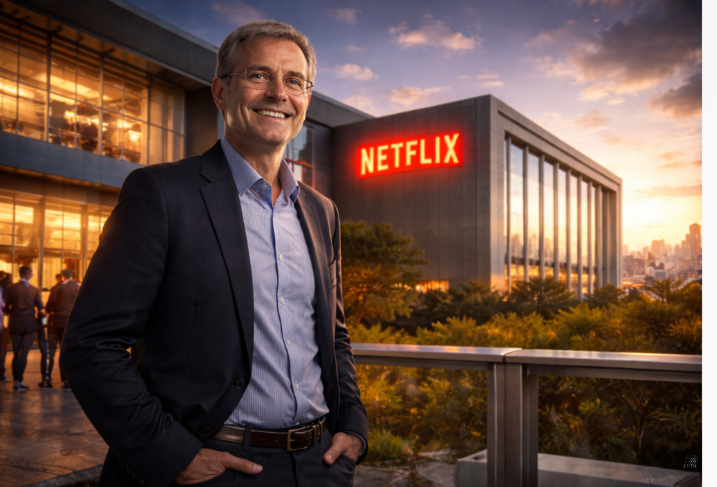
The man who mailed you DVDs and built a $50 billion streaming empire is officially calling it a day.
Reed Hastings is leaving Netflix. The co-founder and current chairman of the world’s largest streaming platform announced on 16 April 2026 that he will not seek re-election to the board. His term expires at the company’s annual shareholder meeting on 4 June 2026. That date will mark the end of a 29-year journey — from a scrappy DVD-by-mail startup operating out of a former bank branch, to a global entertainment force with more than 325 million paid subscribers and projected full-year revenue of between $50.7 billion and $51.7 billion (€46.7 billion–€47.6 billion).
The announcement arrived alongside Netflix‘s Q1 2026 earnings — a quarter that beat analyst expectations. Despite the strong numbers, Netflix shares fell as much as 10% in after-hours trading. The Hastings departure clearly unnerved investors. Furthermore, the market had hoped for raised guidance following a $2.8 billion termination fee from the collapsed Warner Bros. Discovery acquisition bid. Instead, Netflix maintained its existing full-year outlook. Consequently, the combination of conservative guidance and a founder exit proved too much for the after-hours crowd.
What’s Happening & Why It Matters
The End of a 29-Year Connection
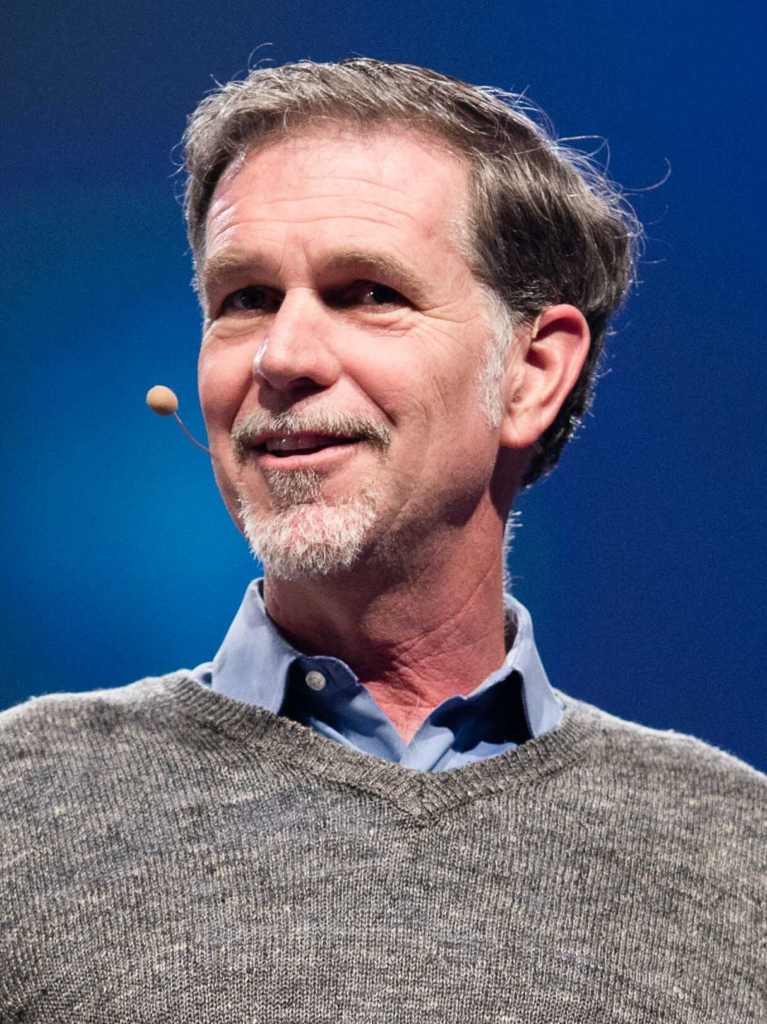
Reed Hastings co-founded Netflix in 1997, alongside Marc Randolph. The founding myth is well known. Hastings returned a copy of Apollo 13 to a Blockbuster store six weeks late. He reportedly owed a $40 (£31 / €37) late fee. The frustration sparked an idea. What if movie rentals had no late fees? DVDs were new to the market in 1997. Hastings and Randolph calculated that they could travel well through the mail. They incorporated Netflix in California and launched mail-order DVD operations in 1998. By December 1999, the company introduced a flat monthly subscription model. Customers could rent unlimited DVDs and return them at their own pace. The video rental industry was never the same.
Hastings served as Netflix CEO for 25 years. He then became co-CEO from 2020 alongside Ted Sarandos. In early 2023, he stepped back from that role and became executive chairman, handing full CEO responsibilities to Sarandos and Greg Peters, who was promoted from chief operating officer. Hastings’ board term will end in June 2026. An SEC filing confirmed the departure is “not as a result of any disagreement with the Company.” Therefore, this is a clean, planned exit — not a dispute.
Hastings described the moment. “Netflix changed my life in so many ways,” he said. “My all-time favourite memory was January 2016, when we enabled nearly the entire planet to enjoy our service. My real contribution at Netflix wasn’t a single decision. It was a focus on member joy, building a culture that others could inherit and improve, and building a company that could be both beloved by members and wildly successful for generations to come.”
He added a direct note of gratitude to his successors. “A special thanks to Greg and Ted, whose commitment to Netflix’s greatness is so strong that I can now focus on new things.”
What Hastings Built: A Company That Rewrote Entertainment

The scale of what Hastings built is worth pausing on. Netflix first launched as a DVD rental service. It survived the dot-com crash and outlasted Blockbuster, which filed for bankruptcy in 2010. It built one of the first major commercial streaming services. Furthermore, it pioneered original streaming content. The company launched its first original series — House of Cards — in February 2013. That show changed what television was. It also changed how television was distributed. The concept of “binge-watching” entered mainstream vocabulary. Netflix was largely responsible.
Under Hastings, Netflix went public in 2002 at $15 per share. The stock traded above $1,000 at its peak years later. By Q1 2026, the company reported Q1 revenue of $12.25 billion (€11.28 billion) — a 16.2% year-over-year increase. Net income reached $5.28 billion (€4.87 billion), driven in part by the Warner Bros. Discovery deal-termination fee. Operating income jumped 18% compared to the prior year. The Q1 results also included content wins across multiple regions. Highlights included Bridgerton season four, the Stranger Things finale, and the World Baseball Classic in Japan. That event drew 31.4 million viewers and made Japan Netflix‘s largest source of subscriber growth for the quarter.
Furthermore, Netflix streamed more than 70 live events in Q1. Advertising revenue is on track to reach $3 billion (€2.77 billion) in full-year 2026 — roughly double the prior year. The company works with more than 4,000 advertisers, up 70% year over year. This revenue line did not exist three years ago.
The Crackdown That Saved the Company
Hastings‘ final years at the helm included one of the company’s most decisive strategic moves. In 2022, Netflix reported its first subscriber decline in a decade. The stock crashed. Investors panicked. The company then moved aggressively. It cracked down on password sharing in 2023 — a move that initially prompted widespread user complaints. However, the crackdown worked. Millions of new paid subscribers joined. The practice is standard across the streaming industry.
Additionally, Netflix raised subscription prices for the second time in just over a year in early 2026. The ad-supported Standard plan rose to $8.99 (£7.06 / €8.28) per month. The Standard ad-free tier moved to $19.99 (£15.70 / €18.36). The Premium tier reached $26.99 (£21.20 / €24.79). Despite the increases, the company reported “slightly higher-than-planned subscription revenue” in Q1. Bank of America analyst Jessica Reif Ehrlich described the ability to sustain price increases as “a validator of Netflix’s confidence in their underlying business.”
Sarandos, Peters, and Life After Hastings
The leadership transition has been gradual. It has also been deliberate. Netflix co-CEO Ted Sarandos paid a warm tribute to Hastings. “Reed has been a singular source of inspiration for me, personally and professionally, since we met in 1999. I’ve had the privilege of working for, and alongside, a true history maker. He has modelled for Greg and me a selfless, disciplined leadership style that will continue to shape how we lead Netflix in the exciting times ahead.”
Co-CEO Greg Peters was similarly direct. “Reed will always be Netflix’s founder and biggest champion — he is a part of our DNA. His vision, entrepreneurship, and steadfast commitment to our values have shaped every stage of our journey and continue to shape how Ted and I lead Netflix today.”
BMO analyst Brian Morris described the exit as “the completion of a long-planned succession process that began over a decade ago.” Therefore, the investor community’s short-term concern may not reflect the long-term reality of a well-prepared leadership handover.
What Hastings Does Next
Hastings has been building his post-Netflix life for years. In 2023, he and his wife, Patty Quillin, invested $100 million (€92.1 million) to acquire Powder Mountain, a ski resort in Utah. He has since been developing it into a members-only club alongside residential projects. Hastings is also a board member at Anthropic, the AI safety company behind Claude. Additionally, he is one of the largest individual donors to the Democratic Party.
Philanthropically, Hastings and Quillin pledged $100 million to children’s education through the Hastings Fund, established in 2012. They have donated hundreds of millions of dollars to universities and colleges. Hastings has long championed charter schools as a vehicle for education reform. Notably, he also co-authored a 2020 book titled No Rules Rules: Netflix and the Culture of Reinvention with Erin Meyer. It became a New York Times bestseller and received widespread recognition.
Therefore, the next chapter is already visible. It involves real estate, philanthropy, AI governance, and politics. Netflix will continue without him. It is built to.
TF Summary: What’s Next
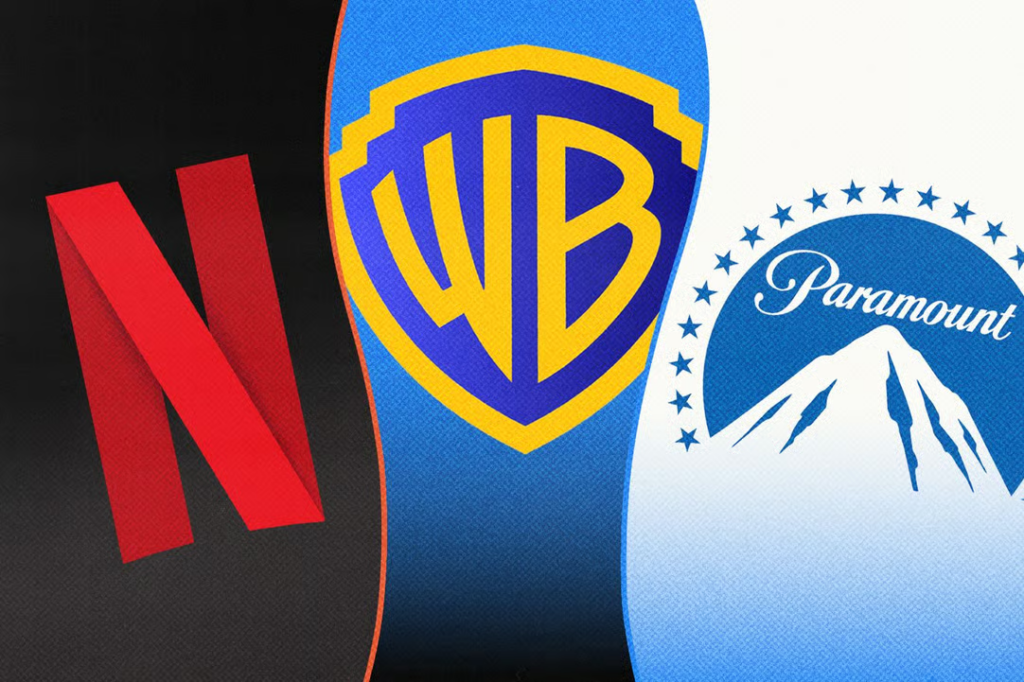
Reed Hastings will formally leave the Netflix board at the 4 June 2026 annual shareholders’ meeting. The company is expected to announce changes to its board composition in the coming months. Meanwhile, co-CEOs Ted Sarandos and Greg Peters will continue steering the company through a period of significant expansion — into live sports, advertising, video podcasting, and international markets. The full-year 2026 revenue target of $50.7 billion to $51.7 billion (€46.7 billion–€47.6 billion) is intact. Furthermore, with Paramount Skydance’s Warner Bros. Discovery acquisition still pending shareholder vote, the streaming sector is in flux. Netflix chose not to compete for that deal. Consequently, it now faces a newly consolidated rival with significant assets.
MY FORECAST: Hastings’ departure is, above all, an orderly exit. He built the company and grew it into a global powerhouse. He trained his successors and stepped back incrementally over three years. Then he walked out the door with no drama — and $2.8 billion in the quarterly results for good measure. That is a reasonably clean ending for someone who spent nearly three decades changing how the world watches everything.
— Text-to-Speech (TTS) provided by gspeech | TechFyle