


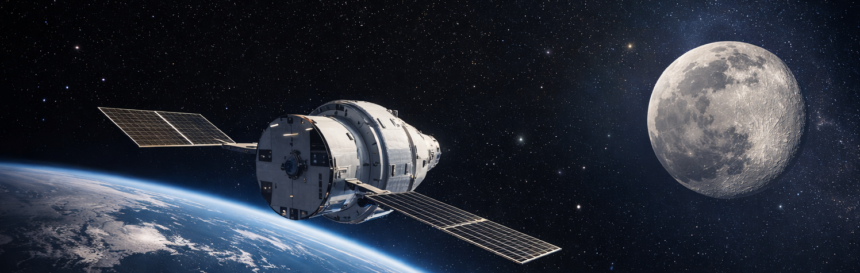
NASA has a deep-space story with little smoke, little panic, and only one truly ridiculous subplot: frozen astronaut urine.
NASA’s Artemis II crew spent the past few days doing something the United States had not done since 1972: flying people toward the Moon and watching the whole trip hold together with surprising grace. The four-person crew launched on 1 April 2026, aboard Orion and the Space Launch System, and the mission has been tracking cleanly through the early phase of the journey. Public updates from NASA and multiple reports from the flight have painted the same picture. Orion is performing strongly. The crew is calm. Mission control sounds almost suspiciously cheerful.
That kind of success changes the tone around the Artemis program. Human lunar missions usually carry enough technical drama to fill a week of headlines. Artemis II has not delivered much of that so far. A minor toilet issue turned into the most talked-about nuisance on board, which is either deeply funny or the best possible sign. A mission only halfway to the Moon had already become so operationally smooth that engineers and reporters began discussing frozen urine instead of system failures. In spaceflight, that counts as a luxury.
What’s Happening & Why This Matters
Orion Performing Better Than Expected
The biggest reason for the upbeat tone is simple. Orion appears to be behaving well in deep space.
NASA said the spacecraft completed its translunar injection burn on 2 April, firing the main engine for 5 minutes and 50 seconds to leave Earth orbit and begin the trip toward the Moon. The agency later said the crew had passed the halfway point and was preparing the cabin for lunar observation activities while practicing medical procedures, exercising, and checking emergency communications. That is the sort of steady mission rhythm NASA wanted. No panic. No loud corrections. No ugly surprise dominating the briefings.
The public commentary from inside the program has sounded almost relieved. One recent report described the spacecraft’s overall performance as “remarkably well,” while another said the vehicle had “pleasantly surprised” the engineers working the mission. That phrasing carries weight because Orion has endured years of delays, scrutiny, and cost criticism. A smooth crewed lunar test flight does not erase all of that baggage. A smooth crewed lunar test flight does give NASA a cleaner answer than usual.
The point is thus: A program mocked for schedule drag needed competence on live television. Orion has supplied exactly that.
Reaching the Moon and Chasing a Human Distance Record
As of 6 April 2026, Reuters reported the Artemis II crew had reached the Moon’s gravitational sphere of influence and was heading toward a record for the farthest distance humans have travelled from Earth. The crew is expected to reach about 252,757 miles (406,772 km) from Earth, breaking the Apollo 13 distance record by about 4,102 miles (6,601 km). The astronauts would pass behind the Moon and fly over the far side from roughly 4,000 miles (6,437 km) above the lunar surface.
That milestone is not only symbolic. Artemis II is a live deep-space systems test with human beings on board. NASA wants data on crew operations, communications, navigation, cabin procedures, and the performance of life-support systems during a real lunar flyby. The mission is not landing. The mission still carries significant technical value because every smooth operation near the Moon reduces uncertainty for subsequent missions.
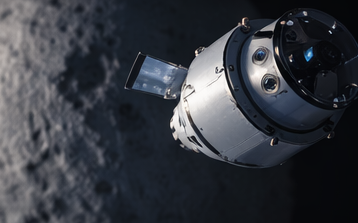
NASA has even added a dramatic visual bonus. The agency said the crew would observe a solar eclipse during the flyby window and use the darkened conditions to search for meteoroid flashes and dust near the Moon’s edge. That kind of scene sounds poetic. It still serves the practical mission profile.
One sentence sums up the mood nicely. Artemis II is finally giving NASA a lunar voyage where the beauty does not need to hide the engineering.
The Crew is Stacked
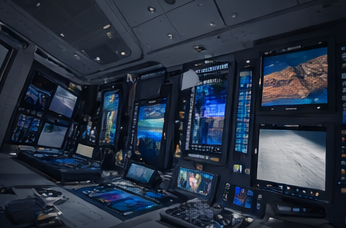
The Artemis II crew carries cultural weight, too. Reid Wiseman commands the mission. Victor Glover serves as the pilot. Christina Koch and Jeremy Hansen serve as mission specialists. Glover is the first Black astronaut assigned to a lunar mission. Koch is the first woman on a mission around the Moon. Hansen is the first Canadian and first non-American slated to fly there. NASA called the lineup a step in broadening who gets seen in deep-space exploration.
That symbolism is real. Better symbolism still requires mission success, and Artemis II has been providing the crew with a sturdy stage rather than a crisis briefing. The crew has been sending back images, conducting procedures, and speaking publicly in a focused rather than strained tone.
NASA quoted Koch saying the astronauts had a “collective expression of joy” when the Moon came into view through Orion’s docking hatch. That kind of line helps because Artemis is more than a technical program. Artemis is a public argument about why the Moon still deserves money, attention, and emotional investment.
A calm crew seeing the Moon again after more than half a century does more for public belief than any amount of PowerPoint evangelism from Washington.
The Real Meaning of the Moon Mission
No space mission escapes some level of bodily comedy. Artemis II’s version has involved the Orion toilet, a priming issue, and then frozen urine in the storage and vent system.

The initial toilet issue stemmed from insufficient water being introduced to prime the pump. That problem got fixed. A second annoyance then surfaced when the urine in the tank froze rather than venting out as planned. NASA responded by changing Orion’s orientation to give the tank and lines more sunlight. The fix only partly worked, so astronauts have continued using collection bags for urination while the bigger mission has kept humming.
On the surface, the whole thing sounds ridiculous. Underneath the joke is a valuable truth. A crewed test flight exists to expose weak points before the stakes are brutal. A messy waste-management problem on a 10-day lunar flyby is inconvenient. The same issue on a future Mars-class mission could grow into a health and survival concern.
Artemis II is proving that boring systems deserve as much respect as engines and guidance software. A deep-space vehicle does not fail only through fire. A deep-space vehicle can fail due to plumbing, air, heat, waste, or a single missed life-support detail.
So yes, the frozen urine story is hilarious. The deeper lesson is not funny at all. Orion is teaching NASA what still needs tightening before the agency claims a longer future beyond the Moon.
Quietly Repairing NASA’s Credibility Problem
For years, Artemis has attracted two kinds of conversation. The first kind came from space enthusiasts who genuinely wanted the Moon program to work. The second kind came from critics who saw cost overruns, delays, political churn, and hardware compromises and assumed another great American space ambition was wobbling toward disappointment.
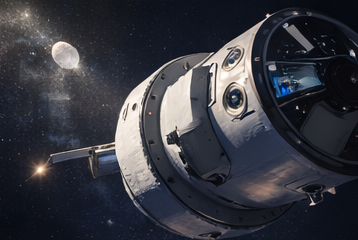
A clean early mission phase changes that discussion. NASA does not need a flawless public-relations campaign. NASA needs evidence that the core stack works when four astronauts climb aboard and leave Earth behind. Artemis II has started delivering that evidence.
NASA says Artemis II is the first crewed Artemis flight and a key step toward long-term return to the Moon and later missions toward Mars. That language can sound grandiose in isolation. A smooth lunar flyby gives the sentence more backbone.
The mission still carries political value, too. China’s lunar ambitions have sharpened the strategic case for a sustained American presence beyond low Earth orbit. Artemis II does not solve that geopolitical race alone. Artemis II does help the United States sound more serious when officials talk about returning astronauts to the lunar surface and staying there.
Programs built on giant promises rarely get many chances to look competent in public. NASA is using the chance well.
Up Next: Artemis III
Even with the mission going well, the hardest work still waits ahead. Artemis II is a flyby, not a landing. The larger public goal is Artemis III, which NASA still says will return astronauts to the lunar surface and eventually help prepare for longer-duration exploration around the Moon and beyond.

That means the praise has limits. A successful flyby gives NASA momentum. A successful flyby does not relieve the technical, budgetary, and schedule pressures tied to lunar landers, spacesuits, operations near the south pole, and the architecture needed for a return to the surface.
Big programs earn the next chapter by surviving the current chapter. Artemis II appears to be doing that. A clean return to Earth will strengthen the case for every next step. A messy late-mission surprise would muddy the glow. For the moment, the mission has earned a more generous reading than many skeptics expected.
The market for lunar belief had gone cold for a long time. Artemis II is warming the room again.
TF Summary: What’s Next
Artemis II has given NASA a valuable gift: a crewed lunar mission that is performing strongly, moving toward a human distance record, and proving the Orion spacecraft can behave in deep space with astronauts on board. The mission has already completed its key outbound burn, crossed the halfway point, entered the Moon’s gravitational sphere, and continued toward a far-side flyby with few serious complications. The toilet trouble turned into the loudest nuisance, which says almost everything about how smoothly the larger mission has gone.
MY FORECAST: A clean return on 10 April 2026 will hand NASA a rare political and technical win. Artemis critics will not disappear, but the tone will soften because live performance still beats old cynicism. The harder pressure will move quickly toward Artemis III and the promise of a true lunar return. For the moment, though, NASA has earned something simple and precious: a Moon mission that is less an apology and more a comeback.
— Text-to-Speech (TTS) provided by gspeech | TechFyle