


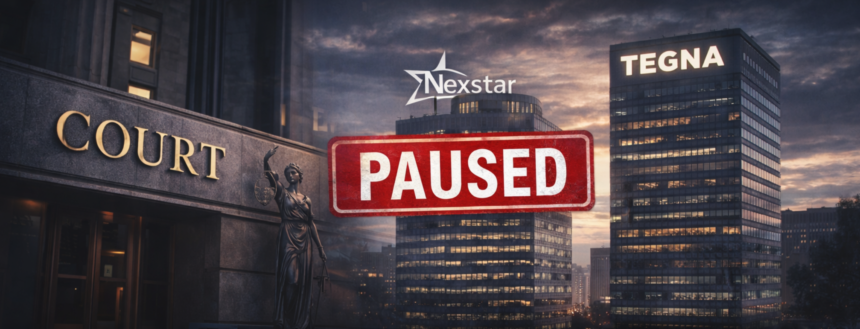
The FCC approved a giant local-TV marriage. A federal judge then asked: Who, exactly, authorized bulldozing the ownership cap?
Nexstar’s long chase for Tegna crashed into a reinvigorated wall. After the Federal Communications Commission approved the deal and allowed the combined company to reach roughly 80% of U.S. TV households, a federal judge stepped in and ordered Nexstar to keep Tegna separate. At the same time, the court reviews the merger challenge. The ruling did not kill the deal forever. It did something almost as painful. It froze the victory lap.
The fight is bigger than one broadcaster buying another. The case cuts into old questions about media concentration, the 39% national ownership cap, and how far regulators can bend the rules for politically friendly deals. Local TV may not appear sexy beside AI, chips, or rockets. It still shapes elections, news agendas, retransmission fees, and what millions of households watch every day. When one company tries to swallow a huge chunk of that system, courts tend to wake up fast.
What’s Happening & Why This Matters
An Approved Deal with Sand in the Gears
Nexstar won federal approval for its purchase of Tegna on 19 March 2026. The deal, valued at around $6.2 billion (€5.7 billion) in enterprise value, had already cleared the Justice Department. The FCC then signed off and let the combination move ahead, despite lawsuits from DirecTV and a coalition of eight states led by California and New York.
That approval was aggressive. The combined company would own 265 stations across 44 states plus Washington, D.C. It would reach about 80% of U.S. television households. Congress set the formal national cap at 39%. The FCC tried to square that circle with the old UHF discount, a relic from the analogue era that counts many stations at half their reach. Critics say that the workaround stopped making technical sense years ago.
Then came Judge Troy Nunley. Reuters reports he ordered Nexstar to keep Tegna’s assets separate and independently managed while the court reviews the antitrust case. That is not a ceremonial slap. It blocks the messy integration work that makes a merger hard to unwind later. In court terms, the judge just told Nexstar: enjoy the paperwork, not the spoils.
Antitrust and Regulatory Nerves
The hardest part of this case lies inside the FCC approval itself. Critics are not only saying the merger could raise prices or weaken local journalism. They are saying the FCC blew past a long-standing ownership limit that Congress wrote into law.
That makes the dispute uglier for regulators. If a merger poses normal competition questions, agencies can argue over economics. If an agency appears to have stretched or sidestepped a congressional limit, the argument gets more constitutional, more political, and far less comfortable.
Reuters says FCC Chair Brendan Carr backed the deal and defended it as a way to strengthen local broadcasters against national networks. Democratic Commissioner Anna Gomez blasted the approval and warned it would hurt local journalism and editorial diversity. Congresswoman Doris Matsui went further, saying only Congress can change the 39% ownership cap. Her message was plain: the FCC is not meant to rewrite the statute because it likes the buyer.
The order suggests the courts may be less impressed by the FCC’s improvisation than the FCC was by itself.
Local TV Is a Powerful, Profitable Avenue
It is easy to dismiss local television as old-media furniture. That would be lazy. Local stations still control valuable news audiences, election coverage, sports carriage, and retransmission negotiations with pay-TV providers. Let’s dig into that last point.

DirecTV sued because larger station groups can demand higher carriage fees. States sued because greater consolidation can reduce competition, weaken local newsroom independence, and narrow the range of editorial voices in major markets. Those are not abstract complaints. They go straight to household bills and local civic life.
Nexstar has argued the opposite. The company says larger scale helps local stations survive and compete against streaming giants and national programmers. That pitch has some logic. The trouble is that scale can help a broadcaster while still hurting viewers, rivals, and newsroom plurality.
A company does not need a monopoly to maintain a comfortable perch. In the media, comfort is dangerous. It can flatten coverage, harden bargaining power, and turn “local” into a franchise label rather than a genuine community function.
That is why the 80% reach figure applies such a wallop. Even if discounts and divestitures soften the technical calculation, the public meaning is clear. One broadcaster was about to get very large, very quickly.
The Order’s Impact on the Merger’s Political Optics
Before the court stepped in, the story was simple. Trump liked the merger. Carr liked the merger. The DOJ cleared it. The FCC cleared it. Nexstar closed it. That storyline felt clean, muscular, and politically useful.
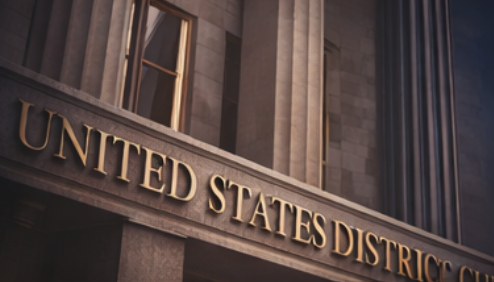
Judge Nunley ruined the tidy version.
By ordering Tegna held separate, he turned the merger from a completed triumph into a contested power grab. Politics feeds off visual cues. “Approved and closed” sounds final. “Hold separate pending review” sounds shaky, rushed, and maybe overreaching.
Reuters reports that the court has scheduled a 7 April 2026 hearing on whether to issue a preliminary injunction. It keeps the merger under a bright public light. In contrast, critics keep hammering the same themes: higher consumer costs, weaker competition, sports blackout risks, and damaged local journalism.
In other words, the legal pause has already changed the narrative. Nexstar no longer gets to say the matter is settled. It gets to say the fight moved into another room.
Courts Are Rechecking Fast Regulatory Wins
There is a wider lesson here, and it reaches beyond broadcasting. Regulators under political pressure can move fast and call the result pragmatic. Courts can then slow the whole machine down and ask whether the legal foundation holds. That is becoming a familiar pattern across tech, media, and communications.

For years, many companies treated regulatory approval as the finish line. That is no longer safe. In heavily contested sectors, approval is often just halftime. States sue. Rivals sue. Consumers complain. Judges review the record. Suddenly, the “done deal” is a frozen integration chart and a pile of sealed filings.
The Nexstar-Tegna mess fits that pattern perfectly. A powerful company won fast support from a friendly administration, a friendly FCC chair, and a deregulatory mood. Then the courts stepped in and asked whether the law was bent too far.
That is the spicy truth under the paperwork. A politically blessed merger still needs a legal spine. If the spine bends too easily, the whole body starts wobbling.
TF Summary: What’s Next
Nexstar’s Tegna deal is no longer a clean regulatory win. The FCC approved the merger, despite the 39% ownership cap and despite objections from states and competitors. Yet a federal judge has already forced Nexstar to keep Tegna separate while the case moves forward. That keeps the merger alive on paper but unstable in practice. It changes the political mood, hardens scrutiny of Brendan Carr’s FCC, and gives critics more time to argue that the government stretched the law to help a favoured buyer.
MY FORECAST: The next phase will turn on whether the courts see the FCC’s ownership logic as clever regulation or blatant evasion. If the injunction grows stronger, the deal could drag into a longer legal war and become a national example of why media-consolidation rules still bite. If Nexstar wins, expect more mergers to test the same boundaries. Either way, local TV just proved it can still produce one of the nastiest policy fights in American media.
— Text-to-Speech (TTS) provided by gspeech | TechFyle