



Robot Wars, Cloud Wobbles, AI Lawsuits, and a Truth Crisis Hit at Once
Technology news used to come in neat little boxes. Gadget launch here. Earnings beat there. Maybe a lawsuit if a CEO got bored and tweeted through it. That tidy world is gone.
The same week brought armed ground robots on the battlefield, AI-made war fakes flooding social media, a major Amazon outage, new court defeats over AI training data secrecy, a courtroom showdown over Elon Musk’s Twitter takeover, and fresh questions about who gets to distribute AI tools when the Pentagon starts throwing procurement grenades.
It sounds chaotic because it is chaotic. Yet there is a pattern beneath the breadth of stories. Digital infrastructure reforms war, commerce, speech, and law all at once. The same systems that deliver shopping carts and chatbots influence missile defense, public trust, and what citizens get to know about how AI works.
This roundup is not about random headlines. It’s about the power stack. Who controls or breaks it. Who regulates it. And who profits while everyone else tries to catch up.
What’s Happening & Why This Matters
AI War Fakes Turn Conflict Into Clickbait Gold

The war involving Iran, the United States, and Israel has triggered a surge in AI-generated misinformation. Researchers tracking the conflict found fake videos and fabricated satellite images spreading across social platforms and racking up hundreds of millions of views.
That scale matters. Timothy Graham of Queensland University of Technology says the barrier to creating synthetic conflict footage has “essentially collapsed.” What once required serious production work can be done in minutes with cheap and widely available AI tools. Henry Ajder, who studies generative AI, makes the same point from a different angle: the number of tools for creating realistic manipulations is unprecedented.

The ugliest twist is monetization. X reportedly identified that “99%” of accounts spreading this kind of AI-generated conflict footage were trying to game monetization. Graham estimates that viral misinformation can function like a “money printer” once creators qualify for X’s revenue-sharing program.
That is the rotten engine under the hood. Platforms say they want accurate information. Their business systems reward engagement. Engagement loves spectacle. Spectacle does not care about reality.

Even worse, AI verification tools can fail. BBC Verify found cases where X users asked Grok whether a fake war clip was real, and Grok answered incorrectly. That is a nasty little recursive loop: the AI generates the fake, then mislabels it as real.
If the trend continues, conflict reporting gets noisier, public trust gets weaker, and real evidence has to fight through a swamp of synthetic sludge.
Ukraine’s Robot Wars Stop Sounding Like Science Fiction
While AI fakes spread online, armed uncrewed ground vehicles are taking a more literal path onto the battlefield in Ukraine. The UGVs already help repel attacks, carry machine guns, move explosives, deliver supplies, and evacuate the wounded.
Oleksandr Afanasiev of Ukraine’s K2 brigade says it plainly: “Robot wars are already happening.” He further explains why the machines are important. Robots can fire in places where human infantry would hesitate to go. They can absorb the risk that Ukraine cannot afford to place on battle-ready soldiers.
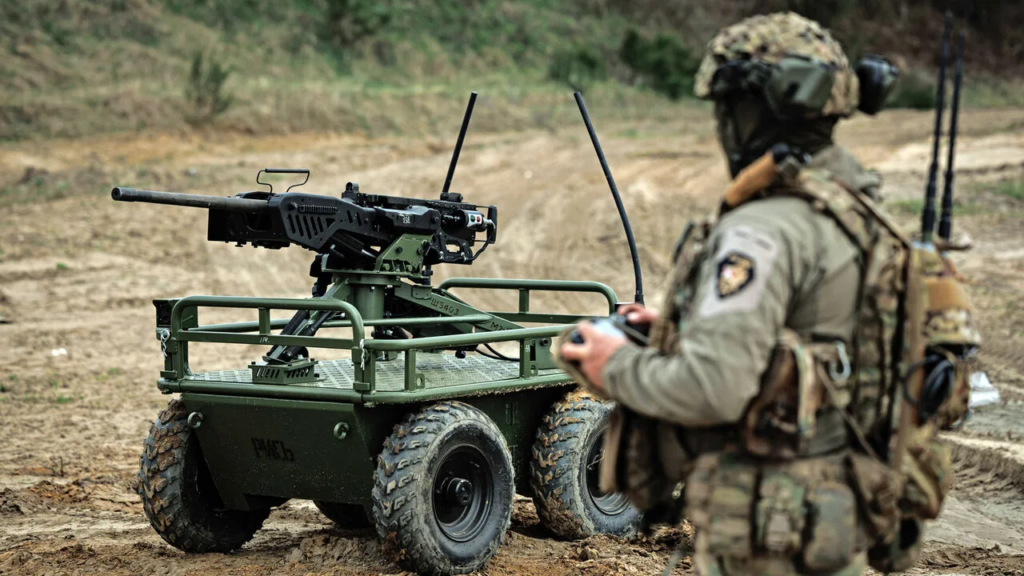
The robots are not replacing all soldiers. They are extending battlefield reach, where aerial drones have already made human presence far more dangerous. The “kill zone” stretches 20 to 25 kilometers from the line of contact, making robotic support far more than a novelty.
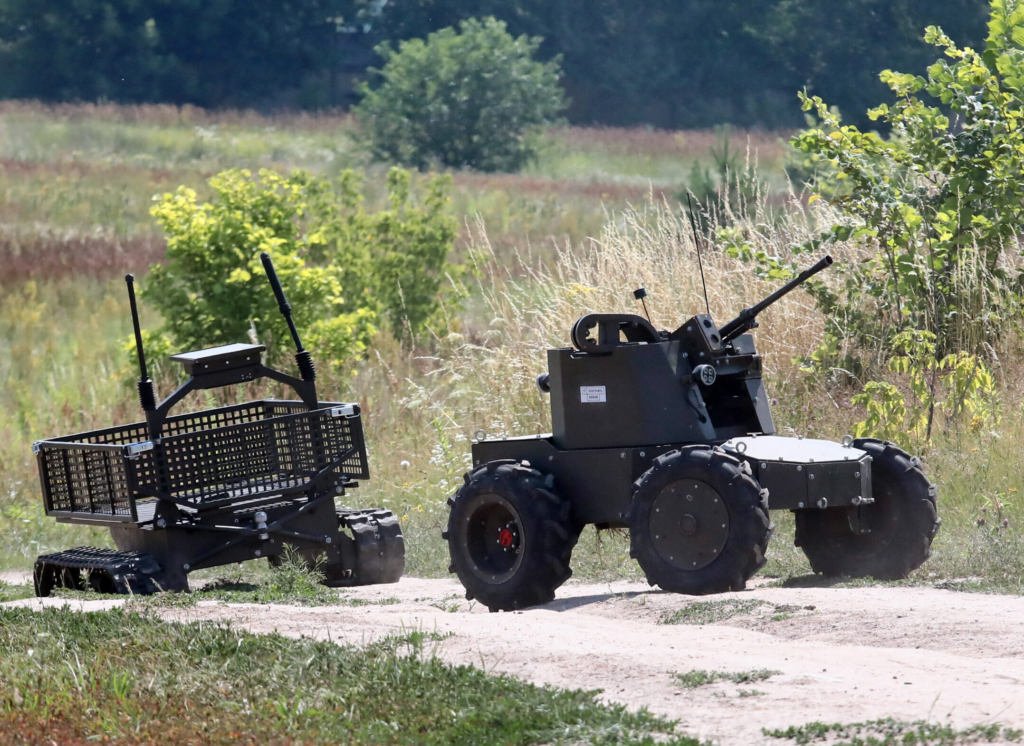
Operators still make the final decision to fire, according to Ukrainian commanders, because the risk of misidentifying a civilian or the wrong target is too high. That human-in-the-loop line is doing a lot of moral work. It’s the last clear boundary before autonomy creeps closer to live fire.
Ukrainian manufacturers expect demand to explode. One company made more than 2,000 UGVs in 2025 and expects around 40,000 in 2026, with 10% to 15% of them armed. That is not a toy market. That is industrial-scale robotic warfare.
Amazon’s Outage Reminds Everyone the Cloud Is Still Fragile
On the less-explosive but still very expensive side of tech, Amazon suffered an outage that triggered more than 20,000 reported issues, including checkout errors, broken product pages, app issues, and some AWS-related complaints.

Downdetector recorded a rapid spike, and the disruption peaked at 20,804 reports before tapering off later in the day. Amazon eventually said the issue came from a software code deployment and that the website and app were restored.
The story is small compared with war and litigation. It isn’t. A code deployment glitch at one of the world’s biggest digital commerce platforms shows how much modern infrastructure hangs on invisible software layers. When those layers wobble, shopping stops, pages fail, apps misfire, and confidence takes a hit.
Cloud resilience has become one of the phrases executives love to toss around during keynote season. Then a bad deployment occurs, and suddenly, resilience is less strategy and more wishful thinking in nice attire.
Microsoft and Google Refuse to Join the Anthropic Freeze
The Pentagon’s feud with Anthropic keeps spilling outward, yet two cloud giants are not rushing to cut ties. Microsoft and Google both say customers can still access Anthropic tools such as Claude through their platforms, outside direct defense applications.
Microsoft’s legal team says Anthropic products are available through M365, GitHub, and AI Foundry, excluding the Department of War. Google says customers can keep using Anthropic products through services like Google Cloud, and the administration’s stance does not stop non-defense collaboration.
That is a big signal. Washington may want to treat Anthropic as radioactive after the company refused unrestricted military access, but cloud incumbents are drawing a tighter box around the damage. They are effectively saying: the procurement fight does not rewrite the entire commercial market.
The deeper lesson is simple. AI model access is infrastructure. When the government tries to squeeze one provider, hyperscalers can blunt the pressure by keeping distribution channels open.
xAI Loses a Legal Fight Over California’s AI Data Disclosure
In California, xAI fails to block enforcement of AB 2013, a law requiring AI developers to explain what data sources trained their models, when data was collected, whether collection is ongoing, and whether protected or personal information appears in those datasets.
xAI argues the law forces disclosure of trade secrets and could devastate its competitive edge. The court is not persuaded. Judge Jesus Bernal says xAI is too vague about the specific harm it faces and fails to show that the law requires the revelation of genuine trade secrets.
The sharpest line in the ruling cuts through Musk’s argument that consumers “cannot possibly” care where training data comes from. The judge says that the claim “strains credulity.” Consumers may very well want to know whether a model trains on medical records, copyrighted works, synthetic content, or something even murkier.
The case matters far beyond xAI. It sends the AI market toward disclosure norms, even if imperfect ones. Companies keep saying the public does not care about training data. Courts are starting to say: prove it.
Musk’s Twitter Trial Keeps the Old Drama Alive
Speaking of Musk, he is also on the stand in the Twitter investor trial, where plaintiffs accuse him of effectively pounding the company’s stock price down during the 2022 takeover saga to improve his bargaining position.

Musk testified that he did not expect his attacks on Twitter to hurt investors or crash the stock. He described the market as “like a manic depressive” and even called his “temporarily on hold” tweet perhaps not his wisest.
Investors argue he knew exactly what he was doing. Musk’s camp says his complaints about bots and spam were genuine.
The case is in that special Musk category where securities law, social media theatrics, and corporate strategy all climb into the same clown car. The legal outcome could shape other pending cases, including SEC claims tied to the delayed disclosure of his Twitter stake.
OpenAI Hits Pause on “Adult Mode” Over Age Prediction
Away from war and courtrooms, OpenAI has delayed the release of ChatGPT’s planned “adult mode” until it improves age prediction systems meant to keep minors out. The tools reportedly use signals such as account age and usage patterns to estimate a user’s real age.

OpenAI says it still believes in treating adults like adults, yet it needs more time to get the experience right. It also says it wants to focus on improvements that matter to more users, including intelligence, personality, personalization, and creativity.
That delay is not trivial. It shows how quickly generative AI companies run into old internet problems in new outfits: age checks, moderation risk, political pressure, and lawsuits involving minors.
When adult features collide with weak age assurance, legal departments start sweating bullets. That is true even when the feature arrives wrapped in sleek product language instead of trench-coat internet vibes.
Satellite Imagery Delayed to Avoid Helping Adversaries
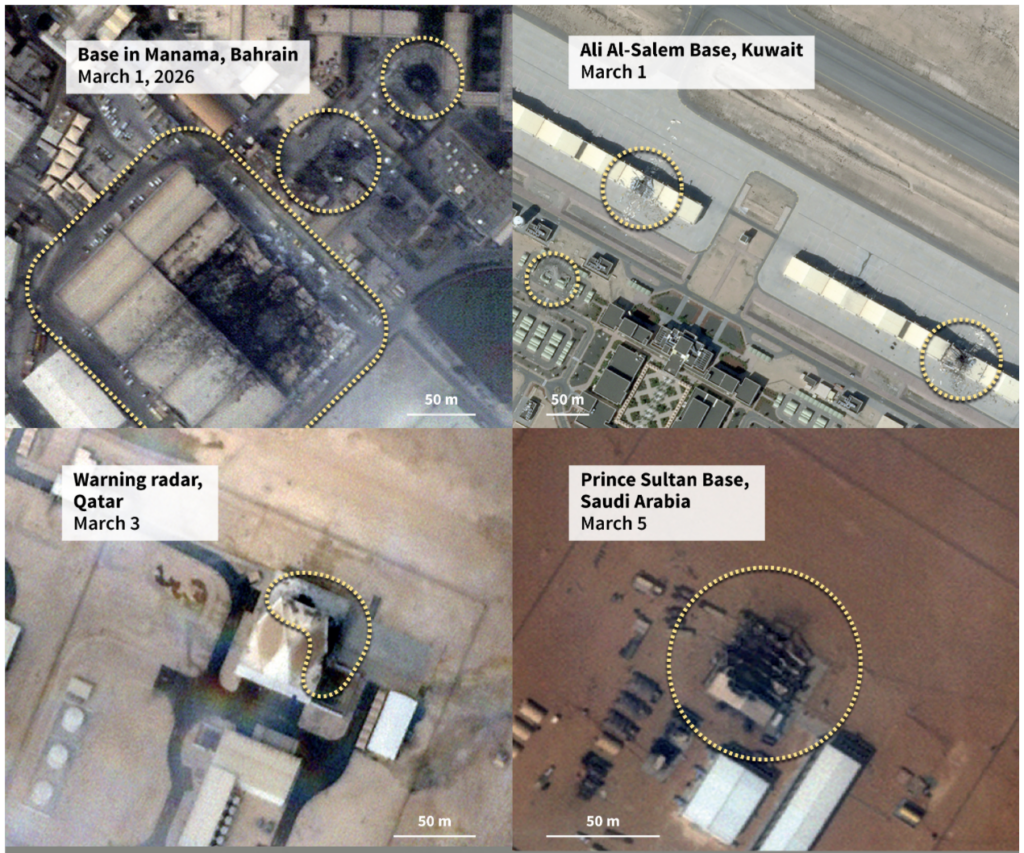
Commercial satellite imaging company Planet Labs has imposed a 96-hour delay on newly collected imagery over Gulf States, Iraq, Kuwait, and nearby conflict zones, while keeping imagery over Iran immediately available to most users. Authorized government users keep immediate access.
Planet says the delay is designed to prevent adversarial actors from using its imagery for battle-damage assessment. The company had already published overhead views showing damage to U.S. and allied installations, including the U.S. Fifth Fleet headquarters in Bahrain and a U.S.-built radar in Qatar.
This is a major shift in the politics of commercial space data. Satellite companies once sold transparency as an uncomplicated public good. They are confronting the obvious catch: transparency during war can also help the people launching the missiles.
TF Summary: What’s Next
The cluster of stories points in one direction. Tech warfare, cloud law, and news are no longer a niche beat. It is the main stage. AI-generated war fakes are getting cheaper and easier to spread. Armed robots are moving from prototypes to battlefield necessity. Cloud platforms are showing both their market power and their fragility. Courts are imposing greater scrutiny on AI training data. Commercial satellite providers are quietly becoming gatekeepers of wartime visibility.
MY FORECAST: Expect three fronts to harden. First, platforms will tighten monetization rules around synthetic conflict media, though not fast enough to stop the flood. Second, military robotics will scale sharply, with human oversight language preserved in public while autonomy expands in practice. Third, courts and regulators will continue to push AI firms toward disclosure and accountability, especially regarding training data, age verification, and product risk. The next phase of tech power won’t hinge on who builds the flashiest model. It will hinge on who survives the pressure from war, infrastructure failure, and law.
— Text-to-Speech (TTS) provided by gspeech | TechFyle