



Europe Eyes 6G Leadership While Space Networks Start Acting Like Infrastructure
Space used to be a separate universe from telecom. Rockets went up. Phones stayed down. That clean split is gone.
At Mobile World Congress (MWC) 2026, the telcos treat orbit as part of the network diagram, not a novelty slide. 6G planning is on the rise. Satellite-to-phone service is turning into a marketplace land grab. NASA is readying the next Artemis II flight window, pushing the Moon back into the calendar with real dates, viable hardware, and unknown constraints.
Here’s the connective tissue: AI needs bandwidth, bandwidth needs spectrum, and coverage needs altitude. Meanwhile, governments want leverage over the infrastructure that carries their data. That political gravity is as real as Earth’s.
What’s Happening & Why This Matters
6G: Beyond a Marketing Cycle
Qualcomm views 6G as a clean break from prior generations. The company calls 6G “a revolution,” and urges Europe to lead it.
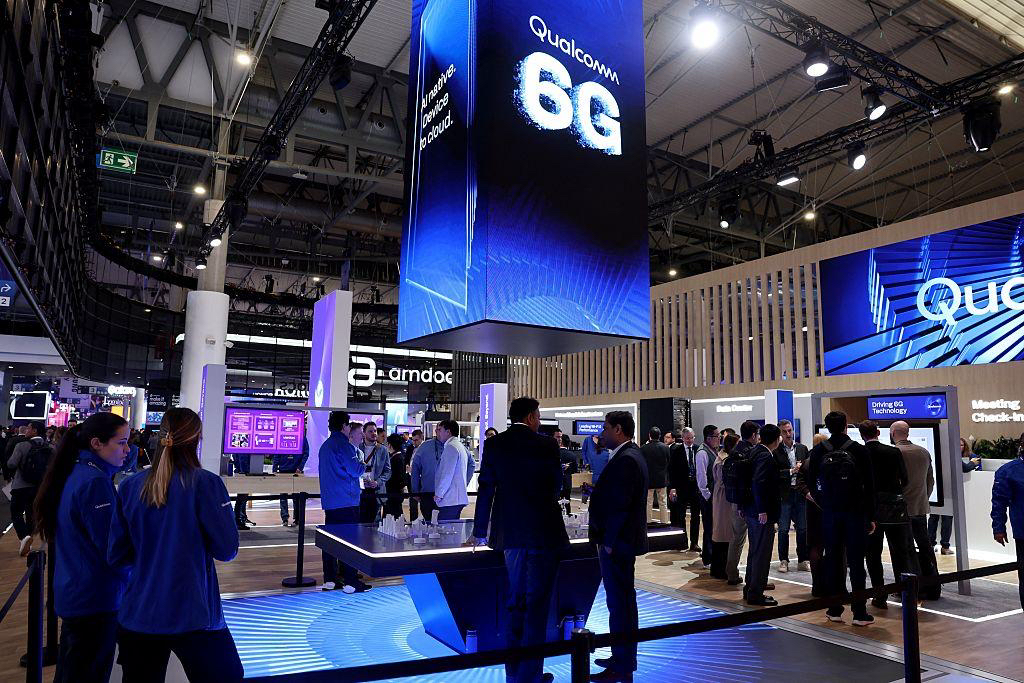
Qualcomm targets 2029 for 6G commercialization and expects pre-commercial deployments as early as 2028. That timeline matters because it lines up with a massive wave of AI adoption across devices, edge nodes, and data centers. The industry is no longer optimizing download speeds. It is strengthening upload, latency, sensing, and compute distribution.
Wassim Chourbaji, Qualcomm’s president for the Middle East and Africa and senior vice president for government affairs for EMEA, points to smart glasses as a practical 6G driver. He describes video streams that return to the network for processing and “tokenization,” which demands strong upstream capacity.
That sounds niche until you consider what “smart glasses” really means in 2026: always-on sensors, always-on vision, constant context. That creates continuous data exhaust. If that exhaust can’t flow efficiently, the product fails.
Qualcomm highlights 6G sensing — network capabilities that detect and track objects such as cars and drones — and tie to national security. That’s not a small aside. It is an indicator that telecom networks are sliding toward dual-use infrastructure: consumer convenience on Monday, defense capability on Tuesday.
At MWC, Qualcomm announced a 6G coalition with European partners, including Nokia and Ericsson, as well as U.S. firms, including Amazon, Google, and Microsoft. The coalition message: 6G will not arrive as one vendor’s product, but as a negotiated stack.
Qualcomm pushes a “hybrid AI” approach, distributing computing across devices, edge networks, and cloud infrastructure. That idea fits the physics: sending every inference request back to a faraway data center adds latency and cost. It fits the politics: local processing supports data sovereignty.
Europe’s big opportunity is at that intersection. Hardware manufacturing strength, plus industrial use cases, plus policy appetite for autonomy.
Satellites Take Over the “Last Mile” Conversation
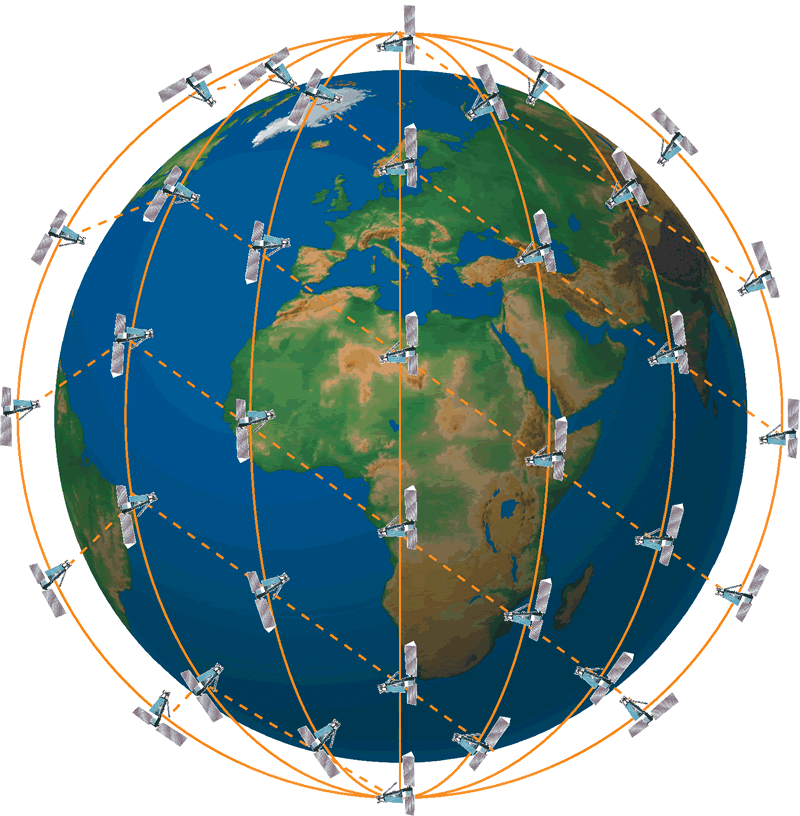
Ground towers can’t cover every valley, ocean route, rural highway, or mountain village. Satellite networks can. That gap used to feel tolerable. It no longer does. People expect coverage everywhere, and governments treat coverage as economic infrastructure.
AST SpaceMobile is chasing that promise with a direct-to-phone approach backed by major carriers. The company says it intends to deliver commercial service in initial markets by the end of 2026.
AST’s president and chief strategy officer, Scott Wisniewski, says the plan requires getting 45 to 60 satellites up this year to enable initial service. The company already has six BlueBird satellites in orbit, including five smaller models launched on a SpaceX Falcon 9 in September 2024 and one larger model launched in December that has deployed a 2,400-square-foot array and entered checkout testing.
The challenge is launch cadence and launch economics. AST’s next liftoff uses Blue Origin’s New Glenn, yet it will carry only one large satellite even though the vehicle can lift more. Wisniewski says AST is conservative on the first New Glenn flight carrying an AST payload.
AST says it will shift to a lighter “stackable” satellite design so three to eight satellites can launch together, depending on rocket capacity. That change isn’t cosmetic. It’s how you avoid a future where every launch feels like a luxury purchase.
In parallel, SpaceX promotes Starlink Mobile as a carrier partner service rather than a direct-to-consumer wireless competitor. In the same orbit of announcements, Deutsche Telekom says it will use Starlink’s future service—powered by S-band spectrum that SpaceX acquired via EchoStar — to fill coverage gaps.
That Starlink upgrade, according to SpaceX, targets peak download speeds up to 150 Mbps. Capacity depends on a next-generation constellation launched with the Starship rocket, with first launches expected in 2027.
So the satellite field is not “one winner.” It is a competition among different architectures, launch plans, and business models. Carriers are picking partners the way airlines pick engine suppliers: for performance, reliability, and long-term roadmap safety.
The Modem Layer Quietly Decides Who Wins Satellite-to-Phone
Satellite-to-phone service does not scale unless phones can speak the right radio language. That pushes the battle down into modem silicon — the chip that controls connectivity.
MediaTek announces work with SpaceX to support wireless emergency alerts via satellite communications, and demonstrates the technology at MWC using its M90 5G modem. MediaTek holds about 34% of the smartphone chip market, and its modems used widely in midrange devices. That matters because midrange phones represent volume. Volume drives standardization.
MediaTek’s announcement focuses on satellite emergency alert messages, such as earthquake and tsunami warnings. Yet the implication runs wider: once the modem supports the band and the protocol, adding more extensive satellite services is a matter of product rollout and commercial agreements.
SpaceX’s push toward S-band frequencies introduces a compatibility hurdle because many current smartphones don’t support those bands. SpaceX has to work with modem makers to integrate those radio frequencies, a process Elon Musk estimates at roughly two years.
In practical terms, the satellite race will not be won by rockets. It will be won by chipset adoption and device availability. Space networks can launch thousands of satellites and still fail at scale if the phone in your pocket can’t talk to them.
Artemis II: The Moon Program Keeps Crawling Forward
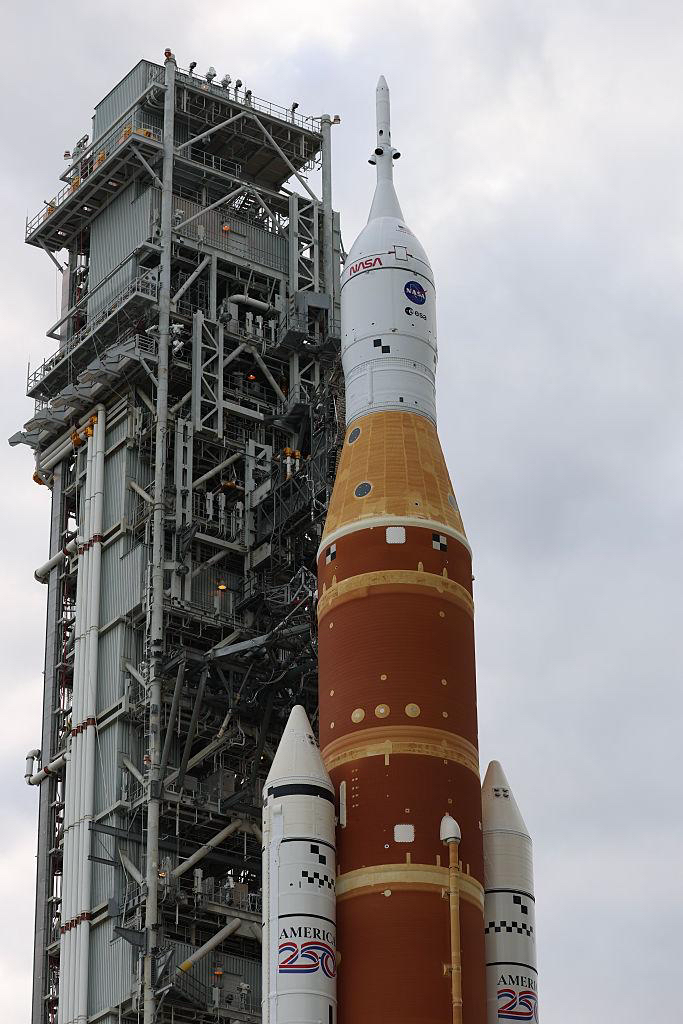
While telecom firms argue over spectrum and orbits, NASA is still pushing humans back toward the Moon, one delayed milestone at a time.
NASA targets 1 April for the delayed Artemis II launch window, after resolving a helium flow issue that affected the wet dress rehearsal. NASA says the issue stemmed from a faulty seal on a quick-disconnect fitting for tubing. Engineers validated repairs by running a reduced helium flow to confirm the issue was resolved.
The agency still has a long checklist before rolling the rocket back to the pad. Tasks include replacing flight termination system batteries, replacing flight batteries on upper and core stages, and recharging Orion launch abort batteries. NASA plans to keep the Space Launch System in the Vehicle Assembly Building until those steps are complete.
Artemis II matters because it sends humans past the Moon for the first time in more than 50 years, testing communications and life support systems that underpin later landing missions.
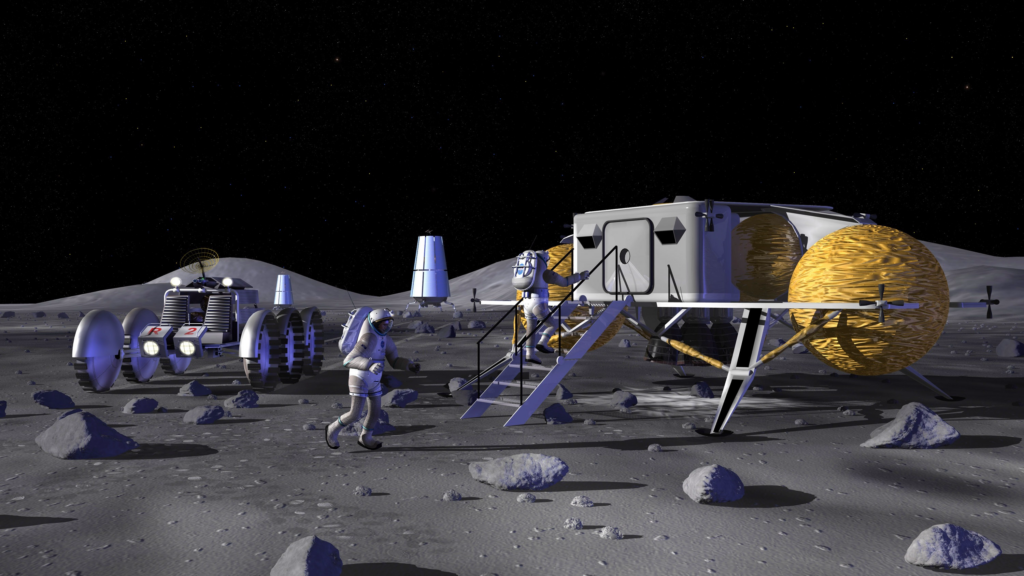
That connects back to 6G and satellites in a non-obvious way. Lunar missions need resilient communications, high-bandwidth links, and dependable navigation. The same technologies being built for satellite mobile coverage and edge computing have direct utility in space exploration. Space and telecom are converging because they share the same foundational problem: dependable connectivity in hostile environments.
The Convergence: 6G + Satellites + Edge + AI
MWC 2026 makes one message unavoidable: next-gen networks will blend layers.
Qualcomm’s “hybrid AI” framing is beside satellite operators scaling direct-to-phone networks. NASA pushes lunar missions that require advanced communications and robust systems testing.
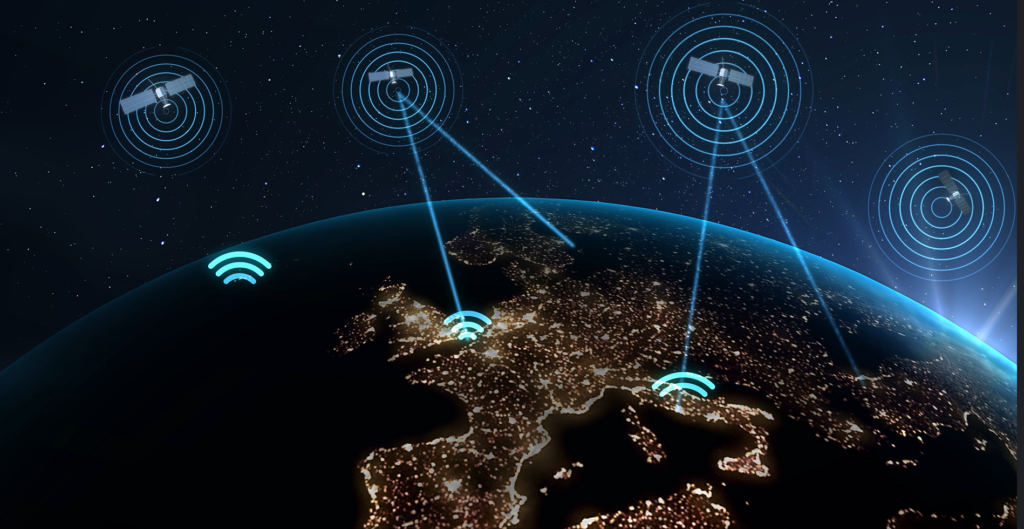
The resulting architecture is thus:
A device does part of the intelligence work. Edge nodes do the next layer. Cloud platforms do the heavy lifting. Satellites fill coverage and redundancy gaps. 6G ties everything together with sensing, high upload capacity, and low latency.
That stack raises new questions: data jurisdiction, network security, resilience under attack, and dependency risk. Yet it also unlocks new products: real-time translation anywhere, robotics with constant connectivity, high-fidelity AR, and industrial sensing at scale.
This is not a gadget story. It is infrastructure politics disguised as a tech conference.
TF Summary: What’s Next
Space tech is merging into the telecom roadmap. Qualcomm is after a 2028–2029 6G timeline while pitching sensing, hybrid AI, and European leadership. AST SpaceMobile races to scale BlueBird launches to reach initial commercial coverage targets by the end of 2026. MediaTek’s satellite alert partnership shows that modem support may decide who scales satellite-to-phone first. NASA aims for an early April Artemis II launch window after fixing helium flow issues and completing essential battery and safety tasks.
MY FORECAST: Telecom operators will treat satellites as a standard coverage layer, not an exotic add-on. Modem makers will compete on satellite band support the way they compete on 5G features. 6G will fuse sensing and AI orchestration into the network fabric, which will pull defense and public-sector requirements into telecom standards debates. Meanwhile, lunar missions will continue to pressurize communications tech to deliver the reliability that terrestrial networks can learn from.
— Text-to-Speech (TTS) provided by gspeech | TechFyle