


Netflix bows out rather than sweetening its $71Bn proposal for Warner Bros. Discovery.
Hollywood dealmaking rarely ends with a polite handshake. It ends with someone blinking. This time, Netflix blinked.
After months of corporate chest-thumping and spreadsheet swordplay, Netflix dropped out of the bidding war for Warner Bros. Discovery (WBD), leaving Paramount Skydance as the clear frontrunner to absorb one of the largest media portfolios on Earth. HBO. CNN. Warner Bros. Studios. A mountain of IP tall enough to blot out the sun. All now drift toward David Ellison’s orbit.
The abrupt withdrawal shocks investors, excites deal junkies, and terrifies regulators who face a mega-merger that would redraw the global entertainment map.
What began as a strategic acquisition saga ends as a power consolidation play. One bidder walks away disciplined. The opposing side moves in for the knockout.
What’s Happening & Why This Matters
Netflix Steps Away From the Table
Netflix initially agreed to purchase WBDTV & film assets for roughly $82.7 billion in a stock-and-cash deal. Then Paramount crashes the party with a hostile offer for the entire company — not just the profitable bits, but the sprawling cable networks too.
Paramount sweetened the deal repeatedly. The WBD board eventually labeled it a “superior proposal,” giving Netflix a brief window to match. Netflix declined within hours.
Co-CEOs Ted Sarandos and Greg Peters delivered the corporate equivalent of a shrug: the price no longer makes financial sense. Discipline beats ego.
Translation from executive dialect: “Nice empire you’ve got there. Not worth that much.”
Investors cheer. Netflix shares jumped as markets decipher the exit as fiscal sanity rather than defeat. Paramount’s stock reaction shows signs of something else entirely — nervous excitement mixed with the suspicion that Ellison may be paying top-dollar.
Paramount Positions Itself For Media Supremacy
Paramount’s bid targets everything: studios, streaming platforms, news divisions, and legacy cable channels. That breadth is key. Unlike Netflix’s plan, the Skydance proposal keeps the empire intact.
The revised offer climbs to about $31 per share, bolstered by deal sweeteners including a multibillion-dollar regulatory termination fee designed to reassure shareholders that the deal will survive antitrust scrutiny.
If completed, the merger would produce a leviathan spanning:
- Paramount Pictures
- Skydance Media
- Warner Bros. Studios
- HBO and Max
- CNN
- Dozens of cable networks
- Massive film and television libraries
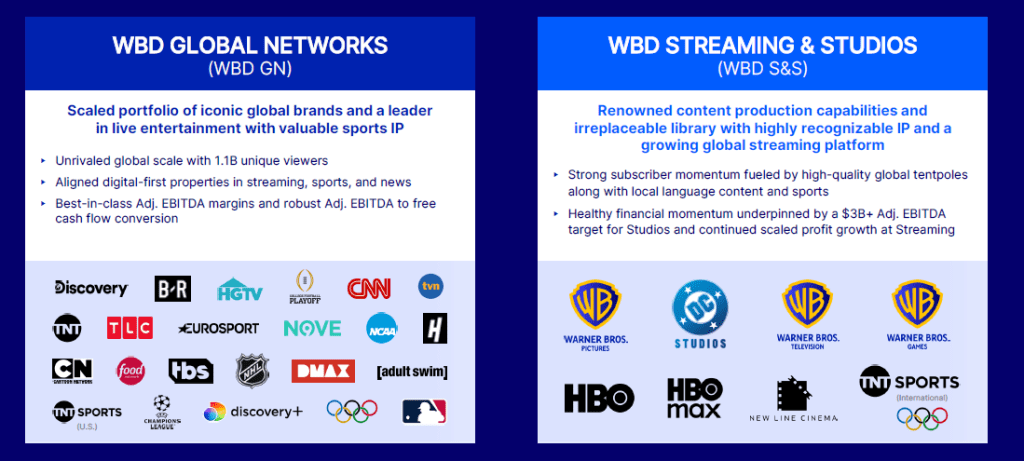
In pure storytelling firepower, the combined entity rivals Disney’s empire — perhaps exceeds it in adult-oriented prestige content.
WBD CEO David Zaslav believes the move is a shareholder victory, noting that the bidding war dramatically boosts the company’s valuation.
Corporate diplomacy translation: “Thanks for bidding against each other. Please collect your bruised egos on the way out.”
Politics In The Background
Large mergers never occur in a vacuum. They orbit power.
Reports surface that Netflix leadership meets with White House officials the same day the deal collapses. Critics speculate that political pressure influences outcomes, especially given public comments from President Trump favouring a full sale of WBD assets, including CNN.
Nothing proves direct intervention. Everything smells like geopolitics wrapped in corporate law.
Meanwhile, Ellison cultivates relationships in Washington. That matters. Regulatory approval represents the final boss level of any mega-merger. Fail there, and the entire transaction evaporates.
Netflix Walks Away — And Why That’s Rational
Netflix excels at building platforms, not absorbing legacy media conglomerates. Integrating massive cable infrastructure, news operations, and studio unions creates headaches no algorithm can smooth.
Buying WBD would saddle Netflix with declining cable assets and political scrutiny attached to news divisions. Paramount appears more willing to manage that complexity.
Sarandos frames the acquisition as “nice to have,” not essential.
The company already dominates global streaming. It doesn’t need CNN or theme parks. It certainly doesn’t need regulatory trench warfare.
Sometimes the smartest decision in chess is declining to play.
Impact: Consolidation in Overdrive
If approved, the merger follows a trend that has changed entertainment for decades: fewer companies controlling more content.
Benefits include:
- Larger budgets for blockbuster productions
- Stronger negotiating power with distributors
- Expanded global reach
- Deep content libraries for streaming wars
Risks include:
- Reduced competition
- Potential layoffs from overlapping divisions
- Increased subscription prices
- Cultural homogenisation of media output
Consumers crave choice. Consolidation quietly removes it.
Studios argue scale enables survival against tech giants. Critics argue that scale eventually crushes innovation. Both positions contain truth, which makes the outcome messy and fascinating.
The News Factor: CNN Changes Everything
Entertainment mergers rarely involve major news organisations. This one does.
Owning CNN places Paramount squarely in the political crossfire. Decisions about editorial independence, governance, and perceived bias become boardroom issues rather than newsroom ones.
That dynamic complicates regulatory approval and public perception. It also raises philosophical questions about whether journalism belongs inside mega-conglomerates at all.
The answer depends on whether one values financial stability or institutional independence.
Spoiler: Wall Street gets to vote first.
TF Summary: What’s Next
Paramount Skydance now stands inches from creating one of the most powerful media companies ever assembled. Regulatory reviews stretch for months. Lobbyists sharpen pencils. Lawyers bill aggressively. Nothing moves quickly when billions hang in the balance.
Netflix, meanwhile, exits richer in cash and reputation. It avoids integration chaos and doubles down on original content — the strategy that built its dominance in the first place.
MY FORECAST: Approval arrives, but not without concessions. Expect asset sales, operational carve-outs, and political theatre before signatures hit paper. If completed, the merger reshapes Hollywood’s power structure for a generation. The streaming wars enter a new phase where size matters again — not just algorithms.
— Text-to-Speech (TTS) provided by gspeech | TechFyle