


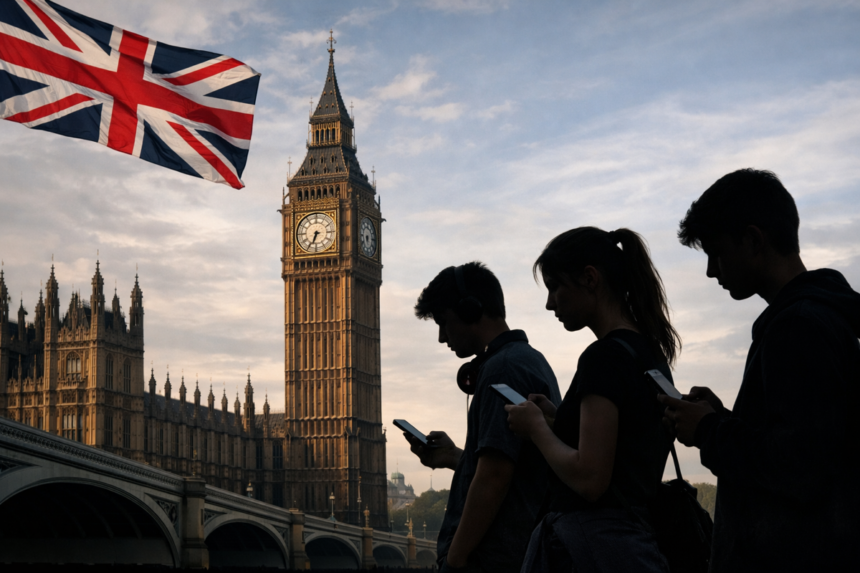
Is A Comparable Ban to Denmark and Australia Coming?
The United Kingdom reopened a tense and emotional debate about children, technology, and responsibility. Ministers confirmed a formal review and public consultation around a possible social media ban for under-16s. The move followed sustained pressure from parents, educators, campaigners, and lawmakers who argue digital platforms now shape childhood more than schools, families, or communities.
This review arrives after years of warnings. Lawmakers previously leaned on platform self-regulation and incremental rules. That approach no longer satisfies many families. The current review signals a harder look at age limits, enforcement, and school phone policies across England.
The question now feels blunt and unavoidable. Does the U.K. restrict social media access for minors, or does it tighten guardrails while keeping platforms open?
What’s Happening & Why This Matters
A Government Review Takes Shape
The review centres on whether the U.K. should legally restrict access to major social platforms for children under 16. Officials confirmed a national consultation that invites responses from parents, young people, schools, technology firms, and civil society groups.
The Department for Science, Innovation and Technology frames the process as evidence-driven. Officials want to test whether a ban improves safety or displaces harm elsewhere. The consultation also examines stronger age-verification methods and platform design changes that reduce compulsive use.
The timing matters. Australia enacted a similar under-16 social media ban in late 2025. That law now serves as a live experiment. British lawmakers watch closely, even as researchers caution against fast conclusions.
Pressure From Families and Tragedy
Public pressure builds from personal loss. The mother of murdered teenager Brianna Ghey publicly urges action. She argues that social platforms isolated her child rather than supported her. Her voice echoes a wider concern shared by parents across the country.

In letters and interviews, families describe children retreating from real-world interaction. Many parents point to algorithm-driven feeds that reward outrage, comparison, and self-harm content. These accounts push the debate beyond abstract policy.
As one campaigner states, “This conversation stops being theoretical when you bury a child.”
Schools and Phone-Free Classrooms
The review links directly to education policy. Ministers already indicate a more forceful stance on phones during school hours. Ofsted receives the authority to assess phone-use policies during inspections. Schools face an expectation to operate phone-free environments by default.
Educators support clarity but resist enforcement through inspections alone. Headteachers warn against turning Ofsted into phone police. Many argue that schools need funding, parental backing, and consistent national guidance.
Teachers describe classrooms reshaped by constant distraction. They describe attention spans shrinking and conflict spilling from online spaces into hallways. Phone restrictions now feel less symbolic and more practical.
Political Fault Lines Appear
The review exposes political division. Labour leaders defend consultation as responsible governance. Conservative leaders call it a delay. Liberal Democrats argue that children face immediate harm that requires faster action.
Technology Secretary Liz Kendall states the Online Safety Act never served as a final answer. She stresses an all-around duty to protect childhood. Opposition leaders counter that consultation risks postponing protection.
Despite disagreement, consensus exists on one point. Parents remain uneasy. The current regulatory framework fails to reassure them.
Evidence Remains Contested
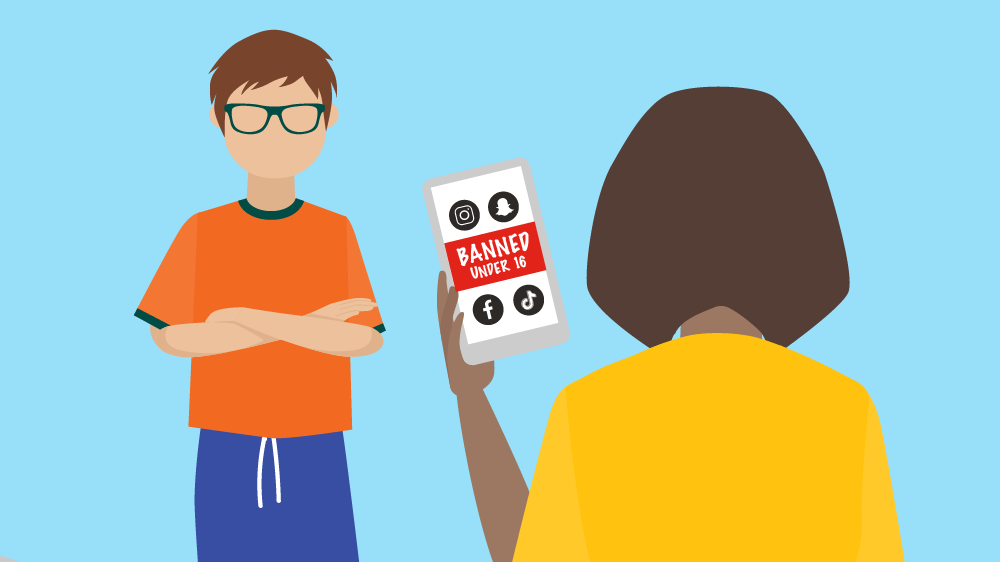
Researchers urge caution. Professor Amy Orben from Cambridge’s Digital Mental Health Programme states evidence around age-based bans remains thin. She argues that outcomes depend more on design choices and social context than on age limits alone.
Oxford researcher Dr Holly Bear echoes that view. She supports layered solutions that combine safeguards, literacy, and evaluation rather than blanket restrictions. Child protection charities, including NSPCC and Childnet, warn bans may push children toward less visible platforms.
These perspectives complicate policymaking. Safety improves through clarity, yet blunt tools risk unintended effects.
Platforms Face Growing Scrutiny
Technology firms now confront pressure on multiple fronts. The review questions algorithmic amplification, default notification settings, and engagement loops. Officials openly discuss forcing companies to limit features that drive compulsive behaviour among minors.
This approach reframes responsibility. Instead of focusing only on children and parents, it scrutinises design incentives. Platforms profit from attention. Lawmakers now ask whether that model belongs anywhere near childhood.
Executives respond cautiously. Public statements emphasise parental tools and investment in moderation. Critics respond that tools mean little without strong defaults.
A Cultural Shift Gains Momentum
The review signals more than a regulatory tweak. It reflects a cultural shift. For years, society treated social media as inevitable. That assumption erodes.
Countries reassess technology’s role in childhood development. Schools push back. Parents push back harder. Governments follow.
The U.K. now stands at a decision point. It either codifies restraint or reinforces managed access. Both paths reshape the relationship between children and digital platforms.
TF Summary: What’s Next
The U.K. review marks a decisive moment. Lawmakers reassess whether social media belongs inside childhood at all. Consultation results, international evidence, and political will shape the outcome during summer deliberations.
The decision carries global weight. Other governments watch closely. Platforms prepare contingency plans. Families wait for clarity.
MY FORECAST: The U.K. avoids a full nationwide ban yet mandates strict age verification, platform design limits, and phone-free schools. That hybrid path reshapes social media access without driving it underground.
— Text-to-Speech (TTS) provided by gspeech