



From piracy crackdowns to zero-click spyware and AI-fueled abuse, cybercrime is accelerating while defences struggle to keep pace.
Cybercrime no longer lives at the margins of the internet. It shapes daily life, national security, and personal safety. Governments respond faster than before. Criminals still adapt faster.
This week’s cybercrime round-up captures that tension clearly. Authorities shut down major piracy networks. Tech companies push new safety tools. Intelligence-linked startups quietly build powerful spyware. Political leaders misuse AI in public view. Each story points to the same truth.
The digital world grows more contested, not safer.
What’s Happening & Why This Matters
Updated Google Tools Remove Exposed Personal Data
Google upgrades its “Results About You” safety feature. The tool scans the web for exposed passport numbers, driver’s licenses, and Social Security numbers and allows users to request removal directly from search results.
The update also speeds up Google’s system for removing non-consensual explicit imagery, including AI-generated deepfakes. Users can flag content faster with fewer steps and track progress in their account dashboard.

Google requires users to submit partial ID details so the system knows what to search for. For passports and SSNs, only the last four digits are required. Driver’s license numbers require full entry. Google states that this data remains private and is used only for detection.
The move reflects a broader reality. Data exposure is no longer rare. AI accelerates misuse. What once required technical skill requires a prompt.
These tools help after harm occurs. They do not prevent exposure in the first place.
That gap is dangerous.
U.S. Shuts Down Three European Piracy Sites
The U.S. Department of Justice seizes the domains of Zamunda.net, ArenaBG.com, and Zelka.org, three of the largest piracy sites serving Europe. The sites offer bootleg films, TV shows, and video games through torrent trackers.
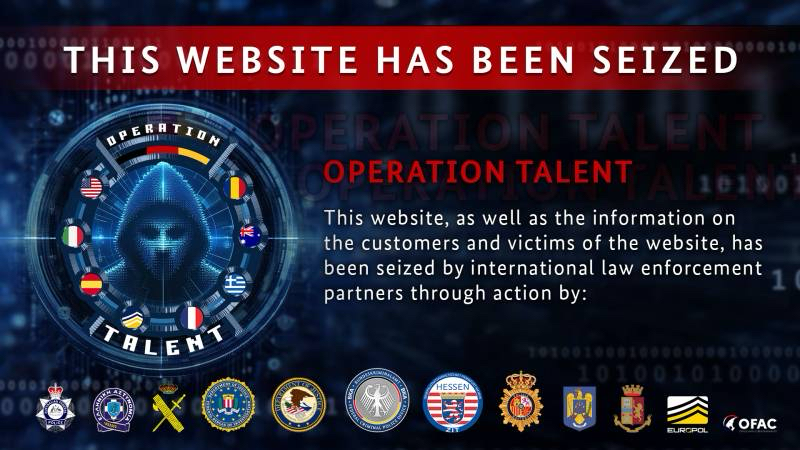
Federal officials say the domains attract tens of millions of visits per year and distribute thousands of pirated works valued in the millions. Although the sites operate from Bulgaria, their domains are registered in the United States, giving U.S. authorities jurisdiction.
Bulgarian law enforcement is assisting with the operation. Authorities conduct searches at 30 locations, seize servers, and collect digital evidence. Investigators also identify individuals who administer the trackers.
The takedown highlights a recurring pattern.
Cybercrime infrastructure often spans borders. Jurisdiction hinges on domain registration, hosting providers, and financial trails. Criminals exploit those seams. Law enforcement increasingly learns to follow them.
Still, the problem persists. Alternative domains already appear online.
Enforcement disrupts piracy. It rarely eliminates it.
Israeli Startup Builds Zero-click Espionage Tools
A report from The Jerusalem Post reveals that Radiant Research Labs develops zero-click cyber tools for Western intelligence agencies. These tools infiltrate phones and computers without any user interaction. No links, downloads, or clicks.
The startup launches in May 2023. Within six months, it will produce its first operational tool. It develops roughly ten classified systems. Founders Tal Slomka and Tzvika Moschkowitz both come from Israeli military intelligence and later worked at NSO, the spyware firm sanctioned by the United States.
Radiant claims it does not build end-user spyware. It builds the underlying “engines.” Company officials compare their work to building a car engine rather than the car itself. They stress partnerships with democratic governments and oversight by Israel’s Ministry of Defence.
After the 7 October attacks, Radiant reportedly provides tools to Israeli intelligence that help track hostages.
The disclosure lands amid growing scrutiny of offensive cyber tools. U.S. sanctions against NSO Group and Intellexa follow allegations of abuse against journalists and activists. Radiant positions itself as different.
Critics are skeptical.
Zero-click exploits represent the most dangerous class of cyber weapon. They leave no trace. They defeat user awareness entirely. Even ethical deployment raises hard questions.
AI Misuse Upends Political Discourse… Again
President Donald Trump faces backlash after posting an AI-generated video depicting Barack and Michelle Obama in racist imagery. The video appears on Truth Social before being deleted. A White House source later blames a staffer.
In a recent NBC News interview, Trump claimed he has never personally used ChatGPT or Claude. He still praises AI as “bigger than the internet.” Meanwhile, his social feeds remain filled with AI-generated content.
This incident is significant to cybercrime in two ways.
First, it normalizes AI misuse at the highest levels of government. Second, it blurs the line between political speech, deepfakes, and harassment.
The same tools used for parody fuel misinformation and abuse. Enforcement lags far behind usage.
Regulators struggle to define boundaries. Platforms struggle to respond consistently. Public trust erodes.
The Connection
At first glance, piracy, spyware, privacy tools, and AI abuse seem unrelated.

They are not.
Each reflects a system under strain.
Personal data leaks faster than it can be protected. Governments race to remove harm after exposure. Criminals innovate before rules exist. Intelligence agencies push capabilities quietly. Public figures test limits openly.
Technology amplifies all of it.
Cybercrime no longer sits outside the system. It lives inside it.
Reactive Defensive Tools
Google’s upgrades show progress. Domain seizures disrupt crime. Public exposure pressures companies. None of this changes the underlying incentive structure.
Data is valuable. Exploits remain profitable. AI lowers barriers. Enforcement stays slow.
That asymmetry defines modern cybercrime.
The tools improve. The threat evolves faster.
Accountability
Governments redirect focus from individuals to infrastructure.
Who hosts the data or builds the tools? Who profits?

This week’s actions hint at that pivot.
Seizing domains. Sanctioning companies. Investigating developers. Questioning political behaviour.
Cybercrime enforcement grows more systemic.
Whether it becomes effective is uncertain.
TF Summary: What’s Next
This week’s cybercrime round-up shows progress and pressure in equal measure. Google expands personal data removal. U.S. authorities shut down major piracy networks. Israeli firms develop advanced zero-click espionage tools. AI misuse reaches the highest political offices. Cybercrime grows more embedded, not isolated.
MY FORECAST: Governments escalate infrastructure-level enforcement. Platforms face stricter liability. Zero-click exploits become the next global regulatory flashpoint. Defensive tools improve, but prevention is elusive.
— Text-to-Speech (TTS) provided by gspeech | TechFyle