


HammerHAI AI Factory Aims to Empower Startups in Europe
A sovereign AI factory’s value is increasingly defined by the companies it serves. Across Europe, publicly funded AI factories are in a competitive rush to provide startups and small manufacturers with supercomputer-class GPUs while avoiding pitfalls such as vendor lock-in and inadequate data handling.
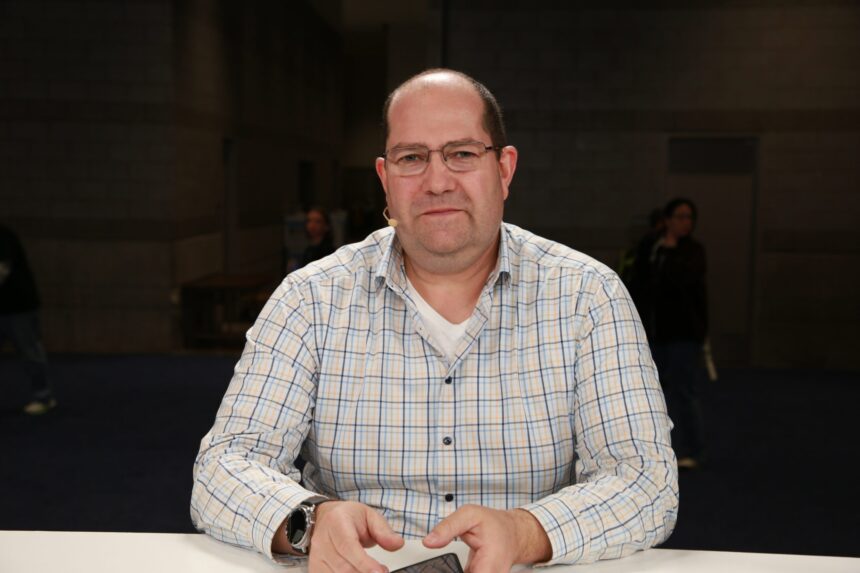
In Stuttgart, the HammerHAI AI factory is emerging, built around a system from Hewlett Packard Enterprise Co. that utilizes Nvidia Corp. Grace Blackwell chips. The factory’s appeal is as much about the personnel supporting the technology as it is about the technology itself, according to Bastian Koller, managing director of the High-Performance Computing Center Stuttgart.
“It’s very important to bring them there because everybody’s talking about AI, but we focus especially on SMEs and startups,” Koller remarked. “Some startups know exactly what they want, while others are exploring possibilities and need guidance and support.”
Koller shared insights during an exclusive interview with theCUBE Research’s John Furrier and Amit Eyal Govrin at SC26, discussing how HammerHAI plans to sidestep vendor lock-in and its pragmatic approach to technological sovereignty. The center employs a concierge model that ensures each customer has a consistent point of contact.
Establishing a Sovereign AI Factory Free from Lock-In
Industrial clients are increasingly moving away from outdated programming models; they expect an experience akin to that offered by major cloud service providers, which raises new expectations for security and access. The HammerHAI center has already collaborated with clients using existing systems as it awaits its new hardware, achieving several notable successes along the way. Unlike other facilities, HammerHAI designs its services to allow clients to move their workloads seamlessly, whether to a hyperscaler or back again.
“The idea is to evolve the system and services to enable clients to easily transition from us to a hyperscaler or vice versa,” Koller explained. “What we provide is a springboard to help them advance.”
This practical approach extends to the notion of sovereignty itself. The Stuttgart facility operates within an ISO-certified environment and holds TISAX Level 3 certification for the automotive sector. Koller acknowledged that achieving full independence with European chips is not feasible in the near future.
“We can’t say, ‘Come back in 10 years when we have a sovereign processor or GPU,’” Koller stated. “We need to concentrate on the data in the meantime.”
Efficiency metrics also play a crucial role in the operations of the HammerHAI center. The new system has doubled the performance of its predecessor, which had a power consumption of 3.2 megawatts, now operating at approximately 700 kilowatts. The facility also implements a waste heat recovery strategy. A significant takeaway is the human element: the concierge model allows the center to better understand how users work and think.
“We learn more about how users operate and their thought processes,” Koller noted. “We could create a highly sophisticated system, but if it does not consider user needs, it will go unused.”
For further insights, you can watch the complete video interview, which is part of SiliconANGLE’s and theCUBE’s coverage of SC26.
(*Disclosure: Hewlett Packard Enterprise Co. sponsored this segment of theCUBE. Neither Hewlett Packard Enterprise Co. nor other sponsors have editorial control over the content on theCUBE or SiliconANGLE.)