


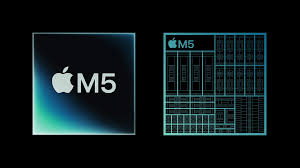
New M5 Silicon. Studio Display XDR Returns. Prices Go Up.
Apple refreshes nearly its entire Mac ecosystem in one coordinated strike. The company unveils the M5 MacBook Air, the M5 Pro and M5 Max MacBook Pro models, and, quietly, a revived high-end monitor lineup that replaces the aging Pro Display XDR.
Storage doubles. Neural performance and wireless speed up. Displays return with brighter panels and faster refresh rates. Entry prices rise. The announcements are beyond a cosmetic refresh, but a platform recalibration around AI performance, professional workflows, and premium positioning.
Let’s break it down.
What’s Happening & Why This Matters
M5 MacBook Air: The Lightweight Grows Teeth
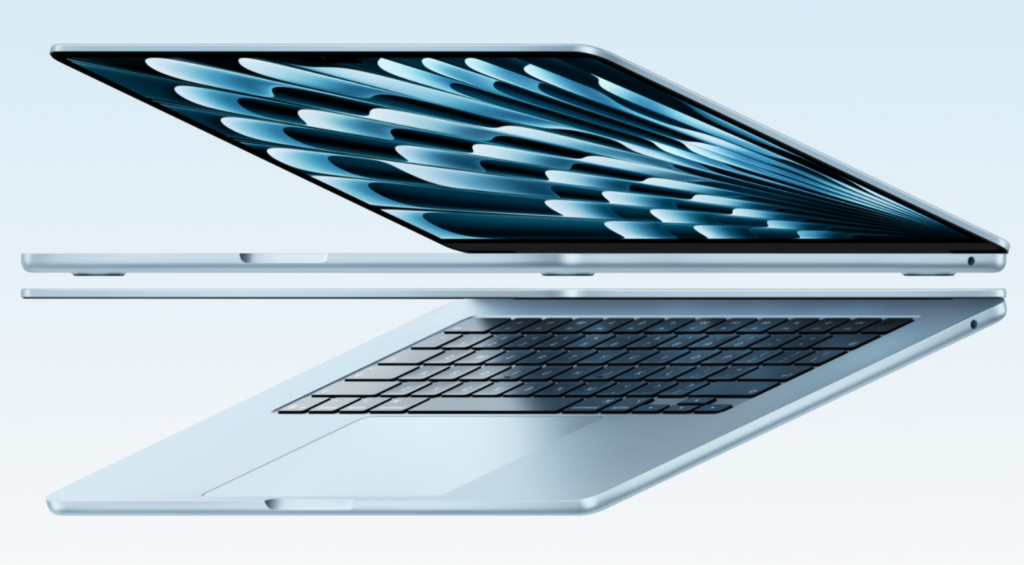
Apple upgrades the 13-inch and 15-inch MacBook Air with the M5 chip and doubles base storage from 256GB to 512GB.
Apple says the new SSD delivers up to twice the speed of the previous generation. That’s important for developers compiling code and creators moving massive media files.
The 13-inch Air starts at $1,099. The 15-inch version begins at $1,299. That represents a $100 increase over last year’s entry price.
Apple argues the value improves. Previously, upgrading storage to 512GB cost $200. That capacity ships standard.
The M5 chip carries a 10-core CPU. It includes four high-performance “super cores” and six efficiency cores. GPU options scale up to 10 cores.
Apple claims up to 4x faster AI task performance than M4 and up to 9.5x faster than M1 for AI workloads.
Battery life holds up to 18 hours.
Connectivity improves with the new N1 wireless chip, enabling Wi-Fi 7 and Bluetooth 6. The Air supports up to 4TB of storage for the first time.
Translation: the MacBook Air is closer to Pro territory without gaining weight.
M5 Pro and M5 Max: Power for Pro Workflows
Apple updates the 14-inch and 16-inch MacBook Pro models with M5 Pro and M5 Max silicon. Both chips use an 18-core CPU architecture. That includes six “super cores” and twelve redesigned performance cores optimized for multithreaded pro workloads.
Apple states that the CPU boosts performance by up to 30 percent over M4 Pro and Max for professional tasks.
GPU capacity increases dramatically. M5 Pro supports up to 20 GPU cores. M5 Max supports up to 40 GPU cores. Apple reports up to 50 percent graphics gains over the prior generation.
Memory bandwidth reaches up to 307 GB/s for M5 Pro and 614 GB/s for M5 Max. Base storage doubles. M5 Pro starts with 1TB. M5 Max begins with 2TB.
Prices increase accordingly.
- 14-inch M5 Pro: $2,199
- 16-inch M5 Pro: $2,699
- 14-inch M5 Max: $3,599
- 16-inch M5 Max: $3,899
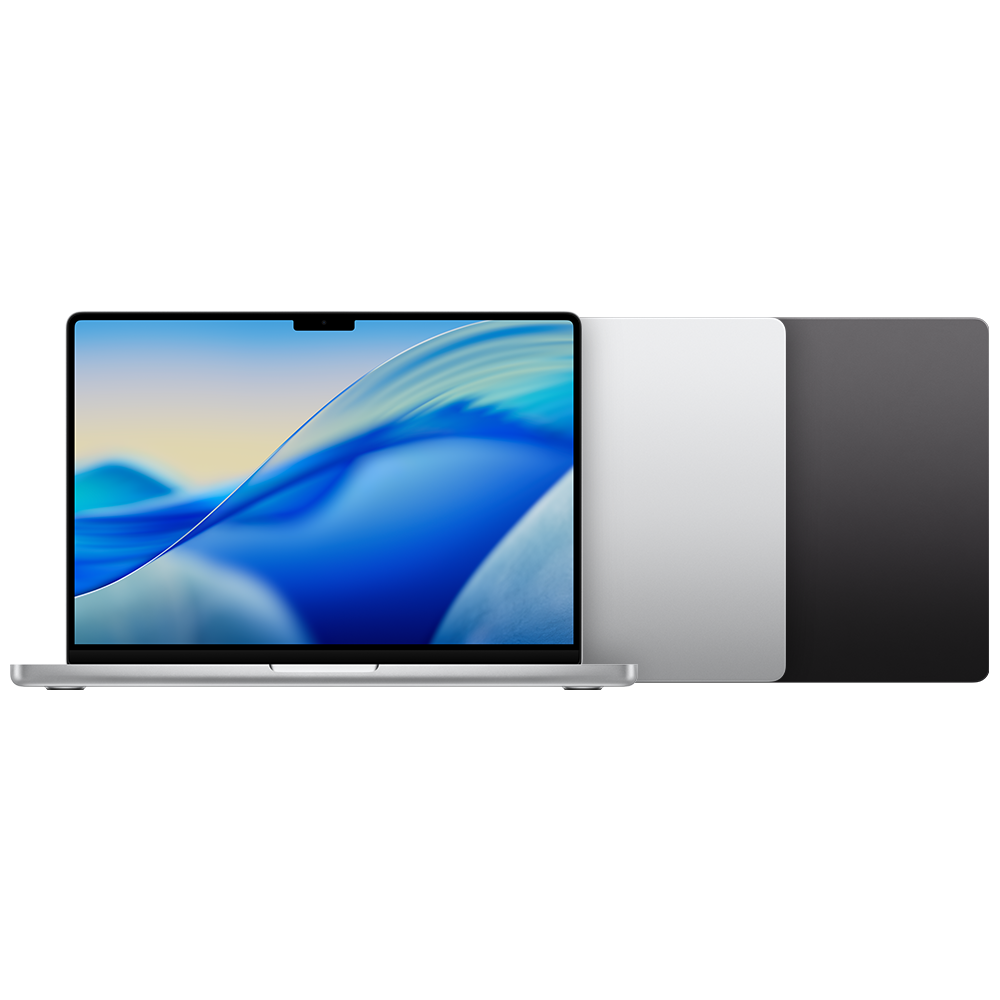
Battery life reaches up to 24 hours. Externally, the design is consistent with the M1-era chassis. Internals drive the story.
Apple markets these systems toward engineers running 3D simulations, photographers processing massive RAW libraries, and developers executing large language models locally.
The message: Apple sees AI workloads as a first-class citizen on macOS.
Studio Display and Studio Display XDR: The Return of the Big Screen

Apple also refreshes its monitor lineup. The Studio Display is a 27-inch 5K Retina panel with 5,120 x 2,880 resolution and 218 pixels per inch. Brightness holds at 600 nits. Refresh rate is maintained at 60Hz.
The bigger story is the Studio Display XDR, which replaces the Pro Display XDR. The new model features:
- 27-inch 5K Retina XDR
- Up to 2,000 nits peak HDR brightness
- Up to 1,000 nits SDR brightness
- 120Hz refresh rate with Adaptive Sync
- 1,000,000:1 contrast ratio
Apple describes it as delivering extreme dynamic range without haloing or blooming artifacts. Both monitors include:
- 12MP Center Stage camera
- Six-speaker system with Spatial Audio
- Three-mic studio array
- Thunderbolt 5 connectivity up to 120Gb/s

The Studio Display costs $1,599. The Studio Display XDR starts at $3,299 and reaches $3,599 with nano-texture glass.
Preorders open on 4 March. Availability begins 11 March. The monitor launch aligns perfectly with the M5 Pro and Max rollout. Apple reinforces a full professional ecosystem.
Apple’s AI Strategy
Apple repeatedly states the M5 generation as engineered for AI.
The M5 Pro and Max include a 16-core Neural Engine. Apple claims nearly four times faster AI image generation compared to M4 Pro and M4 Max.
The language signals a shift. Apple wants MacBooks to serve as serious machines for AI development. Local model execution reduces dependency on cloud services. That strengthens Apple’s privacy narrative. It also positions macOS as a capable AI workstation platform.
Developers gain speed. Creators gain GPU headroom. Enterprises gain local inference capacity.
Pricing Strategy and Market Positioning
Apple’s storage upgrades soften the perception of price increases. Still, entry points are higher. The MacBook Air is above $1,000. That creates room for a rumored lower-cost MacBook.
Meanwhile, Pro models drive further into premium territory. Higher starting storage makes sense for professionals. Casual users lose the cheaper 512GB option in some configurations. Apple appears confident that performance and AI capabilities justify the increase.
The Studio Display XDR returns Apple to the ultra-premium monitor segment.
Availability and Launch Timeline
Preorders begin 4 March. Retail availability starts 11 March. The releases follow announcements of the iPhone 17e and an updated M4 iPad Air. Apple orchestrates a full-platform refresh ahead of a special event.
Apple upgrades silicon across product categories at once. The M5 generation is the new baseline.
TF Summary: What’s Next
Apple doubles down on M5 silicon, AI acceleration, and premium positioning across MacBook Air, MacBook Pro, and Studio Display XDR. Storage increases. Neural performance improves. Wireless connectivity improves. And prices rise.
MY FORECAST: Apple will deepen on-device AI integration across macOS. Expect tighter integration between Neural Engine capabilities and system-level AI features in upcoming macOS releases. A lower-cost MacBook may emerge to fill the new pricing gap under $1,000. Meanwhile, the M5 generation positions Apple as serious about local AI computation and professional creative workflows.
— Text-to-Speech (TTS) provided by gspeech | TechFyle