


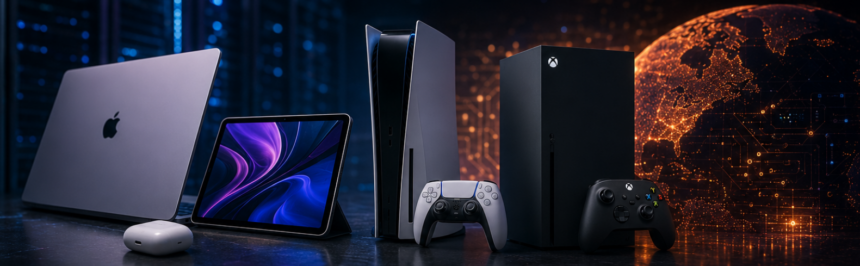
MacBook Air: up $200. MacBook Pro: up $300. iPad Air: up $150. iPad Pro: up $200. Mac Studio: up $1,300. Xbox Series S: up $100. PlayStation 5: up €100 in Europe. Nintendo Switch 2: up 6% in September. AI data centres are consuming the same memory chips your devices need. The bill just arrived.
The AI memory chip price shock reached consumers — as a wall of simultaneous price hikes from the most trusted consumer technology brands. Apple raised prices across its entire Mac and iPad range. Microsoft raised Xbox console prices by $100 to $150 (€88 to €132), effective 1 August 2026. In recent months, Sony and Nintendo also raised the prices of their game consoles. Valve launched its new Steam Machine at a higher price than planned, explicitly citing RAM shortage. The cause behind every single announcement is identical. The rapid expansion of AI data centres has created an extraordinary surge in demand for memory and storage. “We have never seen a component price increase this much, this quickly,” Apple said in its statement. AI is not an abstract future concern. It just made every device on your desk more expensive.
What’s Happening & Why It Matters
Apple’s Specific Price Increases — by Product
The AI memory chip price shock reached Apple products across every Mac and iPad category simultaneously. Apple increased prices across its range of Macs and iPads, with many of its most popular models seeing hikes of 20% or more. The specific figures are striking. The base model MacBook Air retails in the United States for $1,299 (€1,146), up from $1,099 (€970). The lowest-spec MacBook Pro rose from $1,699 (€1,499) to $1,999 (€1,763). The base price of the iPad Air increased from $599 (€529) to $749 (€661). The iPad Pro jumped from $999 (€882) to $1,199 (€1,058). Apple’s entry-level MacBook Neo is priced at $699 (€617), up from $599 (€529).
Additionally, the most extreme increase is at the high end. A Mac Studio M3 Ultra jumped from $3,999 (€3,529) to $5,299 (€4,677) overnight. That is a $1,300 (€1,147) increase — a 33% rise in a single announcement. Apple stock fell more than 6% the same day — its worst single session since April 2025.
Microsoft’s Xbox Increases — and the “Double Again” Warning
Microsoft‘s Xbox announcement arrived alongside Apple‘s — and it carried a more alarming forward projection. Microsoft raised the price of its Xbox video game consoles worldwide by between $100 (€88) and $150 (€132) from 1 August, blaming soaring storage and memory costs driven by AI-related demand. In the United States, the cheapest Xbox, the Series S, will increase to $500 (€441). The Series X will cost as much as $800 (€706).
By contrast, the timeline warning in Microsoft’s statement is the most alarming element. Console storage and memory prices have more than doubled, Microsoft said, and it expects prices to double again by fall 2027. A company that currently charges $500 for an Xbox Series S — and believes memory costs will double again — is indicating that further price increases are coming. This is the third price increase for Xbox after a worldwide hike in May 2025 and another increase, limited to the United States, in October.
Sony, Nintendo, and Valve
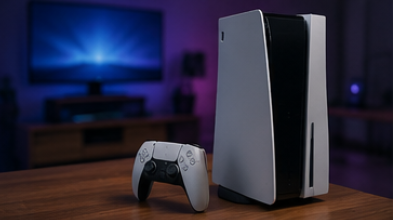
The AI memory chip price shock is not limited to Apple and Microsoft. The entire consumer electronics industry moved in the same period. Sony raised the price of its PlayStation 5 by €100 (approximately $113) in Europe in early April, bringing the standard version to €650 (approximately $735). Nintendo announced a price increase of more than 6% from 1 September for its Switch 2. Valve launched its new Steam Machine at more than $1,000 (€883) for the base version — more expensive than originally planned — citing the RAM shortage as a factor.
Samsung, Dell, and multiple other consumer electronics manufacturers have raised prices in the same period. As TF covered in its earlier Apple prices article, Tim Cook warned on 17 June that increases were “unavoidable.” The 25 June announcements are the delivery of that warning.
The Root Cause? AI Is Consuming the Same Chips
The mechanism behind the AI memory chip price shock is specific and important to understand. AI data centres are buying high-bandwidth memory (HBM) at unprecedented scale. HBM is manufactured on the same wafers as the conventional DRAM and NAND flash that laptops, phones, and consoles use. HBM commands margins three to five times higher, so Samsung, SK Hynix, and Micron are redirecting capacity toward it. That starves the consumer-memory supply and prices spike.
The scale of redirection is striking. High-bandwidth memory consumes 23% of global DRAM wafer output, up from 19% in 2025. A single NVIDIA Blackwell chip needs 192GB of HBM — roughly six times the RAM of a powerful PC. Contract DRAM prices jumped 80 to 90% in Q1 2026 alone. Apple is at the far end of that supply chain — paying more for the memory in every Mac because every hyperscaler is outbidding it for priority allocation. Some analysts have nicknamed the situation “Ram-ageddon.” The name is dramatic. The mechanism is entirely straightforward.
When Does This End?
The AI memory chip price shock‘s end date is the question every consumer wants answered. Micron expects the memory and storage shortage to last at least through 2027. “We expect tight conditions to persist beyond calendar 2027 as a result of AI-driven demand across all segments coupled with structural supply constraints,” Sanjay Mehrotra, Micron’s chair, president and CEO, said. “Even as we expect industry supply to improve gradually in 2028, we currently do not have line of sight as to when memory supply will be able to catch up with increasing demand.”
By contrast, manufacturers are expanding production. Micron is adding capacity in Idaho, New York, and Virginia. Samsung and SK Hynix are building new wafer fabs. Those facilities take two to three years to reach full production capacity from groundbreaking. The near-term supply picture will not change before that capacity comes online.
TF Summary: What’s Next
Apple‘s new Mac and iPad prices apply from 25 June — immediately. Microsoft‘s Xbox increases apply from 1 August 2026. Sony‘s PlayStation 5 European price increase is already in effect. Nintendo Switch 2 price increases apply from 1 September 2026. Micron‘s next quarterly earnings call — expected this week — will provide the most current data on memory supply trajectory.
MY FORECAST: The AI memory chip price shock will produce one more wave of consumer device price increases in early 2027 — before gradually reversing as new memory production capacity comes online in 2028. By contrast, the reversal will not reach consumers as fast as the increase did. Memory companies — Samsung, SK Hynix, Micron — have seen their margins expand dramatically on the HBM premium. They have no commercial incentive to rapidly commoditise consumer memory once supply constraints ease. Apple — whose brand is built on premium pricing supported by premium components — will not drop Mac prices to pre-June levels. Microsoft‘s own statement warning of another memory cost doubling by 2027 signals that more Xbox increases are likely before any decreases. The AI build-out that created this shortage will continue accelerating. The consumers who fund it — through the devices they buy — just found out what that means in practice.
Related Stories
- Tim Cook Confirms Apple Price Rises — Memory Crunch and Intel’s US Chips Are Why
- AI Stocks Sell Off as Markets Ask Whether the Spending Will Ever Pay Off
- IBM Claims the World’s First Sub-1-Nanometre Chip Technology