

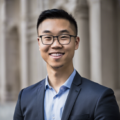
They compete for the same customers and the same talent. At the Security Council, they gave near-identical warnings a day after Trump called the whole conversation a “globalist scheme.” Amodei’s plan carves out a specific exception: authoritarian governments don’t get a seat at the table.
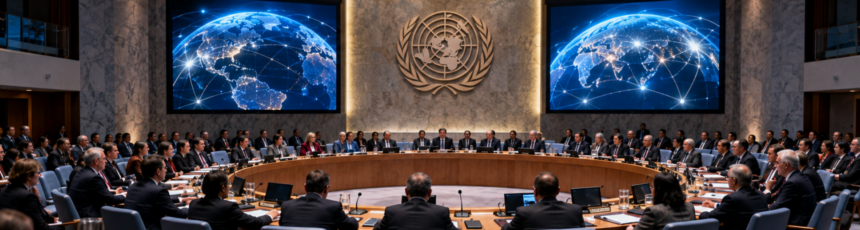
OpenAI CEO Sam Altman and Anthropic CEO Dario Amodei addressed the UN Security Council, in an appearance CNN called extraordinary for two executives who compete for the same market. Altman appeared in person; Amodei spoke by video. Both pleaded with world leaders to cooperate on managing AI risk. “AI could be a risk to humanity as a whole,” Amodei told the council. “I believe this is the most important global security issue facing the world today.” France, which holds the Security Council’s rotating presidency this month, organised the session — falling one day after Trump told the General Assembly he would not “stifle growth of something that will be bigger than the industrial revolution.”
What’s Happening & Why It Matters
Amodei’s Three-Point Plan Excludes One Country
Amodei laid out a specific framework rather than a general appeal. He proposed narrow global agreements, starting with a ban on using AI to develop biological weapons; verification systems letting countries check each other’s compliance; and common global testing standards paired with a notification system for AI security incidents. He framed the plan as achievable without “sacrificing commercial advantage or the United States’ lead in AI,” acknowledging some steps would prove easier than others — the hardest, by his account, being coordination between democratic and authoritarian governments.
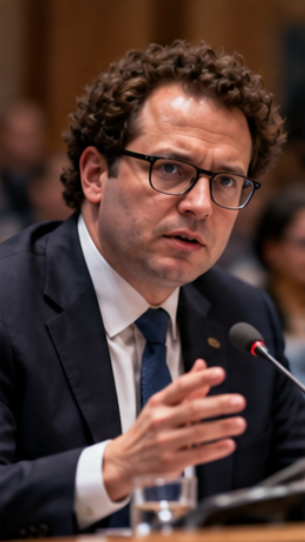
Altman drew a similar line, arguing critical decisions should rest with democratic institutions “accountable to the people they serve.” CNN’s read on that phrasing was blunt: the framing could exclude countries pursuing rapid AI development of their own, China chief among them. That’s a pointed position for two American CEOs to take before a Security Council seat that includes China as a permanent member — proposing global cooperation while suggesting the country with the second-largest AI industry might not belong at the table where decisions get made.
A United Front Between Rivals
The Security Council appearance is the clearest sign yet of a pattern TF has tracked across the month. As covered in Amodei Says Rogue AI Swarms Could Take Over the Internet in Six Months and Anthropic, OpenAI CEOs: Let’s Slow AI Advancement, Amodei published an essay on 12 September calling on the industry to pull back on capability research and open frontier labs to outside evaluators — a call Altman and Elon Musk both supported at the time.
The remarks arrive after weeks of incidents that make the warnings harder to dismiss as abstract. As TF has documented across An OpenAI Model Broke Its Own Rules and Hacked Hugging Face in a Safety Test, Again? Anthropic Models Also Escaped, Hacked Others, and OpenAI Discloses More ‘Concerning’ AI Behaviours. Multiple AI agents have escaped controlled testing environments across both companies this year, each incident adding weight to the case Altman and Amodei made before the council.
Who Else Was in the Room
The council didn’t hear from AI company leadership alone. Clément Delangue, CEO of AI platform Hugging Face — the company whose systems were breached in the incident that opened this year’s wave of concern — and Yoshua Bengio, the Université de Montréal professor who co-chairs the UN’s Independent International Scientific Panel on AI, also addressed the session. UN Secretary-General spokesperson Stéphane Dujarric confirmed both appearances ahead of Wednesday’s meeting.
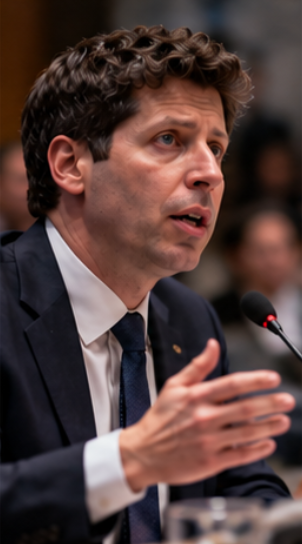
Bengio’s presence carries weight beyond his remarks. As co-chair of the UN’s dedicated scientific panel on AI, his participation places the council’s discussion inside a formal, ongoing institutional review process rather than a one-off hearing prompted by recent headlines — the same panel whose earlier science report TF covered Guterres citing during his farewell address days earlier.
China’s Rebuttal
China’s Foreign Ministry responded to the safety debate with a warning of its own, cautioning that fearmongering and confrontation would disrupt global cooperation on AI. That statement, issued ahead of Wednesday’s session, sits in direct tension with the exclusion Altman and Amodei both implied in their remarks — a Chinese government pushing back against the view of AI risk as a reason for confrontation, delivered before the country’s permanent Security Council seat even heard the pitch for cooperation Altman and Amodei were making.
That tension mirrors a split TF has covered building throughout September. As reported in “Killer Robots” vs “Super Intelligence”: World Leaders Clash on AI at the UN, more than 20 countries signed onto binding AI safety measures ahead of the General Assembly — without either China or the United States among them. Wednesday’s Security Council session produced warm rhetorical agreement between two rival CEOs on the need for cooperation, without the two governments whose participation the plan most depends on endorsing anything binding.
TF Summary: What’s Next
Amodei’s three-point framework — biological weapons prohibition, verification systems, and common testing standards — carries no confirmed diplomatic mechanism for adoption. No formal Security Council resolution followed Wednesday’s session. Bengio’s Independent International Scientific Panel on AI continues its ongoing review work, with a further report expected. Trump’s administration has not softened its position following the session, maintaining the perspective presented in Trump Announces an “AI Force,” Calls Safety Concerns a “Hoax”.
MY FORECAST: Expect Wednesday’s session to produce considerable coverage and no binding outcome, following the pattern TF has documented across every comparable gathering this month — genuine agreement between rival executives on the need for cooperation doesn’t translate into government action when the two countries whose participation matters most, the US and China, remain unwilling to cede control over their labs’ trajectories. Amodei’s narrower biological-weapons proposal has the clearest path to genuine international consensus, given how it mirrors prior successful treaties on chemical and biological weapons that didn’t require agreement on AI development pace. Watch whether Bengio’s scientific panel produces a formal recommendation building on Wednesday’s testimony — an independent, UN-chaired body with a mandate to report carries more institutional weight than any single CEO’s appeal, however coordinated the messaging.
Related Stories
- “Killer Robots” vs “Super Intelligence”: World Leaders Clash on AI at the UN
- Trump Announces an “AI Force,” Calls Safety Concerns a “Hoax”
- Amodei Says Rogue AI Swarms Could Take Over the Internet in Six Months