


A router overloaded a critical communication system, and the FAA sees no attack or AI role
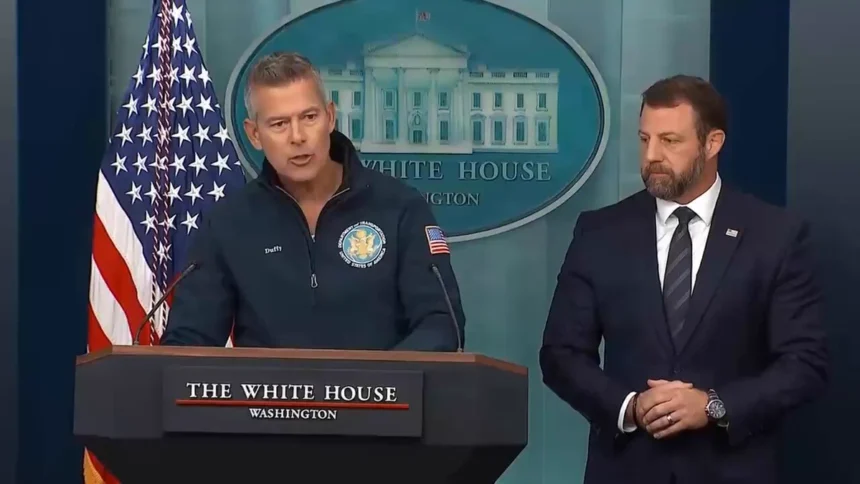
The FAA said the ground stop was caused by a routine equipment upgrade, Transportation Secretary Sean Duffy said on 14 November. The FAA says its root cause analysis is underway.
The ground stop halted US flights on Friday, 13 November 2026. TF covered the outage as the cause remained unknown in its cybercrime round-up for 13-15 November 2026.
What’s Happening & Why It Matters
What Duffy Said Caused the Ground Stop
Duffy said the work was routine maintenance. L3Harris, a longtime FAA contractor, upgraded copper wire to fibre optic cable at a remote location. A router then overloaded a critical communication system. Duffy called the job “pretty straightforward”, per TechCrunch.
The work took place around 3 p.m. on Friday. Duffy said large airports switch over late at night, while remote sites switch during the day. He said the FAA will reevaluate the timing.

What the FAA Found
Acting CTO Rebecca Guy said the FAA saw network instability. She said two sources pinged its network about a thousand connections every four to five seconds. The FAA disabled both sources, stabilised the network and began a root cause analysis. FAA Administrator Bryan Bedford said the agency sees “zero evidence of anything nefarious” and none of anything AI-related.
Bedford described a defective piece of equipment, which officials are still working to identify. Duffy listed three possibilities: user error, installer error by L3Harris or a faulty router. The accounts differ on whether the fault was human error or a faulty part.
The Toll on Travellers
Cirium, an aviation data firm, counted more than 8,200 cancelled flights on Friday evening. At least 3,000 more flights were cancelled on Saturday. TechCrunch calls the event the third nationwide ground stop of the 21st century.
CNBC reports the stop lasted 4 hours and 21 minutes and ended at 20:15 ET. Duffy has urged Congress to fund aviation equipment upgrades.

The AI Tool Question
The ground stop followed an FAA announcement on the SMART tool for air traffic controllers. The FAA extended SMART to all 22 of its air route centres in a statement dated 10 November. The cloud-based system combines weather, flight paths, traffic flow, and controller staffing data, according to the FAA. BigGo Finance puts the programme at $875 million (about €779).
The National Air Traffic Controllers Association says it wasn’t consulted on the design, testing, or implementation of SMART. Controllers keep the final say on its advice. Bedford and Duffy both rule out an AI link, though the root cause analysis has yet to report.
My take: A copper-to-fibre swap at a remote site grounded a country. One failed link can stop a national network. The FAA has ruled out an attack, and the public has seen no data to check the claim. The root cause analysis must name the fault, the owner of the fault and the fix. Until then, the union’s complaint about SMART and the outage will stay tied together in public debate.
TF Summary: What’s Next
The FAA owes the public a root cause finding. Duffy has promised a review of when remote switchovers take place. Congress will hear his call for funding to replace ageing equipment.
MY FORECAST: The FAA will publish its root cause finding by 31 December 2026. The FAA will move remote switchovers to overnight windows by 31 March 2027.
Related Stories
- TF Cybercrime Round-up: 13-15 November 2026
- TF Analysis: The Hidden Cost of Single Provider Dependency
- Microsoft 365 Outage Hits Outlook and Teams Worldwide
- TF Analysis: Can Alternatives to Nvidia AI Chips Fill the Gap After Huang?
- Apple Wants Siri to Act as an Agent, and Bloomberg Says an Agent Could Arrive in 2027